Kenya’s exports to the Democratic Republic of Congo (DRC) have surged by more than half, despite recent diplomatic tensions between the two nations. According to the latest data from the Kenya National Bureau of Statistics (KNBS), exports to the DRC grew by 56.04 percent to Ksh8.62 billion ($66 million) in the first quarter of 2024, marking the most significant year-on-year increase in over a decade.
The primary driver of this growth has been the increased domestic exports of wheat flour, which saw a notable rise after Kenya reduced the import duty on wheat from 35 percent to 10 percent in July last year. This policy, aimed at meeting local demand while protecting Kenyan wheat farmers from unfair competition, has kept quarterly exports to the DRC above Ksh7 billion ($54 million) since its implementation.
Treasury Cabinet Secretary Njuguna Ndung’u noted that the reduced taxes, maintained for the current year ending June 2025, were intended to ensure sufficient wheat supply for domestic consumption. This strategy has resulted in Kenyan traders exporting goods worth nearly Ksh23.88 billion ($185 million) in the nine months ending March 2024, a 57.48 percent increase from the previous Ksh15.16 billion ($117 million).



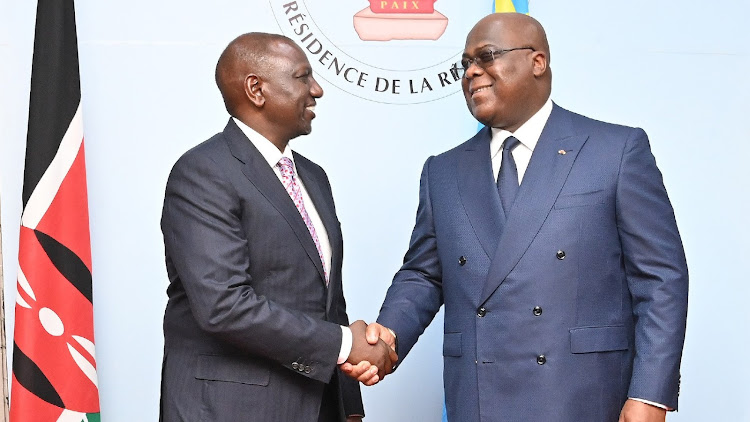
The period of increased exports coincided with strained diplomatic relations between Kenya and the DRC. Last December, the DRC recalled its ambassador to Nairobi following disagreements over Kenya’s hosting of Congolese opposition figures. These figures had launched a political party in Nairobi and later expressed support for the rebel group M23, which has been in conflict with government forces in eastern DRC. Diplomatic relations were restored in May after President William Ruto sent a high-profile delegation to Kinshasa, led by Prime Cabinet Secretary and Cabinet Secretary for Foreign Affairs Musalia Mudavadi.
“My mission here in Kinshasa was to deliver to President Felix Tshisekedi a special message from President William Ruto of Kenya, that we are partners and, as countries within the East African Community, have to continue working together very cordially and closely,” Mudavadi stated. “Kenya respects the territory and sovereignty of DRC and I assure the people of DRC that Kenya will always work with them to ensure there is peace and harmony in the region at all times.”

Despite the significant growth, the DRC still ranks below other East African Community (EAC) destinations for Kenyan goods, except for Burundi. However, the DRC’s share of Kenya’s exports to the regional bloc rose to 10.74 percent in the first quarter, up from 7.96 percent previously.
Uganda remains the largest importer of Kenyan goods in the region, with exports growing by a modest 7.39 percent to Ksh33.34 billion ($258 million), largely driven by increased orders for items such as bottles and flasks. This growth is lower than the 49.62 percent jump seen a year earlier. Uganda’s share of Kenya’s exports to the EAC also declined to 41.56 percent from 44.77 percent.
Trade disputes between Kenya and Uganda have also resurfaced, with Kenyan authorities restricting import permits for several goods from Uganda, including eggs, sugar, and milk powder, in efforts to protect local producers. These issues were reportedly resolved during a state visit by Ugandan President Yoweri Museveni in May.
“We have agreed that trade between the two countries is unimpeded either by tariff or non-tariff barriers or arbitrary levies,” President Ruto said. “We have agreed that the common principle will be the full implementation of the EAC customs and other infrastructure that support trade between East African countries.”
Meanwhile, imports from Tanzania grew by 18.01 percent to Ksh16.74 billion ($129 million), and South Sudan’s imports from Kenya increased by 25.69 percent to Ksh9.27 billion ($71 million). South Sudan’s growth was supported by household or laundry-type washing machines, while Tanzania’s imports were driven by re-exports of kerosene-type jet fuel.
Overall, Kenya’s exports to EAC countries grew by 15.69 percent to Ksh80.23 billion ($62 million) in the first quarter of 2024, up from Ksh69.35 billion ($53 million) a year earlier. The EAC, despite being the most integrated regional bloc in Africa, continues to face challenges in achieving seamless intra-regional trade, partly due to ongoing trade disputes.