

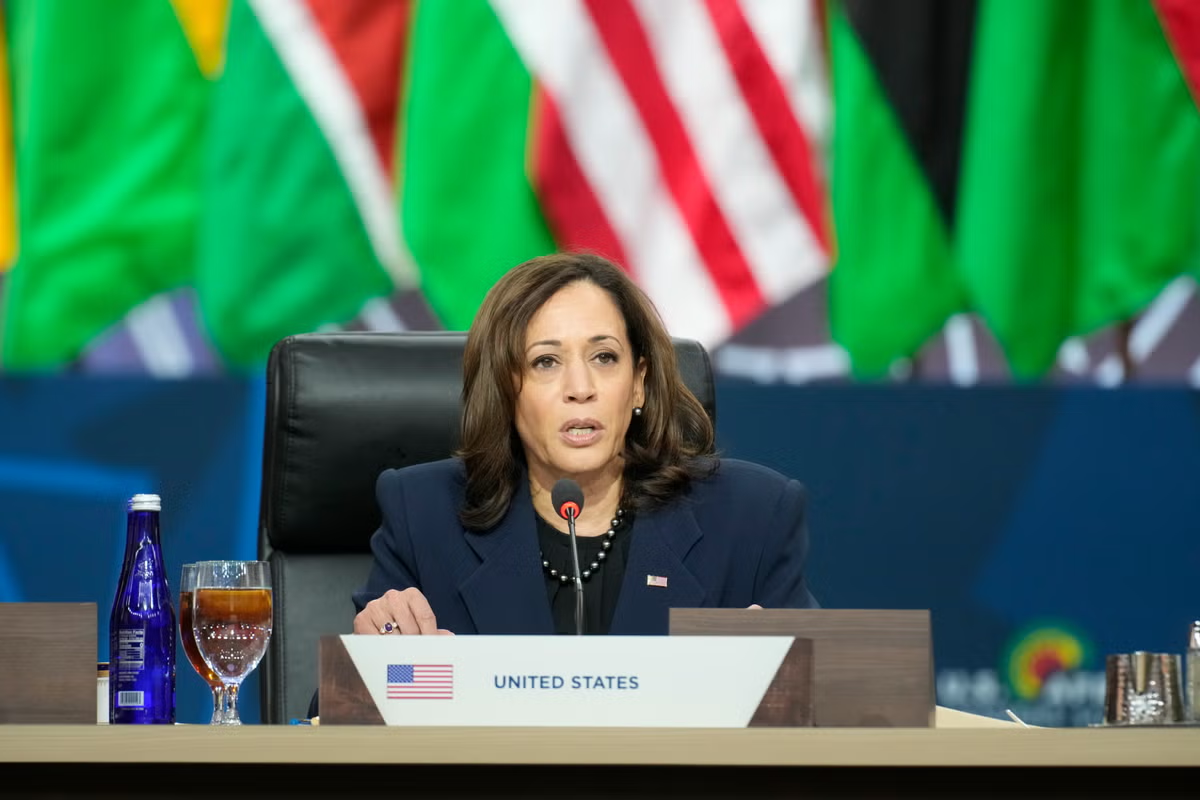
The prospect of Kamala Harris ascending to the presidency of the United States represents not only a significant milestone in American political history but also a potentially transformative moment for U.S.-Africa relations. Harris, known for her dynamic political career and her trailblazing role as the first female, first Black, and first South Asian Vice President, brings a unique perspective and set of priorities that could profoundly impact the African continent.
Kamala Harris’ presidency would be historic in many ways. Her ascent to the highest office in the U.S. would break multiple glass ceilings, and her diverse heritage could foster a deeper sense of connection and understanding with African nations. Symbolically, her presidency could inspire millions across Africa, particularly women and young people, showcasing that leadership barriers can indeed be broken. This could invigorate democratic movements and gender equality initiatives across the continent, providing a powerful example of what is possible.
Harris has consistently emphasized the importance of economic justice and inclusive growth. As President, she would likely prioritize economic partnerships that are mutually beneficial and aimed at sustainable development. Africa, with its rapidly growing economies and youthful population, presents significant opportunities for trade and investment. Harris could advocate for policies that encourage American businesses to invest in African markets, fostering job creation and economic growth on both sides of the Atlantic.
A Harris administration might also focus on enhancing initiatives like the African Growth and Opportunity Act (AGOA), which provides duty-free access to the U.S. market for eligible African countries. Strengthening AGOA and similar programs could boost African exports, support small and medium-sized enterprises (SMEs), and facilitate technology transfer. Furthermore, Harris’ focus on climate change could see increased collaboration on green energy projects, positioning Africa as a key player in the global transition to renewable energy.
However, there are potential challenges and criticisms that could arise with Harris’ approach to U.S.-Africa relations. Critics might argue that her policies, while well-intentioned, could fall short of addressing the complexities of African economies. Overreliance on trade agreements like AGOA might not suffice to spur the necessary industrialization and technological advancement required for sustainable development. Furthermore, there is a risk that increased American investment could lead to neocolonial dynamics, where African resources are exploited without adequate benefits to local populations.
Kamala Harris’ tenure could see a renewed emphasis on health and education initiatives, crucial areas for Africa’s development. The COVID-19 pandemic underscored the interconnectedness of global health, and Harris might prioritize strengthening healthcare systems through increased funding for programs like the President’s Emergency Plan for AIDS Relief (PEPFAR) and initiatives targeting malaria and tuberculosis.
In education, Harris could champion policies aimed at improving access to quality education for African children, particularly girls. Collaborations with organizations focused on education could lead to significant advancements in literacy rates and the empowerment of young Africans. Additionally, Harris’ advocacy for STEM education could translate into partnerships that enhance technological education and innovation on the continent.
Nevertheless, some might critique that such initiatives, while beneficial, may not be sufficient to overcome systemic issues in African health and education sectors. The success of these programs largely depends on effective implementation and local governance, which can be hampered by corruption and political instability. Critics could also point out that external aid often comes with strings attached, potentially undermining African sovereignty and self-determination.
Harris’ experience as a former Attorney General and Senator equips her with a nuanced understanding of security issues. As President, she could adopt a balanced approach to security in Africa, focusing not only on counterterrorism but also on addressing the root causes of instability, such as poverty, corruption, and lack of governance. Strengthening diplomatic ties with African nations would be central to her foreign policy, fostering partnerships based on mutual respect and shared goals.
Harris might also work towards reforming immigration policies that affect African nations, promoting more inclusive and fair systems. Her commitment to human rights could lead to increased support for African civil society organizations, amplifying efforts to combat corruption and promote good governance.
However, critics may argue that U.S. foreign policy has historically been driven by strategic interests rather than genuine concern for human rights or development. There is a risk that Harris’ administration could follow a similar path, prioritizing U.S. security and economic interests at the expense of African needs. Additionally, her focus on security could lead to an increase in military presence and interventions, which might exacerbate existing conflicts and instability.
Kamala Harris has been a vocal advocate for addressing climate change, a pressing issue for Africa, which is disproportionately affected by its impacts despite contributing minimally to global emissions. Her presidency could see the U.S. re-engage in international climate agreements and provide support for African countries in their climate adaptation and mitigation efforts. This might include funding for renewable energy projects, conservation initiatives, and disaster resilience programs, helping to safeguard Africa’s unique biodiversity and the livelihoods of its people.
While Harris’ climate agenda is commendable, its success depends on overcoming significant hurdles. African countries need substantial financial and technical assistance to effectively combat climate change, and there are concerns about whether the U.S. will provide sustained and adequate support. Additionally, implementing green energy projects must be done in a way that respects local communities and avoids repeating past mistakes of exploitation and environmental degradation.
In conclusion, Kamala Harris as President of the United States could herald a new era of U.S.-Africa relations, characterized by deeper economic ties, enhanced cooperation on health and education, a balanced approach to security, and a strong commitment to combating climate change. Her presidency could inspire and empower African nations, fostering a partnership built on respect, mutual benefit, and shared aspirations. As the world faces complex challenges, Harris’ leadership could pave the way for a more collaborative and inclusive global community, with Africa playing a pivotal role in shaping the future.
Yet, it is essential to recognize the potential pitfalls and challenges that may accompany her vision. Ensuring that policies are implemented in a way that genuinely benefits African nations, rather than serving U.S. interests alone, will be crucial. Harris’ administration will need to navigate these complexities carefully, listening to and collaborating with African leaders and communities to build a truly equitable and sustainable partnership.





