Sunday, July 5, 2026
  • Login
The Southern African Times
  • Home
  • Southern Africa
  • Business
    • African Start ups
    • African Continental Free Trade Area
  • Technology
    • Lifestyle
      • Health
      • Culture
      • Food and Drink
      • Entertainment
  • Opinion
  • Sports
  • SAT Jobs
    • Events
  • About Us
    • Advertise with Us
    • Contact Us
No Result
View All Result
  • Home
  • Southern Africa
  • Business
    • African Start ups
    • African Continental Free Trade Area
  • Technology
    • Lifestyle
      • Health
      • Culture
      • Food and Drink
      • Entertainment
  • Opinion
  • Sports
  • SAT Jobs
    • Events
  • About Us
    • Advertise with Us
    • Contact Us
No Result
View All Result
The Southern African Times
No Result
View All Result
Home Eastern Africa

Japan’s low carbon technology lights up Kenya

by SAT Reporter
November 1, 2021
in Eastern Africa, Kenya
0
Japan’s low carbon technology lights up Kenya

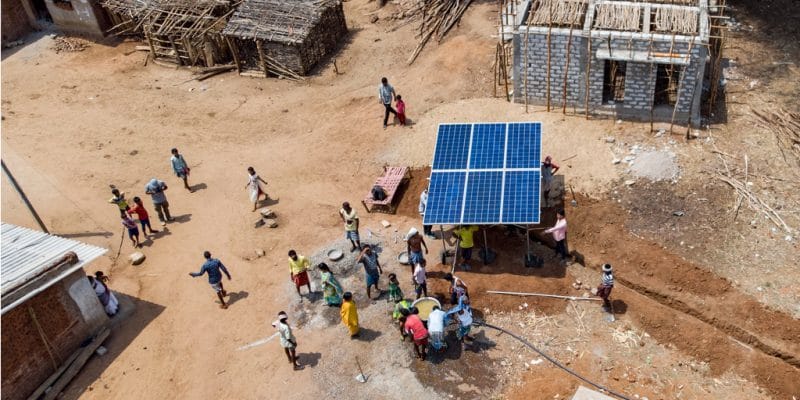
NAIROBI (The Southern African Times) – Japan is on an innovative path to carbon neutrality and it’s also promoting low carbon technologies in developing countries where cutting greenhouse gas emissions is often hard to afford. In Kenya, for example, it is using its technology and resources to reduce emissions whilst also helping local populations and industry.

Kenya’s Greener Salt Production

In the Krystalline salt ponds of Kenya, 250,000 tonnes of salt are harvested every year. The company is one of Eastern Africa’s main producers and thanks to Japanese cooperation, it has managed to cut down its carbon footprint by 25%.

Krystalline Salt runs using one of the largest industrial solar panel systems in Kenya. Financed by Japan, this solar plant provides 1.6 GWh of clean electricity annually. It allows the company to overcome the local grid’s unstable supply. This is extremely beneficial to Krystalline because, as its general manager Dinesh Shikotra says, electric power stability is their main challenge. “We can suffer up to five power cuts a day and that messes up our production. The end result is that we’re not able to cope with the demand”, he adds.


ADVERTISEMENT

The grid’s unstable supply forced the company to invest in polluting and expensive generators until 2016 when the solar plant was built. Shikotra describes harnessing solar energy as a dream come true for the company.

This was made possible by the Joint Crediting Mechanism which is a bilateral system of cooperation between Japan and 17 developing countries. This carbon market mechanism from 2013 is aligned with Article 6 of the Paris Agreement from 2015. It allows Japan to share its technologies and resources facilitating carbon neutrality worldwide.

Anne Nyatichi Omambia is the chief compliance officer and climate change coordinator for the National Environment Management Authority (NEMA). She says that the Joint Crediting Mechanism “works through the support of low carbon development projects, through technology transfer and technical skills enhancement. It is one of the ways in which private sector players and even the government can achieve low carbon development, while at the same time supporting the process of industrial growth.”

Krystalline Salt’s solar plant has allowed the company to increase its production capacity and to save on its electricity bill. According to Shikotra, since the power plant was created, they have saved around 5000 tonnes of carbon emissions and created more employment in the local community. Some of their savings are also invested in social action, like students ‘grants.

Lighting up rural areas

In the heart of the Masai region, another project using Japan’s expertise in clean energy is also changing people’s lives.

David Nkurruna, a 15-year-old school student, lives in a remote off-grid village in this area. His solar lantern allows him to study at home at night. He is part of a project created by Japan’s private tech giant, Panasonic, called ‘Light Up The Future’.

David tells us that before he was given the lantern, he used firewood and kerosene lamps which made studying very difficult because of the smoke. “When we got these lights, my marks went up because I could study well,” he explains.

350 primary students were each donated a solar lantern at the Ilkimati school. The aim is to reduce drop-outs and improve academic performance. Lawrence Nzai, a project officer for World Vision Kenya, tells us that they have improved enrolment at school but also attendance. This is because children who didn’t do their homework thought they would be punished and so they would not come to school. As part of the project, the school was also supplied with solar panels and was able to increase the number of lessons. Every evening students now have one lesson and then they go home.

Previous Post

Africa Oil Week to Initiate Discussions on Diversity, Equity and Inclusion in the Energy Sector

Next Post

Ecobank Ghana scoops Best Bank in Ghana Award at the Euromoney Awards for Excellence 2021

SAT Reporter

Related Posts

Ethiopia’s coffee exports reach 3 billion dollars as government targets 6 billion by 2031
Eastern Africa

Ethiopia’s coffee exports reach 3 billion dollars as government targets 6 billion by 2031

by Times Reporter
June 29, 2026
Uganda to evacuate 746 nationals from South Africa
Eastern Africa

Uganda to evacuate 746 nationals from South Africa

by Times Reporter
June 29, 2026
Uganda Military Chief Orders Closure of Major Media Outlets
Uganda

Uganda Military Chief Orders Closure of Major Media Outlets

by SAT Reporter
June 29, 2026
Ethiopia’s Prosperity Party Secures Strong Parliamentary Majority in National Elections
Ethiopia

Ethiopia’s Prosperity Party Secures Strong Parliamentary Majority in National Elections

by Times Reporter
June 21, 2026
Macron and Kagame Inaugurate Paris Memorial to Rwanda Genocide Victims
Rwanda

Macron and Kagame Inaugurate Paris Memorial to Rwanda Genocide Victims

by SAT Reporter
June 3, 2026
Next Post
Ecobank Ghana scoops Best Bank in Ghana Award at the Euromoney Awards for Excellence 2021

Ecobank Ghana scoops Best Bank in Ghana Award at the Euromoney Awards for Excellence 2021

Browse by Category

  • Africa AI
  • African Continental Free Trade Area
  • African Debt
  • African Start ups
  • Agriculture
  • AI Africa
  • Algeria
  • All News
  • Analysis
  • Angola
  • Arts / Culture
  • Asia
  • BOTSWANA
  • Botswana
  • BREAKING NEWS
  • BRICS
  • Burkina Faso
  • Burundi
  • Business
  • Business
  • Business Wire
  • Cameroon
  • Central Africa
  • Chad
  • China
  • Climate Change
  • Climate Changev
  • Community
  • Congo Republic
  • Conservation
  • Côte d’Ivoire
  • COVID 19
  • CRYPTOCURRENCY
  • Culture
  • Democratic Republic of Congo
  • Diplomacy
  • Eastern Africa
  • Economic Development
  • Economy
  • Education
  • Egypt
  • Elections 2024
  • Energy
  • Entertainment
  • Environment
  • Eritrea
  • Ethiopia
  • Europe
  • Fashion
  • Feature
  • Finance
  • Financial Inclusion
  • Food
  • Food and Drink
  • Foods
  • GABON
  • Ghana
  • Global
  • Global Africa
  • Guinea
  • Health
  • Humanitarian Aid
  • Immigration
  • in Southern Africa
  • International news
  • International Relations
  • Investment
  • Ivory Coast
  • Just In
  • Kenya
  • Lesotho
  • Libya
  • Life Style
  • Lifestyle
  • Literature
  • Malawi
  • Malawi
  • Mali
  • Markets
  • Mauritius
  • Middle East
  • Mining in Africa
  • Morocco
  • Mozambique
  • Namibia
  • Niger
  • niger
  • Nigeria
  • North Africa
  • North-Eastern Africa
  • Obituaries
  • Obituary
  • Opinion
  • PARTNER CONTENT
  • Politics
  • Property
  • Racism
  • Rwanda
  • Rwanda
  • SADC
  • SAT Interviews
  • SAT Investigation
  • SAT Jobs
  • Saudi Arabia
  • Senegal
  • Seychelles
  • Somaliland
  • South Africa
  • South Sudan
  • Sports
  • Startup Africa
  • STOCK EXCHANGE
  • Sudan
  • Sustainability
  • Sustainablity
  • Tanzania
  • Technology
  • Telecommunications
  • The Editorial Board
  • The Power Of She
  • Togo
  • Trade
  • Travel
  • Travel
  • Tunisia
  • Uganda
  • Uncategorized
  • Wealth
  • West Africa
  • World
  • World
  • Zambia
  • ZAMBIA
  • ZIMBABWE
  • Zimbabwe

Browse by Tags

#NewsUpdate #SouthAfrica #SouthernAfricanTimes #TheSouthernAfricanTimes AfCFTA africa African Continental Free Trade Area African development African Development Bank African economies African economy African Union Agriculture Angola Botswana China Climate change critical minerals Cyril Ramaphosa Economic Development economic growth energy transition governance industrialisation Inflation Infrastructure Infrastructure Development International relations Investment Kenya Mozambique Namibia news Nigeria Regional Integration renewable energy Rwanda SADC South Africa Southern Africa sustainable development Tanzania United States Zambia Zimbabwe
ADVERTISEMENT

WHO WE ARE

The Southern African Times is a regional bloc digital newspaper that covers Southern African and world news. The paper also gives a nuanced analysis on news and covers a wide range of reporting which include sports, entertainment, foreign affairs, arts and culture.

Welcome Back!

Login to your account below

Forgotten Password?

Retrieve your password

Please enter your username or email address to reset your password.

Log In
  • Home
  • Southern Africa
  • Business
    • African Start ups
    • African Continental Free Trade Area
  • Technology
    • Lifestyle
      • Health
      • Culture
      • Food and Drink
      • Entertainment
  • Opinion
  • Sports
  • SAT Jobs
    • Events
  • About Us
    • Advertise with Us
    • Contact Us
Not enough quota to unlock this post
Unlock left : 0
Are you sure want to cancel subscription?