Japan is currently in advanced discussions with South Africa to deepen its financial support for the latter’s ongoing energy restructuring efforts, a development that may significantly accelerate South Africa’s transition towards a more resilient and sustainable electricity landscape. The engagement builds on a pre-existing financial commitment of up to $150 million previously extended by Japanese institutions to the Development Bank of Southern Africa, with the funds designated explicitly for renewable energy deployment.
These renewed overtures emerge amid a critical juncture for South Africa’s economy, still reeling from a protracted crisis of energy insecurity that, according to estimates from the South African Reserve Bank, has consistently subtracted as much as two percentage points from annual GDP growth. The costs associated with power interruptions, both direct and indirect, were calculated at R9.53 per kilowatt hour during periods of peak disruption. This longstanding fragility in the energy system has inhibited industrial productivity, particularly in manufacturing, which contracted by 15 per cent in the first half of 2025, while also curbing the anticipated R45 billion contribution of the digital economy to national output, as reported in sectoral analyses.
The genesis of the crisis lies in the overdependence on a coal-fired power fleet that comprises nearly 80 per cent of total generation capacity, much of it managed by the state utility Eskom. Years of structural underinvestment, governance failures and maintenance backlogs have contributed to a precarious electricity grid. However, in 2025 there were modest indications of a turning point. Eskom increased its generation capacity by 4,000 megawatts over the winter season, which materially reduced outages and paved the way for a comparatively stable summer. This development positioned the utility to move closer to financial recovery, following a reported $3 billion loss in the preceding fiscal year.



This modest recovery has been accompanied by structural reforms under the government’s Operation Vulindlela initiative, which aims to improve public infrastructure delivery and regulatory efficiency. These measures have helped to restore a degree of investor confidence, leading to renewed capital flows from European countries, including France and Germany, towards the diversification of South Africa’s energy portfolio. It is within this broader framework that Japan’s expanding interest must be understood. Tokyo’s potential financial contribution, currently under consideration, could reach up to $6 billion in a blend of concessional and market-based loans. These funds would support a wide range of initiatives from grid modernisation to the integration of energy storage and battery supply chains.
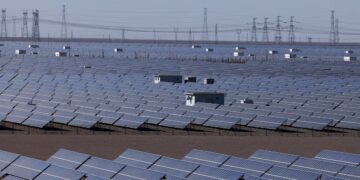
Japan’s renewed engagement is not solely driven by altruism but by a strategic alignment with South Africa’s ambitious energy transformation agenda, articulated in the Integrated Resource Plan 2025. This long-term blueprint envisions the addition of 105,000 megawatts of new generation capacity by 2039, more than half of which is projected to come from renewable sources. The Renewable Energy Masterplan, endorsed by Cabinet in March 2025, outlines annual procurement targets beginning at three gigawatts and rising to five gigawatts by the end of the decade, with an emphasis on solar photovoltaic and wind installations. Projections indicate that utility-scale renewable capacity could reach 30 gigawatts by the early 2030s.

Data from the Climate Policy Initiative reveals that total mitigation investments in the South African energy sector stood at ZAR 137 billion in the latest reporting cycle. Of this, solar PV accounted for 47 per cent or ZAR 64.8 billion, while wind power represented 10.2 per cent or ZAR 14.2 billion. These figures underscore a critical pivot toward low-carbon alternatives that, if fully realised, could avert estimated GDP losses of between 5 and 15 per cent by mid-century due to climate-related economic shocks.
In line with this trajectory, Japan has also pursued strategic linkages in upstream supply chains through a memorandum of understanding signed earlier this year between the Japan Organization for Metals and Energy Security and South Africa’s Minerals Council. The agreement seeks to foster bilateral collaboration in the exploration and beneficiation of critical minerals vital to clean technology development. These partnerships not only support Japan’s own 2050 net-zero objectives but also contribute to building a more integrated and resilient African energy economy.
From a continental perspective, South Africa’s solar resource potential, estimated at over 482,000 gigawatts across the continent, remains underutilised, with renewables currently accounting for only 12 per cent of domestic electricity production. Japan’s involvement could act as a catalyst in unlocking this potential by supporting decentralised procurement mechanisms and localised value chains. The Renewable Energy Masterplan also outlines the expansion of procurement rounds to 6 to 8 gigawatts annually beyond 2030, a development that could see the creation of 115,000 green jobs by the end of the decade.
Significantly, Japan’s proposed financial package is structured not as a singular intervention but as part of a broader dialogue on African energy sovereignty, market integration and long-term climate resilience. In this light, energy cooperation is recast not merely as a response to crisis but as a transformative opportunity for inclusive growth, industrial development and infrastructural modernisation. South Africa’s leadership in this domain may serve as a bellwether for regional energy pathways that are locally determined yet globally interconnected.
As bilateral trade between Japan and South Africa continues to exceed $10 billion annually, largely in vehicles and industrial machinery, the evolving partnership demonstrates how energy diplomacy can intersect with trade, investment and technology transfer in mutually reinforcing ways. Rather than replicating extractive models of development, this emergent cooperation offers a platform for African agency in shaping the contours of the continent’s energy future on its own terms.