Sunday, June 21, 2026
  • Login
The Southern African Times
  • Home
  • Southern Africa
  • Business
    • African Start ups
    • African Continental Free Trade Area
  • Technology
    • Lifestyle
      • Health
      • Culture
      • Food and Drink
      • Entertainment
  • Opinion
  • Sports
  • SAT Jobs
    • Events
  • About Us
    • Advertise with Us
    • Contact Us
No Result
View All Result
  • Home
  • Southern Africa
  • Business
    • African Start ups
    • African Continental Free Trade Area
  • Technology
    • Lifestyle
      • Health
      • Culture
      • Food and Drink
      • Entertainment
  • Opinion
  • Sports
  • SAT Jobs
    • Events
  • About Us
    • Advertise with Us
    • Contact Us
No Result
View All Result
The Southern African Times
No Result
View All Result
Home Analysis

Is Zimbabwe softening its approach towards crypto?

by SAT Reporter
October 7, 2021
in Analysis, Business, Zimbabwe
0
Is Zimbabwe softening its approach towards crypto?

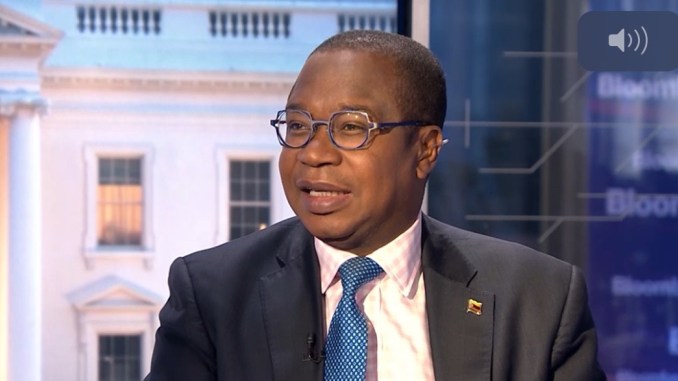
HARARE, (The Southern African Times) –  When Mthuli Ncube was appointed Zimbabwe’s finance minister in September 2018, the country’s crypto enthusiasts hoped he would walk back some of the restrictions imposed on cryptocurrency trading.

The truly optimistic hoped he would become a champion of digital currencies.

“When he joined government, he was bullish about cryptocurrencies,” William Chui, one of the founders of Golix, a now-defunct cryptocurrency exchange in Harare, told SAT.


ADVERTISEMENT

A year before Ncube’s appointment, Zimbabwe’s central bank ordered all banks to stop processing transactions involving cryptocurrencies, calling the likes of Bitcoin and other altcoins “the currency of choice for money launders and other criminals”.

The decree saw Chui’s firm close shop and crypto traders fall off the radar of government authorities.

But on a trip to the United Arab Emirates last month, Ncube extolled at least some of crypto’s potential virtues.

“I visited the DMCC Crypto Centre in Dubai, which is a fascinating incubation hub for crypto currency and payment solutions,” Ncube tweeted during his visit to the United Arab Emirates last week. “Came across solutions that could lower charges for diaspora remittances.”

But despite the official shoutout, few believe that Zimbabwe is on the brink of reversing its ban on crypto transactions.

Many crypto supporters see Ncube’s tweet as a signal that Zimbabwe’s government – like the governments of other countries – is simply attempting to cherry-pick some of the benefits of blockchain technology without ceding monetary control.

Blockchain yes, Bitcoin no

Nearly three million Zimbabweans live abroad and the money they send home accounted for just over 7 percent of the country’s economic output last year, according to the World Bank.

But middlemen take a sizable chunk of the remittance pot for themselves: between 10 and 20 percent in commission fees to facilitate money transfers from abroad.

“With disruptive blockchain technology, the cost can come down significantly,” said Clive Mphambela, chief director of communications for the Ministry of Finance.

“The uses of blockchain are far wider than just crypto. We even have a sandbox group to analyse the use of blockchain tech in Zimbabwe created by the Reserve Bank,” he told Al Jazeera.

But some question official enthusiasm for blockchain technology.

“I don’t think government will be willing to adopt this,” said Harare-based crypto trader Batanai Moyo. “It means they would give up a portion of their power in terms of control of the monetary system.”

Chui, one of Zimbabwe’s foremost cryptocurrency traders and promoters, also doubts that official blockchain enthusiasm would soften the government’s crypto ban.

“Unfortunately, the government has to this day not recognised cryptocurrencies as an asset class,” said Chui. “I think his tweet was more personal and didn’t represent the government’s view in any way.”

Zimbabwe is hardly alone. Governments around the globe have placed restrictions and even all-out prohibitions on the trading and use of cryptocurrencies as they try to strike a balance between reaping the benefits of blockchain innovations without losing control over monetary systems and policy.

But a hard line can have unintended consequences. After Zimbabwe banned cryptocurrency transactions, the country’s crypto traders went underground. They now rely on social media to buy and sell the digital assets in the country from a network of die-hard traders and enthusiasts.

“Currently trading is going on a peer-to-peer basis,” said Chui. “We use social media to trade, be it on Signal, Telegram, WhatsApp, and Facebook.”

But the workaround is problematic, he added. Buy and sell orders can take much longer to process, leading to lower profits and bigger losses. Social media platforms are also fertile breeding grounds for scammers. In one notorious case, a crypto pyramid scheme reportedly bilked investors of $5m.

“People were scammed of millions,” said Chui.

The innovation curve

Even if the government embraces crypto, economists say Zimbabwe may have fallen too far behind the innovation curve to even nurture a competitive homegrown crypto industry.

“In terms of cryptocurrency, we are lagging far too behind compared to Dubai, and when you look at the local citizens they have trust and security issues with regards to money,” Victor Bhoroma, a Harare-based independent economist, told Al Jazeera.

If the government does eventually soften its hardline, Bhoroma sees it happening slowly.

“Based on what has happened in the past where people lost millions in pyramid schemes and failed to recover the money, adopting cryptos is going to be slow,” he said. “We are more of a laggards market. Yes, they will be early adopters but in the short to medium, I don’t quite see many people widely accepting the use of cryptocurrencies.”

But even baby steps by the government would be an improvement, said Chui. “I think more can be done to protect people trading in cryptocurrencies,” he said. “If regulated exchanges are approved and licenced, it would help bring transparency and certainty to the market.”


Previous Post

South African car industry fears impact as union starts strike

Next Post

Two Congolese seek UNESCO listing to reclaim rumba’s rhythms

SAT Reporter

Related Posts

Watervlei Memorial Park Set to Redefine Burial Services in Zimbabwe
Zimbabwe

Watervlei Memorial Park Set to Redefine Burial Services in Zimbabwe

by Leo Muzivoreva
June 19, 2026
Pick n Pay Raises R4.7bn from Boxer Stake Sale to Fund Turnaround
Business

Pick n Pay Raises R4.7bn from Boxer Stake Sale to Fund Turnaround

by SAT Reporter
May 19, 2026
Uganda Grants Starlink Licence in Boost to Internet Competition
Business

Uganda Grants Starlink Licence in Boost to Internet Competition

by SAT Reporter
May 16, 2026
Why Zimbabwe Is Returning 67 Foreign Owned Farms
in Southern Africa

Why Zimbabwe Is Returning 67 Foreign Owned Farms

by SAT Reporter
May 8, 2026
Zimbabwe steps up UN Security Council bid in Eastern Europe
in Southern Africa

Zimbabwe steps up UN Security Council bid in Eastern Europe

by SAT Reporter
May 3, 2026
Next Post
Two Congolese seek UNESCO listing to reclaim rumba’s rhythms

Two Congolese seek UNESCO listing to reclaim rumba's rhythms

Browse by Category

  • Africa AI
  • African Continental Free Trade Area
  • African Debt
  • African Start ups
  • Agriculture
  • AI Africa
  • Algeria
  • All News
  • Analysis
  • Angola
  • Arts / Culture
  • Asia
  • Botswana
  • BOTSWANA
  • BREAKING NEWS
  • BRICS
  • Burkina Faso
  • Burundi
  • Business
  • Business
  • Business Wire
  • Cameroon
  • Central Africa
  • Chad
  • China
  • Climate Change
  • Climate Changev
  • Community
  • Congo Republic
  • Conservation
  • Côte d’Ivoire
  • COVID 19
  • CRYPTOCURRENCY
  • Culture
  • Democratic Republic of Congo
  • Diplomacy
  • Eastern Africa
  • Economic Development
  • Economy
  • Education
  • Egypt
  • Elections 2024
  • Energy
  • Entertainment
  • Environment
  • Eritrea
  • Ethiopia
  • Europe
  • Fashion
  • Feature
  • Finance
  • Financial Inclusion
  • Food
  • Food and Drink
  • Foods
  • GABON
  • Ghana
  • Global
  • Global Africa
  • Guinea
  • Health
  • Humanitarian Aid
  • Immigration
  • in Southern Africa
  • International news
  • International Relations
  • Investment
  • Ivory Coast
  • Just In
  • Kenya
  • Lesotho
  • Libya
  • Life Style
  • Lifestyle
  • Literature
  • Malawi
  • Malawi
  • Mali
  • Markets
  • Mauritius
  • Middle East
  • Mining in Africa
  • Morocco
  • Mozambique
  • Namibia
  • Niger
  • niger
  • Nigeria
  • North Africa
  • North-Eastern Africa
  • Obituaries
  • Obituary
  • Opinion
  • PARTNER CONTENT
  • Politics
  • Property
  • Racism
  • Rwanda
  • Rwanda
  • SADC
  • SAT Interviews
  • SAT Investigation
  • SAT Jobs
  • Saudi Arabia
  • Senegal
  • Seychelles
  • Somaliland
  • South Africa
  • South Sudan
  • Sports
  • Startup Africa
  • STOCK EXCHANGE
  • Sudan
  • Sustainability
  • Sustainablity
  • Tanzania
  • Technology
  • Telecommunications
  • The Editorial Board
  • The Power Of She
  • Togo
  • Trade
  • Travel
  • Travel
  • Tunisia
  • Uganda
  • Uncategorized
  • Wealth
  • West Africa
  • World
  • World
  • Zambia
  • ZAMBIA
  • Zimbabwe
  • ZIMBABWE

Browse by Tags

#NewsUpdate #SouthAfrica #SouthernAfricanTimes #TheSouthernAfricanTimes AfCFTA africa African Continental Free Trade Area African development African Development Bank African economies African economy African Union Agriculture Angola Botswana China Climate change Cyril Ramaphosa Economic Development economic growth energy transition Ghana governance industrialisation Inflation Infrastructure Infrastructure Development International relations Investment Kenya Mozambique Namibia news Nigeria Regional Integration renewable energy Rwanda SADC South Africa Southern Africa sustainable development Tanzania United States Zambia Zimbabwe
ADVERTISEMENT

WHO WE ARE

The Southern African Times is a regional bloc digital newspaper that covers Southern African and world news. The paper also gives a nuanced analysis on news and covers a wide range of reporting which include sports, entertainment, foreign affairs, arts and culture.

Welcome Back!

Login to your account below

Forgotten Password?

Retrieve your password

Please enter your username or email address to reset your password.

Log In
  • Home
  • Southern Africa
  • Business
    • African Start ups
    • African Continental Free Trade Area
  • Technology
    • Lifestyle
      • Health
      • Culture
      • Food and Drink
      • Entertainment
  • Opinion
  • Sports
  • SAT Jobs
    • Events
  • About Us
    • Advertise with Us
    • Contact Us
Not enough quota to unlock this post
Unlock left : 0
Are you sure want to cancel subscription?