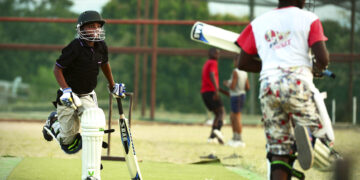
Two significant injury setbacks have necessitated last-minute alterations to South Africa’s squad for the upcoming ICC Men’s T20 World Cup scheduled to take place across India and Sri Lanka next month. These developments have resulted in the inclusion of batters Ryan Rickelton and Tristan Stubbs, both of whom had been viewed as surprising exclusions from the initial selection.
The injuries to Tony de Zorzi and Donovan Ferreira have interrupted their preparations and ultimately ruled them out of contention. According to a formal communication from Cricket South Africa, de Zorzi, who had featured in just two T20 internationals, sustained a hamstring injury during the recent ODI series in India and has not responded to rehabilitation as expected. His absence from the SA20 competition further underlines the severity of the injury and the concern surrounding his recovery trajectory.
Donovan Ferreira, an all-rounder known for his aggressive middle-order batting and utility with the ball, suffered a fractured collarbone during the SA20 tournament. The injury is particularly unfortunate given the growing stature of the SA20 as a competitive domestic league and a proving ground for South African cricketing talent. Ferreira’s injury removes a key dimension of flexibility from the squad but also opens the door to a broader discourse about player workload and injury management.



In response, selectors have turned to Rickelton, who topped the scoring charts in the league phase of the SA20, a testament to both his form and consistency. His reintegration into the squad is a reflection of his undeniable domestic performances and a pivot towards merit-based inclusion. Tristan Stubbs, who had previously been heralded as one of South Africa’s most promising T20 talents, returns despite a recent slump in form. His selection may signal a longer-term strategic investment in rebuilding confidence and continuity in the national team’s batting line-up.
Veteran left-hander David Miller remains a provisional inclusion in the World Cup squad following a groin injury sustained earlier this month. While he will not participate in the imminent T20 series against the West Indies, a recent scan has reportedly produced encouraging results. Head coach Shukri Conrad has indicated optimism that Miller will be fit to travel with the squad to the subcontinent. Rubin Hermann, a left-handed top-order batter, has been named as his temporary replacement for the West Indies series beginning Tuesday in Paarl.
The revised squad comprises a blend of emerging talent and established international figures. Aiden Markram will continue to lead the side, supported by the likes of Quinton de Kock, Kagiso Rabada, and Anrich Nortje. The inclusion of teenage pace prospect Kwena Maphaka and the consistent Marco Jansen reflects an ongoing evolution in the team’s strategic composition.

South Africa’s reconfigured squad represents not just a reaction to injury but a broader moment of reflection on the dynamics of team selection, athlete development, and competitive readiness. It is also a reminder of how African cricket narratives are in a constant state of renewal, shaped not solely by wins and losses but by perseverance, depth of talent, and the power of representation in global sport.
This moment offers an opportunity to challenge reductive perceptions of African teams as peripheral competitors. Instead, it underscores the resilience and tactical foresight within the continent’s cricketing infrastructure. The choices made by South Africa’s selectors signal not just a response to adversity but an insistence on retaining agency and nuance in constructing narratives that reflect African sporting complexity.
The updated squad now reads as follows: Aiden Markram (captain), Corbin Bosch, Dewald Brevis, Quinton de Kock (wicketkeeper), Marco Jansen, George Linde, Keshav Maharaj, Kwena Maphaka, David Miller, Lungi Ngidi, Anrich Nortje, Kagiso Rabada, Ryan Rickelton, Jason Smith, Tristan Stubbs.
As the team prepares for a tournament that will engage both emerging and traditional cricketing powers, the revised composition brings into focus the delicate balance between readiness and resilience. It also reinforces the critical need for spaces that elevate African stories in global cricketing contexts with respect and authenticity.