

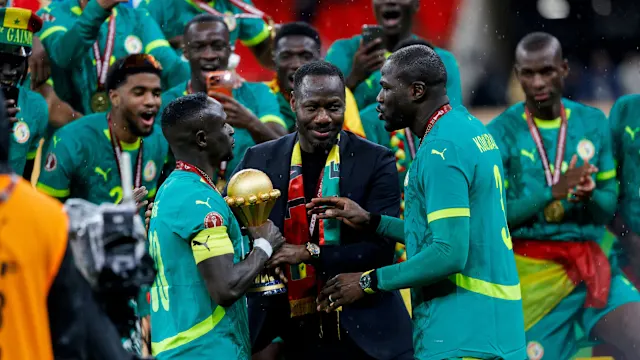
The aftermath of the 2026 Africa Cup of Nations final between Senegal and Morocco has evolved into one of the most consequential disputes in the recent history of African football, extending beyond the field of play into legal, administrative and symbolic domains that reflect broader tensions within the continental game.
According to reporting from multiple international outlets including ESPN, the final itself ended in controversy following a decisive moment in extra time that led to Senegal initially being recognised as winners after a 1 nil result. However, subsequent disciplinary proceedings by the Confederation of African Football resulted in a reversal, with Senegal deemed to have forfeited the match after players left the field during a disputed penalty decision. The ruling awarded Morocco a 3 nil technical victory, thereby reassigning the title.
This administrative decision did not conclude the matter. Senegal lodged an appeal with the Court of Arbitration for Sport, the highest authority for international sports disputes, which has since accepted the case for review. The acceptance of the appeal has introduced a further layer of legal uncertainty, leaving the official status of the championship contested pending a final ruling.




The dispute has also unfolded in the public sphere, where parallel narratives have emerged across different parts of the continent. In Senegal, public celebrations and official recognition of the team have continued, including ceremonial acknowledgements by state authorities. In contrast, Moroccan officials and commentators have maintained that regulatory frameworks were correctly applied and that the reassignment of the title reflects adherence to established competition rules.
The situation has also intersected with international football governance. Reports indicate that Moroccan football authorities are considering formal complaints relating to the staging of celebratory events involving the Senegalese team in France, raising questions about jurisdiction and the role of third party associations in disputes originating within African competitions. While such considerations remain at an early stage, they underscore the extent to which the issue has expanded beyond a single match or tournament.
Within the African football community, responses have been measured, with many players and administrators refraining from public comment. This restraint reflects both the sensitivity of the dispute and its potential implications for institutional credibility. The Confederation of African Football has in recent years sought to strengthen its governance structures and global standing, and the present case is widely seen as a test of those efforts.
From a broader continental perspective, the dispute highlights ongoing challenges in balancing regulatory enforcement with perceptions of fairness and legitimacy. African football occupies a complex position within the global game, navigating internal diversity alongside external expectations. Episodes such as this reveal the need for transparent processes that are both procedurally robust and widely trusted across different constituencies.
At the same time, the intensity of public engagement with the case reflects the central role of football in shaping collective identity and expression across Africa. The competing claims to the title are not solely about a trophy but are embedded in wider narratives of recognition, dignity and representation. These dimensions complicate efforts to resolve the matter purely through legal mechanisms.
The pending decision from the Court of Arbitration for Sport is therefore likely to carry significance beyond the immediate question of who is formally recognised as champion. It may influence how future disputes are handled, how authority is distributed between continental and global institutions, and how African football continues to define itself within an evolving international landscape.
For observers across the continent, the current moment represents both a challenge and an opportunity. It foregrounds the necessity of strengthening governance while also affirming the importance of African agency in determining the direction of its sporting institutions. In this sense, the resolution of the Senegal Morocco case may mark not only the conclusion of a dispute but also a point of reflection on the future trajectory of the game in Africa.


