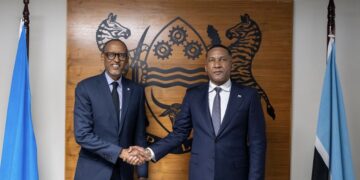
In a landmark development marking four decades of diplomatic engagement, India and Angola have agreed to significantly expand their bilateral cooperation, focusing on energy, defence, digital infrastructure, and other strategic sectors. The accord was announced during the state visit of Angolan President João Lourenço to New Delhi — the first such high-level visit in nearly four decades — and was accompanied by the signing of multiple Memoranda of Understanding (MoUs).
Indian Prime Minister Narendra Modi described the visit as “historic,” underscoring its significance not only in terms of bilateral progress but also in reinforcing India’s broader partnership with the African continent. He emphasised India’s long-standing support for Angola, recalling its solidarity during Angola’s independence struggle, and reiterated the commitment to build upon that enduring foundation of trust.
A key outcome of the bilateral talks was the announcement of a $200 million Line of Credit extended by India to assist in the modernisation of Angola’s defence sector. This support will encompass procurement, maintenance and overhaul of defence systems, and provision of training modules to Angolan armed forces. This move aligns with India’s broader defence diplomacy in Africa and reflects Angola’s strategic interest in strengthening its military capacities.



Further, the Indian government offered technical collaboration in developing Angola’s digital public infrastructure, enhancing e-governance capabilities, and applying Indian expertise in capacity building. In addition, India extended its readiness to cooperate in the field of space technology — an area of increasing relevance for emerging economies seeking to expand their scientific and satellite capabilities.
The economic dimension of the partnership remains substantial. Bilateral trade currently stands at $4.2 billion, with oil and gas accounting for 90% of this exchange. Angola is India’s second-largest African supplier of crude oil and liquefied natural gas, following Nigeria. Indian exports to Angola amount to approximately $700 million and include pharmaceuticals, vaccines, automobile components, plastics, and refined petroleum products. Angola has also expressed interest in Indian support for refining and processing newly discovered oil reserves, as well as the establishment of both onshore and offshore refineries.
In a strategic shift towards sustainable energy cooperation, Angola formally acceded to the International Solar Alliance (ISA), becoming its 123rd member. This underscores Angola’s intent to diversify its energy mix and India’s role in spearheading global renewable energy alliances. India also extended an invitation for Angola to participate in initiatives such as the Coalition for Disaster Resilient Infrastructure, the Global Biofuels Alliance, and the Big Cat Alliance, reflecting growing cooperation in climate and biodiversity initiatives.
Defence and maritime engagement between the two nations also witnessed a milestone with the recent India-Africa naval exercise “AIKEYME,” highlighting enhanced maritime security collaboration. The exercise reflects India’s growing role as a maritime partner for Africa, especially in the Indian Ocean Region.
On the multilateral stage, Prime Minister Modi welcomed Angola’s upcoming chairmanship of the African Union and reaffirmed India’s support for the African bloc, which was inducted as a permanent member of the G20 during India’s presidency. He noted, “India and the African Union are pillars of the Global South,” advocating for a more equitable global order driven by the voices of developing nations.
India’s expanding footprint in Africa has been marked by strategic investments, including the establishment of 17 new embassies over the past decade, $12 billion in credit lines, and $700 million in grant assistance. India has also implemented vocational training initiatives in eight African countries and is collaborating with five others on digital public infrastructure projects.
President Lourenço’s visit is seen as pivotal in revitalising India-Angola relations, placing them on a forward-looking trajectory. PM Modi concluded, “India and Angola are natural partners in progress. I am confident that under Angola’s leadership, India’s engagement with the African Union will scale new heights.”

The visit was also marked by a shared condemnation of terrorism. Prime Minister Modi thanked Angola for its support following a recent terrorist incident in Pahalgam, reiterating India’s stance that terrorism remains the gravest threat to humanity and that all efforts must be made to combat it decisively.
This renewed cooperation marks not only a diplomatic milestone but a deeper alignment of geopolitical and developmental interests, setting a strong precedent for India’s evolving role as a partner to Africa in the multipolar world.