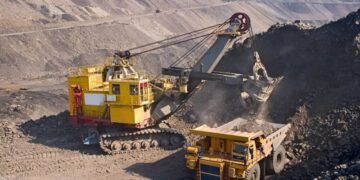
Botswana has embarked on a major infrastructure upgrade to improve its energy reliability, with the construction of a dome-shaped coal storage facility at the Morupule B Power Station in Palapye. Standing 30 metres tall and stretching 140 metres wide, the dome is an impressive feat of engineering that will protect coal reserves from rain, wind, and dust, thereby ensuring a more efficient and stable power supply.
The facility is designed to safeguard the calorific quality of coal, reducing the risk of wet or degraded fuel that can compromise combustion efficiency in boilers. By maintaining consistent energy output, the dome will help stabilise electricity supply across Botswana, where reliable power remains a cornerstone of both social wellbeing and economic progress. This innovation is particularly critical at a time when southern Africa faces rising energy demand and ongoing supply challenges.
Central to the project is Uni-Span, a South African company specialising in scaffolding and formwork technologies. Its involvement illustrates the growing significance of intra-African collaboration in infrastructure delivery. By harnessing regional expertise, Botswana benefits not only from advanced engineering design but also from knowledge exchange that strengthens the continent’s collective capacity to build resilient energy systems.



Coal remains the backbone of Botswana’s electricity generation. According to the International Energy Agency, the majority of the country’s power is generated from coal-fired plants, with Morupule B operating as the primary supplier of national grid electricity. While renewable energy projects are gaining attention—particularly solar given Botswana’s abundant sunlight—the short-to-medium-term reliance on coal makes infrastructure investments such as the dome essential for energy security.
The structure does more than meet immediate technical needs. It speaks to a broader pan-African challenge: how to balance resource dependence with a just and gradual energy transition. Across the continent, policymakers are faced with the dilemma of sustaining reliable energy for economic development while simultaneously pursuing commitments to cleaner energy futures. Botswana’s coal dome is a practical example of an interim solution—protecting and optimising existing resources while enabling conversations about diversification.
Furthermore, the project resonates beyond national borders. Botswana is a member of the Southern African Power Pool, a regional framework for energy trade and cross-border electricity exchange. Stable power generation within Botswana not only supports domestic needs but also strengthens the wider regional grid. As demand for electricity grows across neighbouring states, Botswana’s investment in resilient energy infrastructure helps reduce vulnerability to outages, supporting regional industrialisation agendas.
For local communities, the dome may seem like a technical detail, yet its impacts are deeply felt. Reliable electricity underpins household livelihoods, education, healthcare, and small-scale enterprises. For industries, including mining and manufacturing—both pivotal sectors in Botswana—the consistency of supply ensures competitiveness and growth. In this way, the dome is not just an engineering solution but a social and economic enabler.

The design itself is notable for its durability and efficiency. Dome-shaped structures distribute stress evenly, making them highly resistant to environmental pressures while minimising material use. This makes them well-suited for large-scale storage, particularly in climates with fluctuating conditions. By adopting such a design, Botswana is also investing in infrastructure that reduces long-term maintenance costs and enhances operational resilience.
While debates on the environmental implications of coal continue, it is evident that Botswana’s immediate priority lies in securing reliable power for its population and industries. The dome at Morupule B reflects a pragmatic step in this direction, demonstrating how targeted infrastructure projects can improve energy outcomes while keeping space open for future transition strategies.
As Botswana deepens its engagement with renewable projects—particularly solar farms in the Kgalagadi and Central districts—the coal dome may eventually serve as a bridge between two energy eras. Until then, it stands as an emblem of engineering ingenuity and cross-border collaboration, supporting both national stability and regional development.