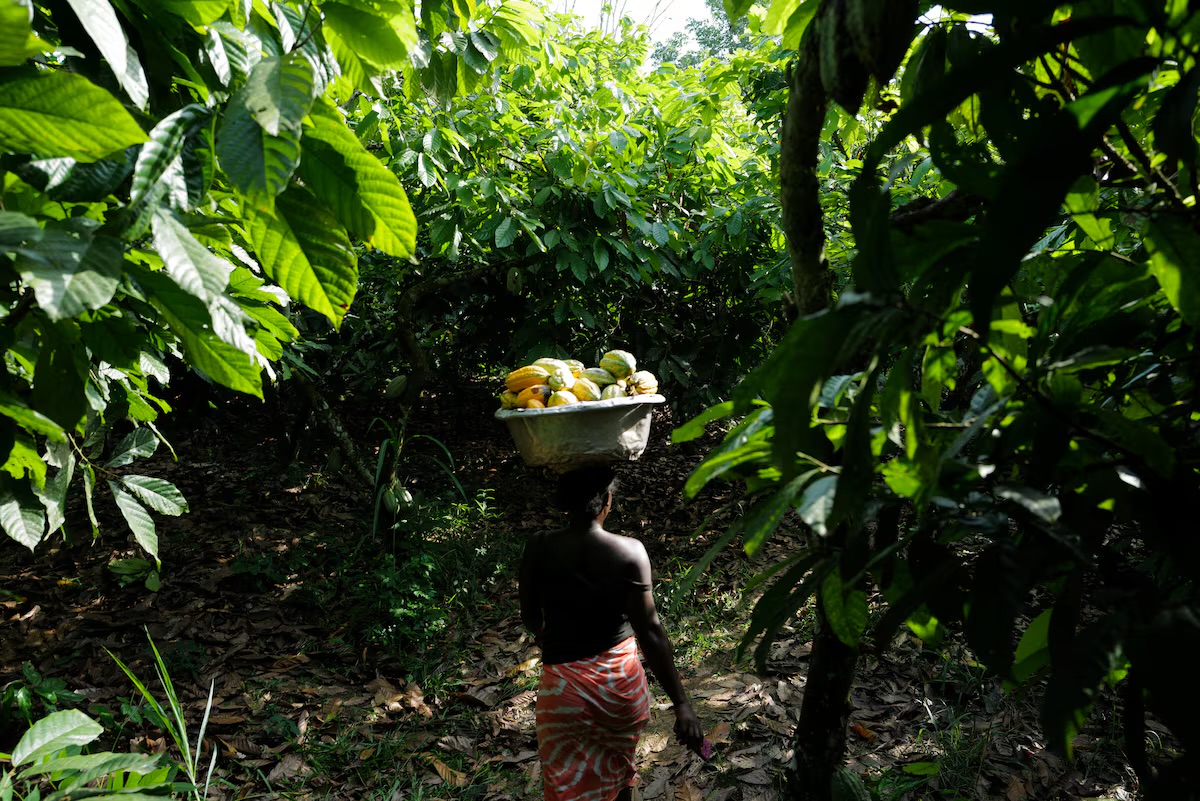
Acoalition of Ghanaian cocoa farmers has threatened to block officers of the national regulator from entering their farms in protest against the newly announced producer price for the 2025/2026 season, raising fears of fresh smuggling to neighbouring Ivory Coast and Togo.
More than 300,000 farmers voiced anger over the fixed price of 51,660 cedis ($4,783) per ton, or 3,228 cedis per 64 kilogram bag, announced on August 4. The increase amounts to just 4 percent from the previous season, far below expectations among growers who say they are struggling with rising input costs.
Theophilus Tamakloe, vice president of the Ghana Cooperative Cocoa Farmers and Marketing Association, said the government had failed to honour its pledge to pay farmers 70 percent of the free on board price used in international trade. “Based on that formula, farmers should be receiving around 3,800 cedis per bag,” Tamakloe said. “The announced price is unfair and unsustainable.”




Some producers warn they may smuggle their beans across the border, echoing an already deepening problem in the industry. Kwame Alex, who was recently named Ghana’s Best Cocoa Farmer, said the gap with Ivorian prices was too wide to ignore. “The difference is around 700 cedis, and that creates incentives for smuggling,” Alex said. “If I were farming near the border, all my cocoa would go to Ivory Coast.”
The threat to bar officers of the Ghana Cocoa Board, or COCOBOD, marks an escalation of tensions between growers and the regulator. Extension officers routinely visit farms to monitor crop health and provide technical advice, and their exclusion could undermine oversight at a time when the sector faces disease pressures and global supply concerns.
Ghana, the world’s second largest cocoa exporter, has already been battling cross border smuggling that has cost the country an estimated 160,000 tons of beans in the 2023/24 season, according to COCOBOD officials. Smuggling to Ivory Coast and Togo has been fuelled by price differentials as well as higher demand in neighbouring markets.
Farmers argue the new price is particularly inadequate given escalating costs of production. Insecticides now sell for around 150 cedis per unit, while renting basic equipment can cost 100 cedis per day, eating into already thin margins. “Government cannot expect us to produce more under these conditions while paying us less than what the market allows,” Tamakloe said.
The standoff underscores growing discontent in Ghana’s cocoa heartlands and adds pressure on authorities as they seek to stabilise output and reassure international buyers ahead of the next crop cycle.