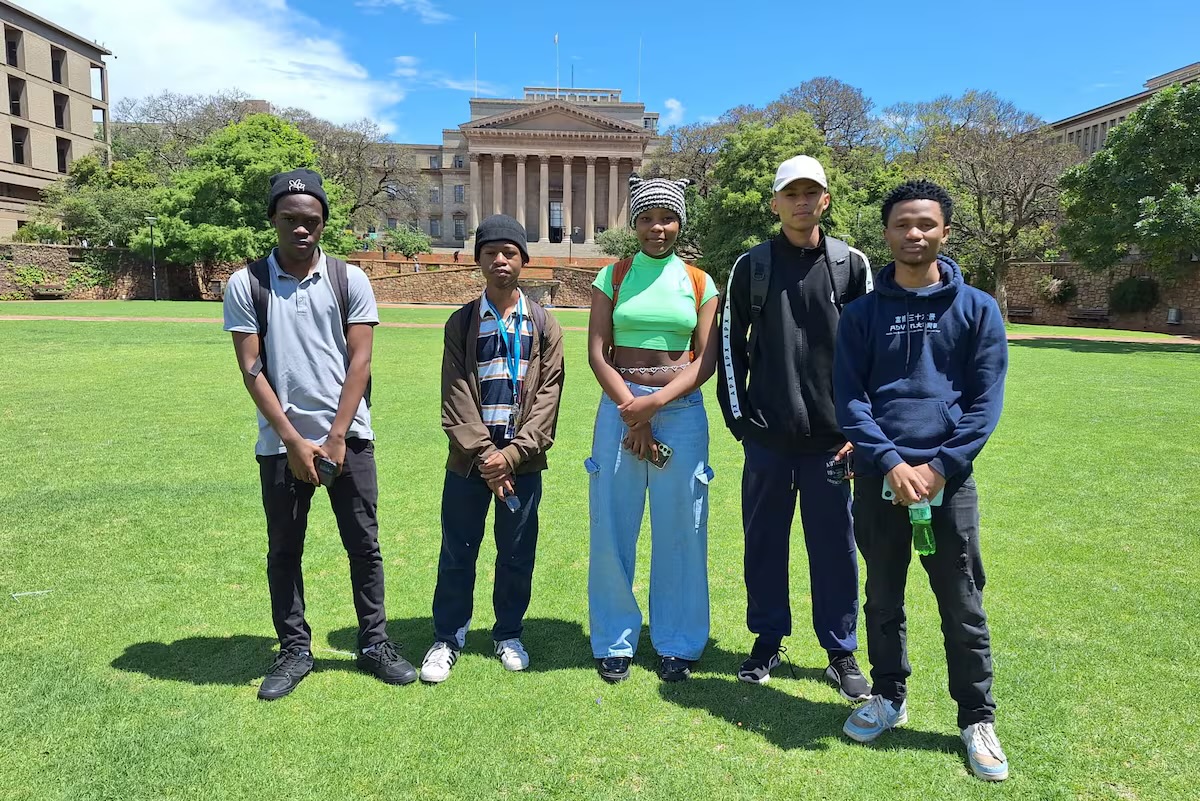
In Johannesburg, on the campus of the University of the Witwatersrand, 19-year-old computer science student Ayathandwa Ziqula sits on a bench surrounded by friends. He smiles as he explains that he is the first from his public high school to study at Wits, one of the most prestigious universities in the country. For him, this achievement represents both a personal triumph and a small but significant signal of change in a society still struggling to transcend the deep scars of its past.
South Africa’s Generation Z, born after the end of apartheid, carries the hopes and burdens of a young democracy. They have grown up in a digital world, yet remain confined by the constraints of structural inequality. Nearly three decades after the first democratic elections, South Africa remains the most unequal country on Earth, according to the World Bank (2023). The top 10 percent of the population controls roughly 80 percent of the nation’s wealth, while half of South Africans live below the upper-bound poverty line.
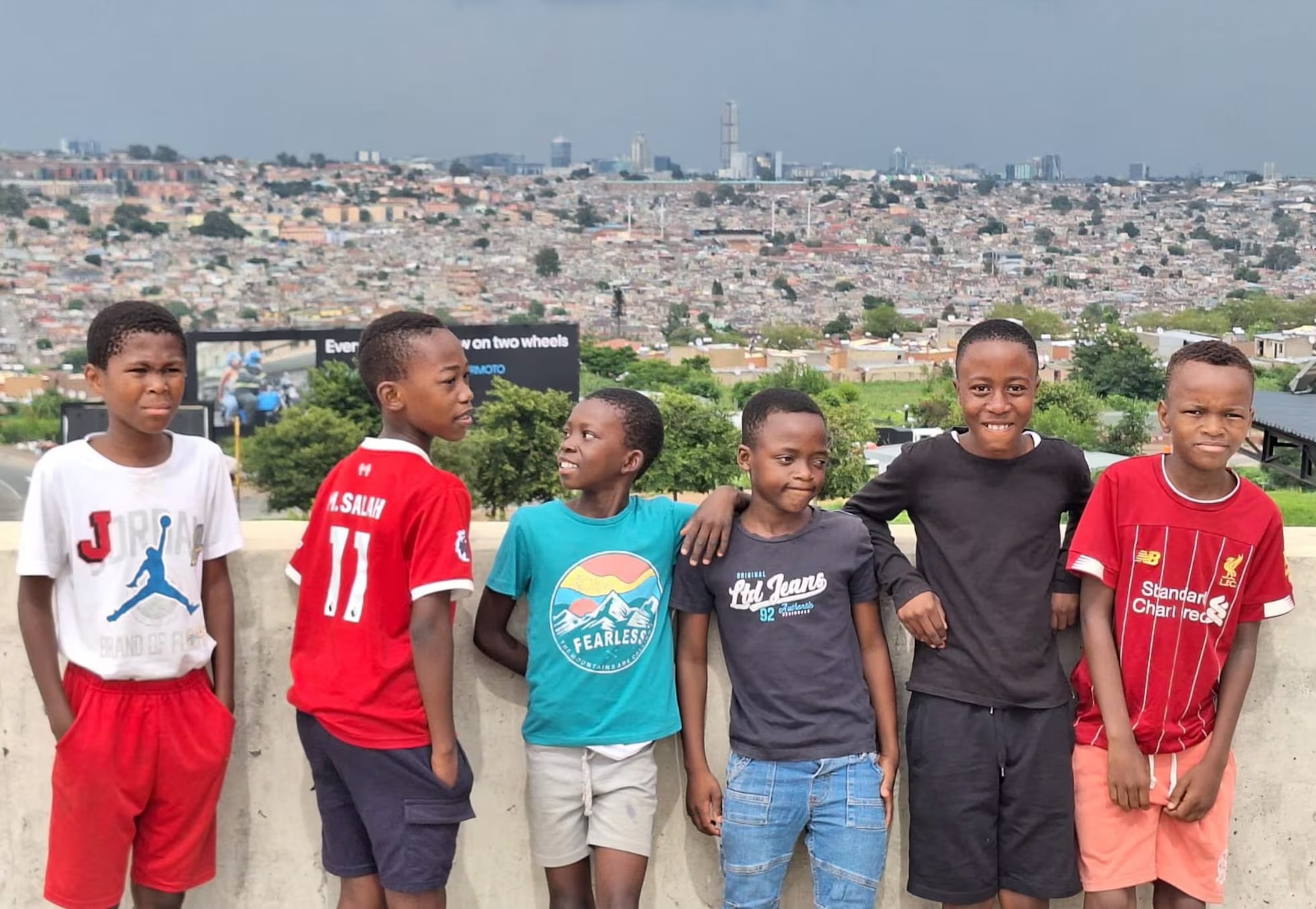
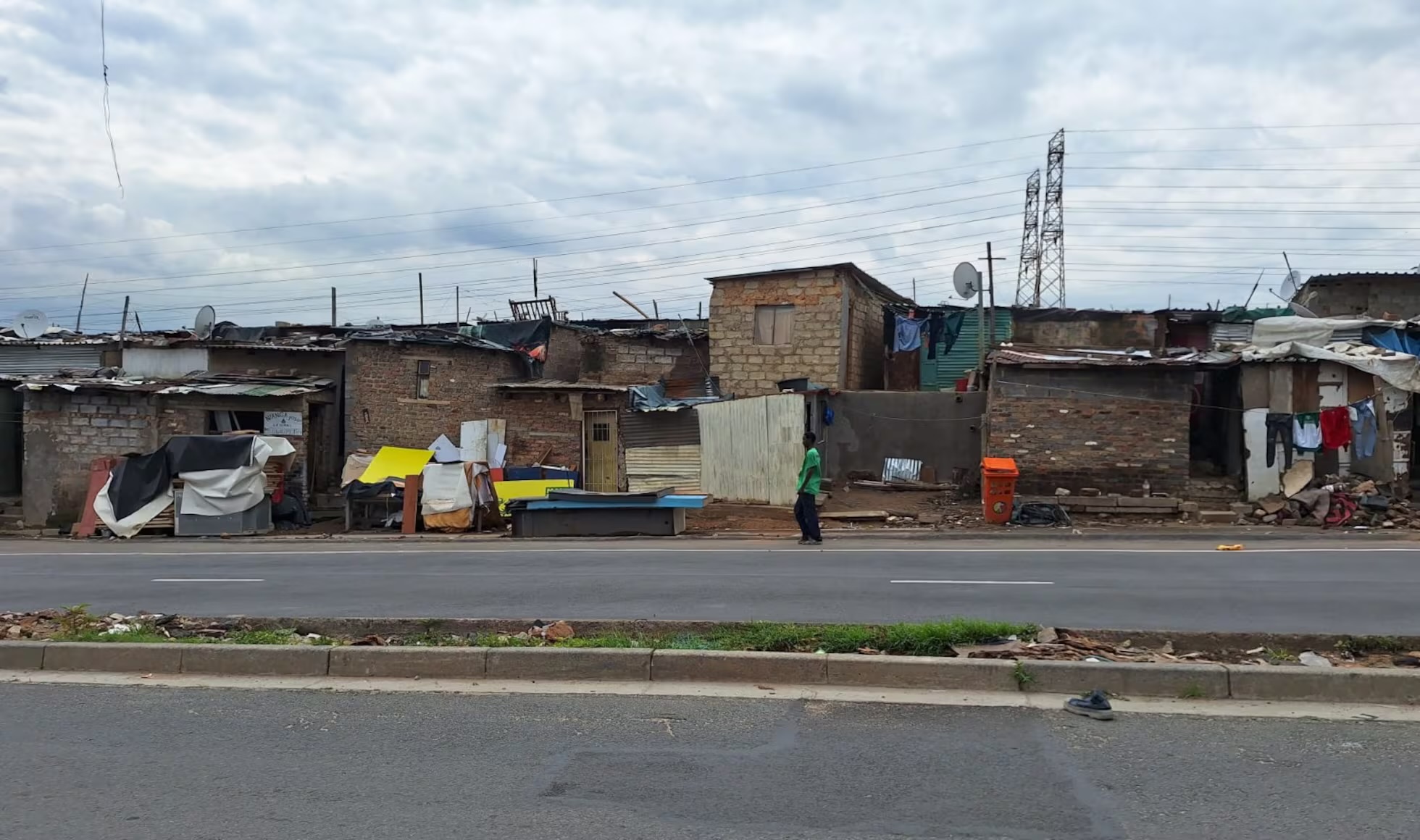
This paradox is starkly visible across Johannesburg. In Alexandra, one of the city’s oldest and most densely populated townships, children play football beside corrugated metal homes. The smell of street food drifts from open fires, while across the skyline, the glass towers of Sandton, Africa’s wealthiest square mile, shimmer under the same sun. The contrast between the informal settlements of Alex and the manicured streets of Sandton illustrates how proximity has failed to translate into equality.



Between these two worlds lies the fragile balance sheet of post-apartheid South Africa: a nation that has made political progress but still wrestles with economic and social exclusion. Ziqula’s story, and that of his peers, unfolds within this complex terrain. “If someone like me, from a working-class background, can study computer science here, something is being done right,” he says. “But we still have a long way to go.”
For many of his generation, the struggle is not only to survive but to redefine success. “I want to build a start-up here in South Africa, one that creates jobs,” Ziqula adds. His father drives a minibus taxi for a modest wage, and his late mother worked as a domestic helper. His motivation stems from both necessity and conviction: a belief that local innovation can change the conditions of everyday life.
Yet even for those who manage to access higher education, the future remains uncertain. The youth unemployment rate reached 46 percent in early 2025, according to Statistics South Africa, one of the highest in the world. This figure represents nearly 5.5 million young people who are willing to work but unable to find employment. The consequences extend beyond economics. Joblessness erodes dignity, strains families and deepens disillusionment with political leadership.
For 18-year-old Mathapelo Moala, a first-year student at Wits, her dream is simple: “a stable job.” Her response reflects a generational realism shaped by economic stagnation and the rising cost of living. Along the roadsides of affluent areas such as Fourways, it is common to see unemployed men and women holding up cardboard signs advertising their skills. Some are painters, others plumbers, some domestic workers. They wait patiently for passing motorists, hoping to secure a day’s labour. The image is both ordinary and heartbreaking, revealing the persistence of exclusion amid abundance.
The inequality that defines South Africa is not solely economic. It is also gendered, spatial and generational. Women, particularly young women, face heightened vulnerability to violence and unemployment. The South African Medical Research Council (2023) recorded approximately 2,400 femicides between April 2021 and March 2022, one of the highest rates globally. The violence is not isolated but systemic, linked to social dislocation, poverty and patriarchal norms that continue to shape many communities.

Against this backdrop, the younger generation is increasingly aware, informed and engaged. They are digitally connected and politically vocal, drawing inspiration from movements across the continent. “The essential element for achieving progress is an educated and disciplined citizenry,” says Ziqula, echoing the belief that education remains the cornerstone of transformation.
Dr Beatrice Grace Alouch Obado, associate professor of International Relations and Sustainable Development at IE University and Schiller International University, observes a continental pattern of youth activism. “Across Africa, young people are driving demands for accountability and more transparent governance,” she explains. “In Kenya, youth movements were instrumental in securing a new constitution and expanding civic freedoms. In Tanzania, young citizens have taken to the streets to challenge power cuts and internet restrictions. Similar mobilisations are taking place in Madagascar, Morocco and Botswana.”
This civic engagement demonstrates that Africa’s youth are not apathetic. They are confronting systems that exclude them, often through non-violent and creative forms of protest. From the #FeesMustFall movement in South Africa to youth-led climate initiatives in Senegal and Ghana, a generation once dismissed as disengaged is shaping the public discourse.
The energy of Africa’s youth represents both an opportunity and a warning. According to the United Nations Population Division (2024), Africa’s population is projected to reach 2.5 billion by 2050, with one in three of the world’s young people living on the continent. This demographic boom could be transformative if supported by investment in education, digital infrastructure and job creation. Without such policies, however, it risks deepening instability and migration pressures.
Ziqula and his peers understand this duality. Their optimism is tempered by realism, their ambition grounded in awareness. They navigate a society that is both dynamic and uncertain, where freedom exists but opportunity is scarce. They represent a generation that refuses to be defined solely by struggle but insists on participating in shaping its own narrative.
What makes their perspective particularly vital is its refusal of linear, Western interpretations of progress. Their vision of the future is not about imitation but adaptation: building an African modernity that values community as much as individual success, and that sees education not as an escape from poverty but as a collective investment in renewal.
As the afternoon sun fades over Braamfontein, the young students gather around, continuing their conversation about the recent G20 Summit in Johannesburg. They ask questions about the role of African nations in global decision-making, about technology, inequality and environmental justice. Their curiosity is emblematic of a generation unwilling to be spectators in their own story.
South Africa’s youth, and Africa’s youth more broadly, stand at a crossroads between disillusionment and determination. They are the inheritors of an unfinished revolution, one that demands both structural reform and moral courage. The future they seek is not defined by escape but by transformation: a reimagining of society rooted in fairness, dignity and opportunity.

If the promise of democracy is to mean anything, it must be measured not by the wealth of Sandton but by the dreams of those in Alexandra. And if Generation Z’s journey reveals anything, it is that hope, though fragile, remains the most powerful currency of al