The Group of 20 (G20) has embraced the African Union (AU) as a full member during its two-day summit held in New Delhi over the weekend. This decision signals a significant shift in global governance, aiming to amplify the voices of developing countries and ensure their representation on the international stage.
The G20, established in 1999 as a platform for international cooperation in finance and the economy, initially comprised 19 countries plus the European Union (EU). However, the inclusion of the AU now grants the African continent the same status as the EU, acknowledging the importance of expanding representation beyond traditional powerhouses.
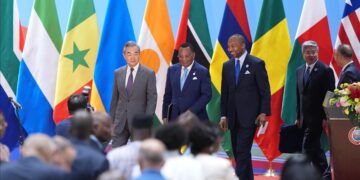
Amidst applause from G20 representatives, Azali Assoumani, President of the Union of the Comoros and current AU chairperson, assumed his seat at the summit, symbolising a momentous step forward in global diplomacy. China’s proactive role in advocating for the AU’s membership has been crucial in this endeavor, reinforcing its commitment to supporting the Global South’s interests.




The AU Commission Chairperson, Moussa Faki, expressed his enthusiasm for the AU’s inclusion in the G20 on social media, stating, “The membership for which we have long been advocating will provide a propitious framework for amplifying advocacy in favor of the continent and its effective contribution to meeting global challenges.”
Steve Patrick Lalande, Director of the Partnerships Management and Resource Mobilization Directorate of the AU Commission, emphasised the expectations of African nations. “We have huge expectations that the voice of the African people will be heard, so that development is well promoted worldwide,” he declared.
Mathapelo Monaisa, a member of the South African delegation to the G20 summit, lauded China’s support for the AU’s G20 membership. “As partners in the BRICS, we would like to see other members being able to have more representation in various multilateral platforms, and China’s support for the AU’s joining of the G20 is important,” Monaisa stressed.
This historic development reflects a growing demand from developing nations for a greater say in global governance systems. Many have felt marginalized and neglected, leading to a call for more inclusive international decision-making processes.
Keith Bennett, an international relations consultant based in London, noted, “China was the first G20 member to clearly and unequivocally declare its support for membership of the African Union. This is a matter of both justice and pragmatism.”
However, as emphasized by the South African Institute of International Affairs, securing a seat at the table is just the first step. African nations, along with other Global South countries, now seek further support to pursue independent and sustainable development.
In a world where multilateralism is becoming increasingly vital, the G20’s decision to welcome the AU as a full member represents a pivotal moment in reshaping the global governance landscape. It underscores the importance of equitable representation and inclusivity in addressing the challenges facing our interconnected world.