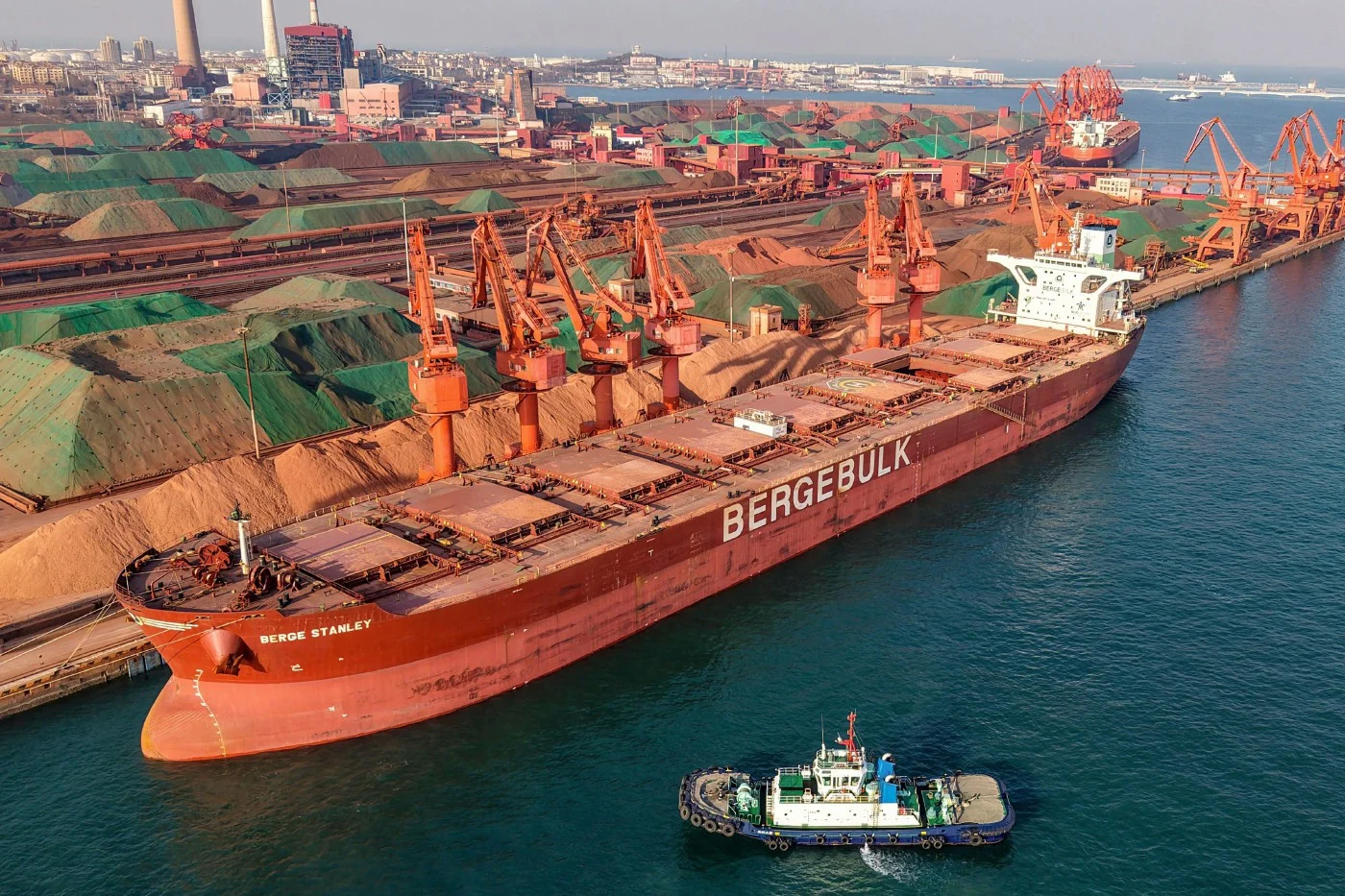
China has received its first shipment of iron ore from the Simandou mine in the Republic of Guinea, marking a milestone in the development of the West African mineral project. The delivery follows several years of infrastructure development and international investment in one of the world’s most significant untapped iron ore deposits.
According to a statement issued by China Baowu Steel Group, the vessel arrived at Majishan port in China’s Zhejiang province on 17 January, carrying approximately 200,000 metric tonnes of high-grade iron ore. The journey from Guinea took 46 days.
Simandou, located in southeastern Guinea, is estimated to hold reserves with an iron content of about 65 percent. The project is divided into four mining blocks and has a projected annual production capacity of 120 million tonnes. The development involves multiple stakeholders, including Rio Tinto, the Aluminium Corporation of China (Chalco), and the Winning Consortium Simandou (WCS), a partnership between Singaporean and Chinese firms. China Baowu is also a shareholder, following the transfer of equity from WCS.




The commissioning of the mine was held in November 2025 and attended by senior officials, including China’s Vice Premier Liu Guozhong. A second shipment of ore from the mine reportedly left Guinea in December.
The Simandou project is part of broader efforts by China to diversify its iron ore sources. China currently imports around 80 percent of its iron ore from Australia and Brazil. In 2022, the Chinese government established the China Mineral Resources Group to consolidate purchasing and improve negotiating leverage with global suppliers.
For Guinea, Simandou represents a long-term mining venture with the potential to contribute to national revenue and infrastructure. The project has drawn international attention due to its scale and the complexity of logistics and stakeholder arrangements involved. The rail and port infrastructure necessary to move ore from inland Guinea to the coast has required significant investment.
The long-term impact of the project on Guinea’s economy, employment, and environment remains subject to regulatory oversight and ongoing assessment. Stakeholders in both public and private sectors continue to manage the implementation phase across technical, legal, and environmental dimensions.
The Simandou project reflects evolving patterns in global commodity trade and infrastructure investment. The shipment marks the beginning of active exports, but full-scale operations are expected to be realised gradually over the coming years.