South Africa has declared Israeli Charge d’Affaires Ariel Seidman persona non grata and ordered him to leave the country within 72 hours, a decision that has prompted reciprocal action by Israel and intensified already strained relations between Pretoria and Tel Aviv. The South African government has framed the move as a defence of diplomatic protocol and national sovereignty rather than a sudden rupture, situating it within a longer history of principled disagreement over Palestine and international law.
According to the Department of International Relations and Cooperation, the expulsion followed what it described as a pattern of conduct inconsistent with accepted diplomatic norms. These concerns included the repeated use of official Israeli social media channels to make derogatory or provocative remarks about South Africa’s head of state, as well as failures to follow established procedures for official visits. The department stated that such actions constituted a breach of the Vienna Convention on Diplomatic Relations, which governs the conduct of diplomats and is recognised globally. An outline of South Africa’s foreign policy positions and diplomatic protocols is available through the department’s official portal at https://www.dirco.gov.za.
South African media reports cited posts by the Israeli embassy on the platform X that criticised Pretoria’s decision to pursue legal action against Israel at the International Court of Justice, arguing that it had imposed financial costs without tangible benefit. Other posts were interpreted domestically as sarcastic commentary on statements made by President Cyril Ramaphosa. While the government did not enumerate each incident, it argued that the cumulative effect undermined mutual respect and trust that underpin diplomatic engagement.




Additional tension arose earlier this month when an Israeli Foreign Ministry official undertook visits to medical institutions and a public university in the Eastern Cape without prior authorisation from national authorities. Provincial leaders characterised the engagements as a violation of protocol and an encroachment on South Africa’s sovereign right to regulate foreign diplomatic activity within its borders. Analysts cited by regional media have suggested that these visits contributed to the decision to take the more decisive step of expulsion.
The episode cannot be separated from the broader context of South Africa’s relationship with Israel. Since the end of apartheid, successive South African governments have aligned themselves with the Palestinian cause, drawing on historical parallels between Palestinian experiences under occupation and South Africa’s own past. Nelson Mandela’s assertion that South Africa’s freedom would be incomplete without Palestinian freedom remains a touchstone in the country’s political discourse. In 2018, Pretoria recalled its ambassador following the killing of Palestinian protesters in Gaza, and in 2019 it downgraded its mission in Tel Aviv to a liaison office. Background on these developments is documented by international observers and human rights organisations, including reports referenced by The Guardian at https://www.theguardian.com/world/israel-palestine.
After the outbreak of large scale hostilities in Gaza in October 2023, South Africa’s parliament called for the closure of the Israeli embassy in Pretoria. In December of that year, South Africa instituted proceedings against Israel at the International Court of Justice, alleging violations of the Genocide Convention. The court has issued provisional measures but has yet to deliver a final judgment. Details of the case and the court’s procedures are available on the ICJ website at https://www.icj-cij.org.
Israel’s response to the expulsion was to declare a South African diplomat persona non grata. Pretoria replied that the diplomat concerned is accredited to the State of Palestine and that the arrangement reflects the absence of full diplomatic relations with Israel. South African officials have argued that this exchange underscores deeper disagreements about Palestinian statehood and international consensus.
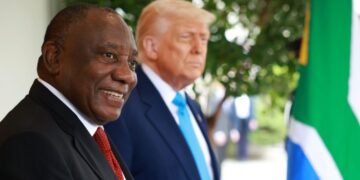
The diplomatic confrontation also intersects with South Africa’s evolving relationship with the United States, Israel’s closest ally. Relations between Pretoria and Washington have cooled since President Donald Trump’s return to office, amid disagreements over human rights narratives and political rhetoric. Both countries currently lack resident ambassadors, reflecting the fragility of their engagement. Analysts caution that while South Africa’s stance may invite external pressure, it is rooted in a consistent foreign policy tradition that prioritises multilateralism, international law and solidarity with liberation struggles.
From a pan African perspective, Pretoria’s actions resonate beyond bilateral ties. They reflect a broader continental debate about sovereignty, the limits of diplomatic conduct and Africa’s place in a global order often shaped by non African power centres. By foregrounding legal norms and historical experience, South Africa presents its decision as part of a wider African insistence on dignity, agency and adherence to shared rules, even amid polarised international politics.