Asubsea technology provider has secured contracts to supply advanced positioning systems for two deepwater energy developments located off the coasts of Angola and Brazil. The agreements highlight the increasing role of specialised underwater navigation technologies in large scale offshore infrastructure projects across the global South.
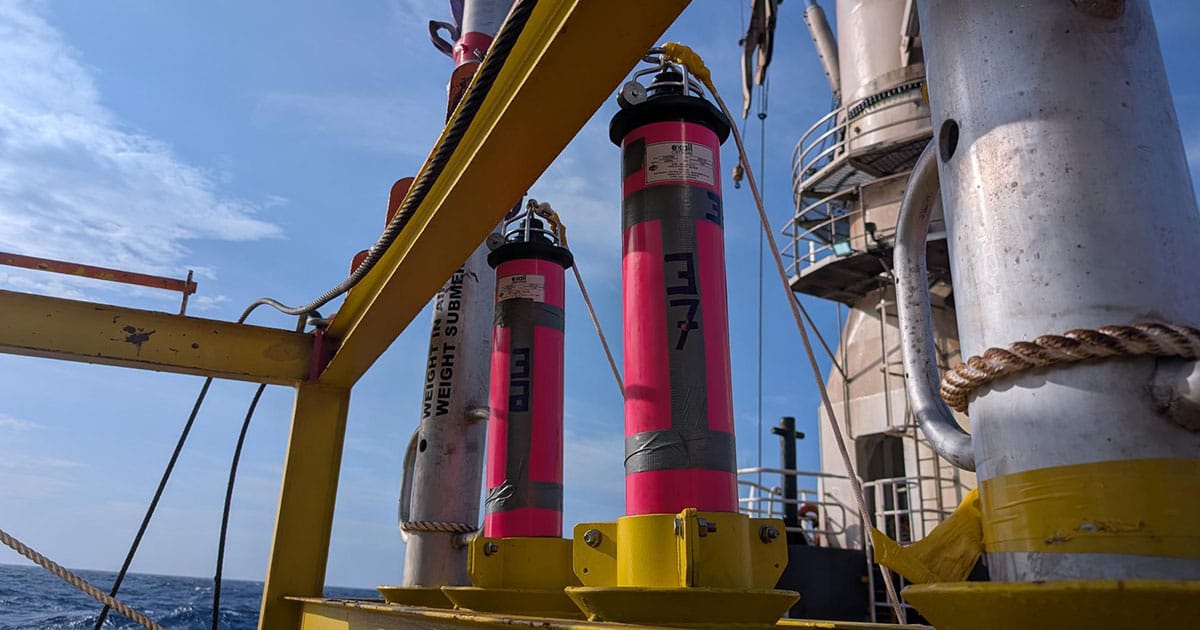
Exail Technologies, through its maritime robotics subsidiary Exail, confirmed that it will deliver long baseline subsea positioning systems for two major offshore developments. The company will supply more than seventy acoustic transponders alongside integrated navigation equipment designed to support subsea construction and survey activities at water depths reaching approximately 4,000 metres.
The projects themselves have not been publicly identified. However, they represent significant offshore developments in both the South Atlantic and the Gulf of Guinea, regions that continue to play a central role in global energy supply chains while also shaping emerging discussions about energy transitions in Africa and Latin America.



In Brazil, the company is supplying fifty six Canopus acoustic transponders paired with Rovins inertial navigation systems for what has been described as an ultra deepwater gas development. According to information published by Exail’s long baseline positioning solutions, such systems are designed to provide high accuracy underwater localisation by establishing a network of reference points on the seabed. These reference points allow remotely operated vehicles and subsea installation equipment to determine their position with high precision during construction and inspection activities.
Long baseline acoustic positioning systems operate by measuring the distance between subsea vehicles and multiple seabed transponders. This network forms a stable spatial reference framework that enables precise underwater navigation in environments where satellite based positioning systems cannot operate. Research on subsea navigation technologies indicates that LBL systems remain among the most accurate underwater positioning methods for offshore engineering tasks such as pipeline installation, subsea structure alignment and deepwater survey operations.
The Brazilian installation is expected to provide the primary positioning reference for several phases of subsea construction within the field development. These phases typically include the installation of subsea manifolds, pipelines and other infrastructure that connects wells to floating production facilities.

A separate contract relates to the expansion of existing offshore infrastructure in Angola, one of Africa’s largest oil producers. In this project Exail’s Ramses acoustic transceivers will be integrated with inertial navigation suites installed on remotely operated vehicles. These vehicles are routinely used for inspection, maintenance and construction work on subsea installations that may lie several kilometres beneath the ocean surface.
The integrated navigation system is intended to support the precise integration of new pipelines and subsea structures within a mature offshore oil field. Offshore expansion projects in Angola have become increasingly reliant on digital navigation and mapping technologies as operators extend the life of existing fields through infrastructure upgrades and tie back developments.
The positioning solution deployed in both projects combines acoustic long baseline navigation with inertial measurement systems. This hybrid configuration allows operators to reduce the number of seabed transponders required while maintaining positioning accuracy measured at the decimetre scale. According to the company, the approach can also reduce calibration time by approximately fifty per cent compared with conventional subsea positioning deployments.
Such improvements can translate into lower operational costs because fewer transponders and shorter calibration periods may reduce vessel time during installation campaigns. In deepwater operations where specialised vessels are required, time savings can have significant economic implications for offshore construction schedules.
Subsea positioning technology plays an essential role in contemporary offshore engineering. Academic research shows that the integration of acoustic navigation systems with inertial sensors improves reliability and accuracy in underwater environments where visual navigation and satellite positioning are not available. These systems support the safe installation of subsea infrastructure and are widely used in offshore oil and gas operations as well as in oceanographic research and subsea mining.
For African producers such as Angola, technological developments of this kind form part of a broader effort to sustain offshore production while navigating shifting global energy dynamics. The Gulf of Guinea remains one of the most important offshore petroleum provinces in the world and continues to attract investment in deepwater exploration and infrastructure upgrades.
At the same time, observers note that technological partnerships between global engineering firms and offshore operators can create opportunities for knowledge exchange and skills development within African maritime industries. As subsea engineering grows more complex, the demand for specialised technical expertise in navigation, robotics and offshore surveying is also increasing.

Exail stated that the latest contracts build upon its existing portfolio of subsea positioning projects worldwide. The company indicated that its technologies are intended to support both conventional hydrocarbon developments and broader maritime activities in challenging offshore environments.
The developments in Angola and Brazil illustrate how offshore energy projects increasingly depend on sophisticated subsea technologies that operate beyond the reach of traditional navigation systems. In regions such as the South Atlantic and the Gulf of Guinea, these technologies are becoming integral to the infrastructure that underpins global energy production while also shaping the evolving technological landscape of offshore industries.