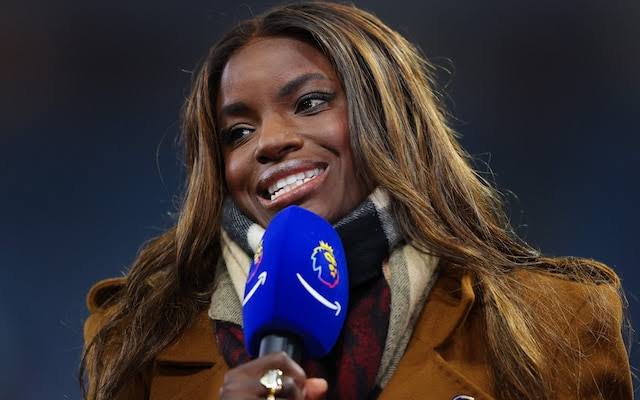
Former England international footballer and respected pundit Eni Aluko has been awarded more than £300,000 in damages and legal costs after winning a libel case against former football manager Joey Barton over posts published on social media platform X.
The ruling by the High Court in London brings an end to months of intense public scrutiny and personal attacks directed at the Nigerian-born football figure. Barton had published dozens of posts about Aluko in 2024, including claims that she had exploited allegations of racism and bullying and an image mocking her by superimposing her face onto that of a convicted serial killer.
During proceedings, the court heard that between January and August 2024 Barton posted 48 messages targeting Aluko in what her legal team described as a deliberately targeted public campaign of vilification. The court ultimately ruled in her favour, with Barton accepting that the campaign amounted to harassment and that the posts should not have been made.



Under the court order, Barton must pay £339,000 in damages and legal costs, with an initial payment of £100,000 plus interest due by 24 March.

For Aluko, the judgment represents more than just a legal victory. It is a moment of vindication after a prolonged period in which the headlines often focused on controversy rather than her influence and achievements in the global game.
Born in Nigeria and raised in the United Kingdom, Aluko built one of the most distinguished careers of any African-born woman in modern football. As a player she earned more than 100 caps for England, represented top clubs across Europe and the United States, and helped raise the profile of the women’s game during its formative professional era.

Since retiring, her impact has expanded far beyond the pitch.
Aluko has become a prominent broadcaster, lawyer and football executive, and is now part of the investment group Mercury 13, which focuses on acquiring and developing women’s football clubs globally. Through this role she is connected to projects involving clubs such as Bristol City Women in England and Como Women in Italy, part of a growing network aimed at strengthening the commercial and sporting foundations of women’s football.
The strategy behind Mercury 13 is to build a multi club model dedicated to the women’s game, investing in infrastructure, talent pathways and global fan engagement as women’s football experiences rapid growth across Europe and beyond.
For Aluko, the focus now lies firmly on the future.
Her work with investors and club leadership groups places her in the boardrooms shaping the next phase of the sport, expanding women’s leagues, strengthening club ownership structures and identifying the next generation of talent across England, Italy and Africa.
From an African perspective, the story resonates far beyond a courtroom. It reflects the broader narrative of an African born leader navigating global sport while confronting the pressures that often accompany visibility and influence.
Despite the noise surrounding the controversy, Aluko’s trajectory continues to move forward from international player to executive, investor and advocate for the women’s game.
For many across the continent, the ruling serves as a reminder that reputations built over decades cannot easily be overshadowed by a moment of public dispute. Instead, the case underscores resilience and the power of reclaiming one’s narrative.
As women’s football enters a new era of growth and investment, Eni Aluko remains firmly positioned among the figures helping to shape its future, searching for talent, building clubs and expanding opportunities for the next generation of female players across three continents.