Ethiopia’s electricity generation capacity has expanded markedly over the past decade, reflecting a broader continental shift towards infrastructure-led development and energy sovereignty. Official figures from Ethiopian Electric Power indicate that installed capacity has risen from approximately 4,462 megawatts to 9,752 megawatts within seven years, a trajectory consistent with the country’s long term energy planning and large scale public investment in renewables. This growth positions Ethiopia among the most significant power producers in sub Saharan Africa, particularly in the domain of renewable energy.
Electricity access has also improved, though more gradually. National access levels have increased to just above half of the population, aligning with estimates from institutions such as the World Bank, which place access at around 55 percent in recent years. This expansion reflects sustained efforts to extend grid infrastructure alongside off grid solutions, particularly in rural areas where access gaps remain most pronounced. The national transmission network now exceeds 21,000 kilometres, indicating a substantial scaling of distribution capacity across diverse and often challenging terrains.
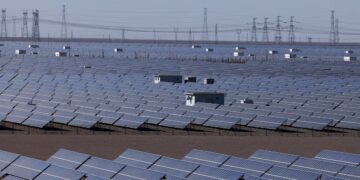
The structure of Ethiopia’s energy mix remains heavily weighted towards hydropower, which continues to account for the overwhelming majority of electricity generation. Wind energy contributes a smaller but growing share, while geothermal and solar remain under development despite the country’s considerable resource potential. This reliance on hydropower situates Ethiopia within a broader African pattern in which water resources underpin national energy systems, while also raising ongoing questions about climate variability and long term resilience.



Central to recent capacity gains is the Grand Ethiopian Renaissance Dam, a project that has come to symbolise both national ambition and regional interdependence. With an expected generation capacity exceeding 5,000 megawatts, the dam is among the largest hydropower installations on the continent. Its commissioning has significantly augmented Ethiopia’s domestic supply while also enabling cross border electricity exports to neighbouring countries such as Kenya and Sudan. Further details on the project can be accessed via the Grand Ethiopian Renaissance Dam overview.


Government strategy increasingly emphasises diversification within the renewable sector, with ongoing investments in wind corridors, geothermal fields and solar installations. This aligns with continental frameworks such as the African Union’s Agenda 2063, which foregrounds energy as a cornerstone of industrialisation and regional integration. Ethiopia’s approach reflects an attempt to balance rapid expansion with sustainability, even as financing constraints, climate risks and population growth continue to shape the pace and distribution of access.
From a pan African perspective, Ethiopia’s energy trajectory underscores the importance of domestically driven infrastructure development in reshaping narratives around growth and capability on the continent. While challenges remain, particularly in ensuring equitable access and system resilience, the scale of expansion illustrates how African states are increasingly defining their own development pathways through strategic investment in critical sectors.