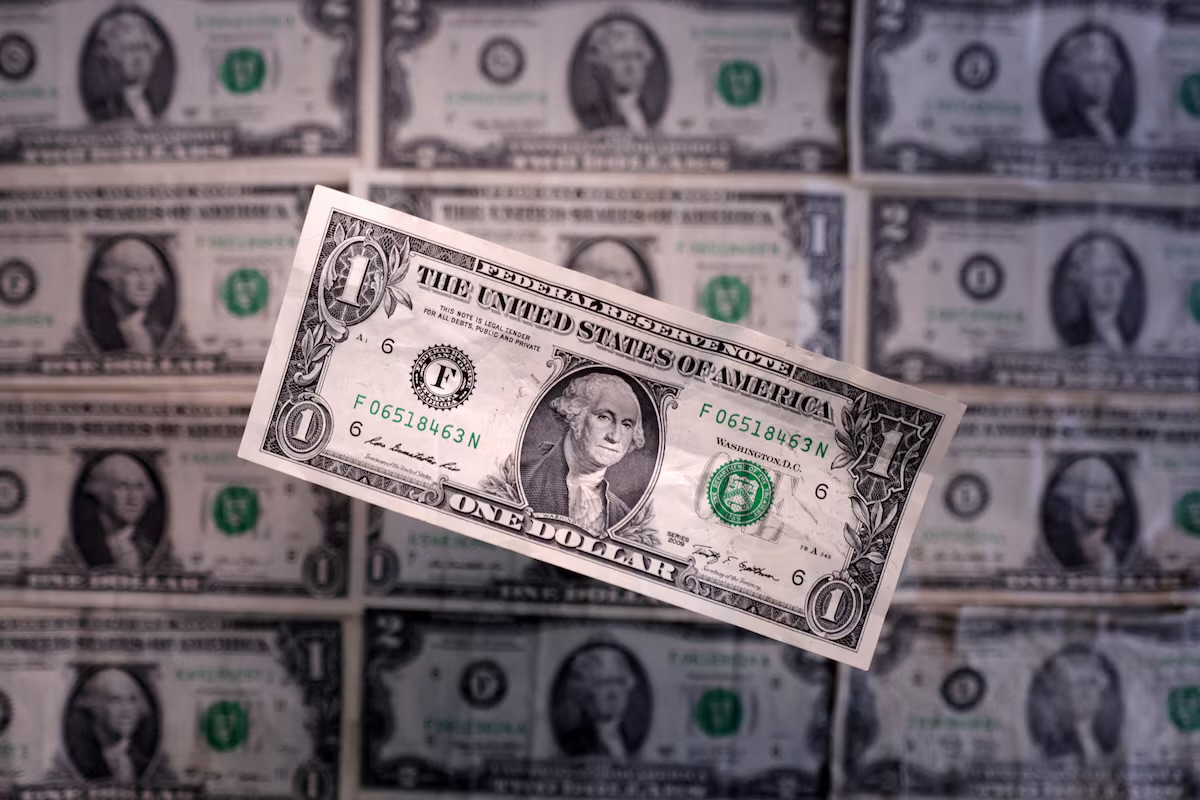
The dollar struggled to gain ground against major peers on Thursday as traders increased bets that the Federal Reserve will cut interest rates next month. The shift in expectations followed comments by New York Fed chief John Williams, who suggested that a reduction was possible, and was compounded by political pressure from President Donald Trump to reshape the central bank.
The dollar index, which tracks the U.S. currency against six major peers, was steady at 98.145 after two straight sessions of losses. The euro traded at $1.1640, little changed on the day, while sterling edged higher to $1.3505. Against the Swiss franc the dollar slipped 0.14 percent to 0.8015, and it fell 0.19 percent to 147.11 yen. The greenback also eased slightly to 7.1495 yuan in offshore trading.
Williams, speaking in a CNBC interview on Wednesday, said every meeting remained “live” for policy action, underscoring the Fed’s data-dependent stance. He noted that risks had become more balanced but emphasized that upcoming inflation and labor data would guide the decision. Traders are now assigning nearly 89 percent odds of a quarter-point cut at the September 16-17 meeting, with cumulative easing of 55 basis points priced in by year-end, according to LSEG data.



That outlook dragged two-year Treasury yields, which are closely tied to interest rate expectations, to their lowest level since May 1. The decline in yields added to downward pressure on the dollar, extending its recent weakness.
Trump’s growing influence over monetary policy is also weighing on sentiment. The president has intensified his campaign to reshape the Fed, attempting to dismiss Governor Lisa Cook and replace her with a loyalist more aligned with his preference for aggressive rate cuts. Cook has sued to keep her seat, setting the stage for a potential legal battle that could drag on for months.
Analysts at DBS warned that if Trump succeeds in sidelining Cook before March, when the twelve reserve bank presidents are reappointed by the board of governors, it could open the door to a more dovish policy tilt. They suggested that in such a scenario, markets might even see rate cuts at every meeting or larger half-point reductions.

The political backdrop in Europe did little to bolster the U.S. currency. France’s prime minister unexpectedly called a confidence vote for next month that is likely to topple his minority government, but the euro held steady despite the uncertainty.
In Asia, Japanese developments further complicated the dollar’s path. Chief trade negotiator Ryosei Akazawa canceled a trip to Washington at the last minute, delaying an announcement on the details of a $550 billion Japanese investment pledge tied to a tariff deal. A government spokesperson said unresolved administrative issues needed further discussion before any final commitment.
Meanwhile, commodity and digital currencies moved largely sideways. The Australian dollar held firm at $0.6507, after rising 0.4 percent over the previous two sessions. Bitcoin inched 0.4 percent higher to trade just above $112,900.
With the Fed’s preferred inflation gauge, the PCE price index, due on Friday and the monthly payrolls report scheduled for next week, investors are bracing for a volatile run into the September meeting. Markets will be watching closely not only the data but also the political battle surrounding the Fed, with the dollar caught in the middle of shifting economic signals and Washington power plays.