Sunday, June 28, 2026
  • Login
The Southern African Times
  • Home
  • Southern Africa
  • Business
    • African Start ups
    • African Continental Free Trade Area
  • Technology
    • Lifestyle
      • Health
      • Culture
      • Food and Drink
      • Entertainment
  • Opinion
  • Sports
  • SAT Jobs
    • Events
  • About Us
    • Advertise with Us
    • Contact Us
No Result
View All Result
  • Home
  • Southern Africa
  • Business
    • African Start ups
    • African Continental Free Trade Area
  • Technology
    • Lifestyle
      • Health
      • Culture
      • Food and Drink
      • Entertainment
  • Opinion
  • Sports
  • SAT Jobs
    • Events
  • About Us
    • Advertise with Us
    • Contact Us
No Result
View All Result
The Southern African Times
No Result
View All Result
Home Opinion

Defaulting on Africa’s future

by SAT Reporter
October 17, 2023
in Opinion
0
Defaulting on Africa’s future

In 2017, the International Monetary Fund categorized 15 Sub-Saharan African countries as being in debt distress or at high risk of it. Since then, economic shocks induced by the COVID-19 pandemic, dramatic spikes in food and fuel prices owing to the Ukraine war, and the rising dollar have exacerbated the crisis. But, even as 23 countries in the region now face unsustainable debt burdens, very few have defaulted. Only two states – Ghana and Zambia – stopped servicing their external debts, while three others have sought to restructure their obligations – Chad, Ethiopia, and Malawi.

Why has the predicted wave of defaults not materialized? Did the initial assessments exaggerate the risks? Have these countries and their creditors found some way to ease the pain of unsustainable debt? As cheerleaders of economic development in Africa, should we celebrate, or at the very least, relax a little?

On the contrary, there is ample reason to worry. Even after G20 countries provided temporary debt relief, and the International Monetary Fund (IMF) issued $650 billion of special drawing rights (SDRs, the Fund’s reserve asset) to unlock extra liquidity, African governments have had to slash their already meager spending on health, education, and public investment in order to pay their external creditors. To avoid debt default, African finance ministers are defaulting on their obligations to future generations.


ADVERTISEMENT

In Kenya, debt-service costs tripled in the last six years and now account for nearly 60 percent of public revenue. Over the same period, development spending, including on education and health, was halved, and some ministries are in arrears. As the chief economic advisor to the Kenyan president tweeted, “Salaries or default? Take your pick.”

In Sierra Leone, one of the world’s poorest countries, real (inflation-adjusted) public spending per person is expected to be 20 percent lower this year than in 2015. On the other hand, debt-service payments have more than doubled over the same period. In the four years before its default, Zambia cut public spending by 20 percent.
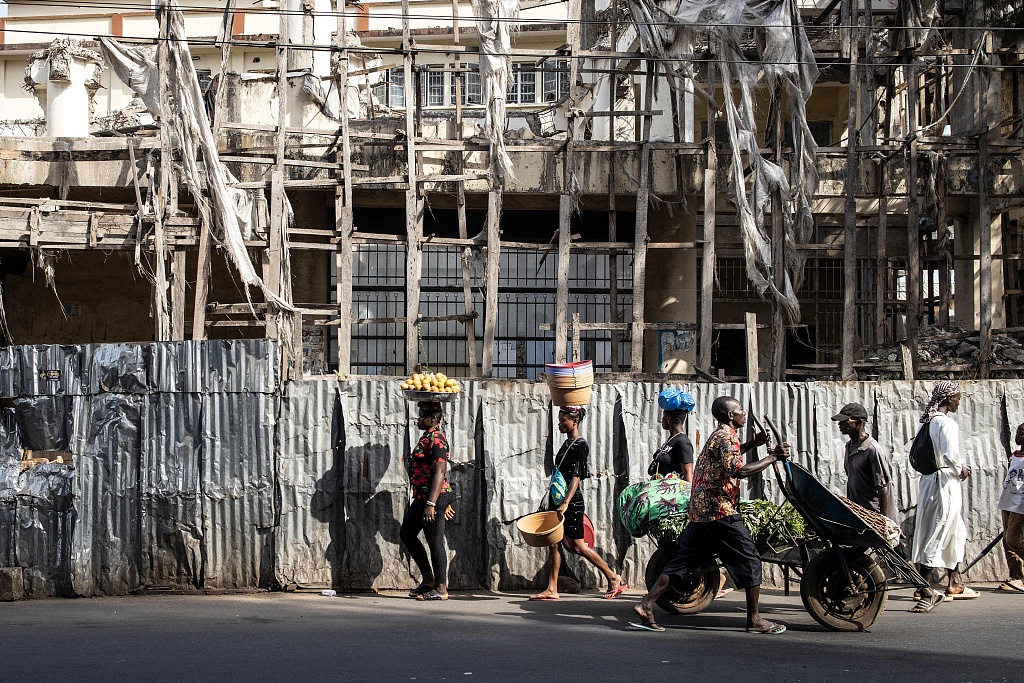
These are not isolated cases. Today, 20 low- and lower-middle-income countries are spending more than a quarter of government revenue on external debt service, and these costs will rise further next year, when Eurobonds issued by African governments hit a wall of maturities. Most of these countries are also paying substantial amounts to service domestic debts that helped finance the fight against COVID-19. And all of them are underspending on health and education – essential building blocks to equip their young people for a better future.

When faced with the choice between servicing external loans and funding much-needed social programs, policymakers almost always opt to pay creditors. After all, a default has deep and lasting financial consequences. A country that cannot repay its debt to international creditors loses the ability to borrow from capital markets for five years. Moreover, it can take many months before a low-income economy that has defaulted sees any relief, owing to problems with the G20 Common Framework for Debt Treatments, or support from international institutions like the IMF.

Default also has a human cost. Poverty levels spike by 30 percent immediately after a default and remain elevated for a decade, infant deaths rise by 13 percent, and surviving children face shorter life expectancy, according to a World Bank study.

Any government contemplating a default may also face profound political consequences. A finance minister is 33 percent more likely to be replaced in the year after a default, which is commonly viewed as an admission of failure by fellow policymakers and the public at large. Moreover, the international forums where sovereign-debt restructuring occurs have subtle and not-so-subtle ways of reminding government officials of their irresponsibility. No wonder the beleaguered finance minister postpones a default long past the point where the country would benefit from a preemptive restructuring of its external debt obligations.

Such costs may explain why so few countries have defaulted, even under extreme fiscal pressure. But they do not address the long-term price that Africa, and the world, will pay for a generation of under-educated children with poorer health outcomes – the African workforce of tomorrow. The fundamental problem is that many of these countries need affordable and predictable financing to sustain economic- and social-development programs. But the international financial institutions and member countries of the Organization for Economic Cooperation and Development that traditionally offered cheap funding have pulled back over the past decade, and have been replaced by more expensive commercial lenders and newer bilateral creditors.

Although the international community should do everything in its power to improve and streamline the sovereign-debt restructuring process, the real solution is to ensure that debt-distressed African countries have adequate financing to invest in health, education, and critical infrastructure. If they must continue paying their creditors, at least it won’t be at the expense of Africa’s future.

Bernat Camps Adrogue contributed to this article and provided research support.

Masood Ahmed is the President of the Center for Global Development. The article reflects the author’s opinions and not necessarily the views of The Southern African Times. 

Previous Post

Readying the multilateral development banks for the climate fight

Next Post

Zimbabwe Ranks as Seventh Largest Global Diamond Producer

SAT Reporter

Related Posts

The Insurance Hack More Drivers Should Know
Opinion

The Insurance Hack More Drivers Should Know

by Times Reporter
June 22, 2026
Southern African Times Announces Brendan Amadi as Recipient of the 2026 Editorial Recognition of the Year Award
The Editorial Board

Southern African Times Announces Brendan Amadi as Recipient of the 2026 Editorial Recognition of the Year Award

by The Editorial Board
June 19, 2026
LONG READ | No Longer the World’s Dustbin: China’s Waste Ban and Africa’s Circular Economy Moment
Opinion

LONG READ | No Longer the World’s Dustbin: China’s Waste Ban and Africa’s Circular Economy Moment

by Times Reporter
June 12, 2026
OPINION | The Investors Southern Africa Refuses to See
Opinion

OPINION | The Investors Southern Africa Refuses to See

by Times Reporter
June 14, 2026
Faith, Miracles and the Crisis of Religious Authenticity
Opinion

Faith, Miracles and the Crisis of Religious Authenticity

by Brendan Amadi
June 10, 2026
Next Post
Zimbabwe Ranks as Seventh Largest Global Diamond Producer

Zimbabwe Ranks as Seventh Largest Global Diamond Producer

Browse by Category

  • Africa AI
  • African Continental Free Trade Area
  • African Debt
  • African Start ups
  • Agriculture
  • AI Africa
  • Algeria
  • All News
  • Analysis
  • Angola
  • Arts / Culture
  • Asia
  • BOTSWANA
  • Botswana
  • BREAKING NEWS
  • BRICS
  • Burkina Faso
  • Burundi
  • Business
  • Business
  • Business Wire
  • Cameroon
  • Central Africa
  • Chad
  • China
  • Climate Change
  • Climate Changev
  • Community
  • Congo Republic
  • Conservation
  • Côte d’Ivoire
  • COVID 19
  • CRYPTOCURRENCY
  • Culture
  • Democratic Republic of Congo
  • Diplomacy
  • Eastern Africa
  • Economic Development
  • Economy
  • Education
  • Egypt
  • Elections 2024
  • Energy
  • Entertainment
  • Environment
  • Eritrea
  • Ethiopia
  • Europe
  • Fashion
  • Feature
  • Finance
  • Financial Inclusion
  • Food
  • Food and Drink
  • Foods
  • GABON
  • Ghana
  • Global
  • Global Africa
  • Guinea
  • Health
  • Humanitarian Aid
  • Immigration
  • in Southern Africa
  • International news
  • International Relations
  • Investment
  • Ivory Coast
  • Just In
  • Kenya
  • Lesotho
  • Libya
  • Life Style
  • Lifestyle
  • Literature
  • Malawi
  • Malawi
  • Mali
  • Markets
  • Mauritius
  • Middle East
  • Mining in Africa
  • Morocco
  • Mozambique
  • Namibia
  • Niger
  • niger
  • Nigeria
  • North Africa
  • North-Eastern Africa
  • Obituaries
  • Obituary
  • Opinion
  • PARTNER CONTENT
  • Politics
  • Property
  • Racism
  • Rwanda
  • Rwanda
  • SADC
  • SAT Interviews
  • SAT Investigation
  • SAT Jobs
  • Saudi Arabia
  • Senegal
  • Seychelles
  • Somaliland
  • South Africa
  • South Sudan
  • Sports
  • Startup Africa
  • STOCK EXCHANGE
  • Sudan
  • Sustainability
  • Sustainablity
  • Tanzania
  • Technology
  • Telecommunications
  • The Editorial Board
  • The Power Of She
  • Togo
  • Trade
  • Travel
  • Travel
  • Tunisia
  • Uganda
  • Uncategorized
  • Wealth
  • West Africa
  • World
  • World
  • Zambia
  • ZAMBIA
  • Zimbabwe
  • ZIMBABWE

Browse by Tags

#NewsUpdate #SouthAfrica #SouthernAfricanTimes #TheSouthernAfricanTimes AfCFTA africa African Continental Free Trade Area African development African Development Bank African economies African economy African Union Agriculture Angola Botswana China Climate change Cyril Ramaphosa Economic Development economic growth energy transition fiscal policy governance industrialisation Inflation Infrastructure Infrastructure Development International relations Investment Kenya Mozambique Namibia news Nigeria Regional Integration renewable energy Rwanda SADC South Africa Southern Africa sustainable development Tanzania United States Zambia Zimbabwe
ADVERTISEMENT

WHO WE ARE

The Southern African Times is a regional bloc digital newspaper that covers Southern African and world news. The paper also gives a nuanced analysis on news and covers a wide range of reporting which include sports, entertainment, foreign affairs, arts and culture.

Welcome Back!

Login to your account below

Forgotten Password?

Retrieve your password

Please enter your username or email address to reset your password.

Log In
  • Home
  • Southern Africa
  • Business
    • African Start ups
    • African Continental Free Trade Area
  • Technology
    • Lifestyle
      • Health
      • Culture
      • Food and Drink
      • Entertainment
  • Opinion
  • Sports
  • SAT Jobs
    • Events
  • About Us
    • Advertise with Us
    • Contact Us
Not enough quota to unlock this post
Unlock left : 0
Are you sure want to cancel subscription?