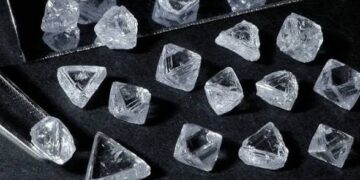
De Beers Group reported a significant year-on-year increase in diamond production for the third quarter of 2025, achieving a 38% rise to 7.7 million carats. The surge in output was primarily driven by robust operational activity in Botswana, particularly at the Jwaneng mine—an asset co-owned with the Government of Botswana under the Debswana partnership. The mine operated at full capacity during the quarter and processed higher-grade ore in anticipation of scheduled maintenance in the final quarter.
Botswana, a long-standing anchor of Africa’s diamond sector, recorded a 51% increase in production, rising to 6 million carats. This performance reflects not only the operational readiness of Jwaneng but also the resumption of production at the Orapa mine following earlier planned maintenance. The scale and strategic management of these operations continue to position Botswana as a central force in global diamond supply, while also challenging conventional narratives that overlook Africa’s role as a sophisticated driver of mineral production and resource diplomacy.
Elsewhere, De Beers’ output presented a mixed picture. Production in Namibia, managed under its Namdeb joint venture, remained stable at 0.5 million carats. In South Africa, production rose by 28% to 0.7 million carats due to increased processing of underground ore with higher grades. Conversely, Canada experienced a 15% decline in production, totalling 0.5 million carats, attributed to the scheduled treatment of lower-grade ore.



Despite the rise in output, De Beers noted persistent challenges in rough diamond trading. Demand that had previously shown signs of recovery was tempered by the imposition of United States tariffs on diamond imports from India, the principal global hub for cutting and polishing. This policy shift illustrates the increasing entanglement between geopolitics and commodity trade, with ramifications for African producers who remain dependent on the global midstream for beneficiation.
However, a measure of relief came in September when the US listed natural diamonds under Tariff Annex III, granting exemptions for countries with preferential trade agreements. The European Union has already secured such an exemption, and the African industry awaits clarity on how these shifts will impact the continent’s producers and exporters.
Consumer appetite for natural diamond jewellery remained steady in the United States and broadly stable globally. De Beers conducted two Sights (closed sales events) during the quarter, selling 5.7 million carats (4.6 million on a consolidated basis) and generating a consolidated revenue of US$700 million. In contrast, Q3 2024 saw only one Sight, with sales amounting to 2.1 million carats (1.7 million consolidated) and revenue of US$213 million.
While the average realised price per carat for the year declined by 3% to US$155, reflecting a 14% dip in the rough price index, this was partially offset by stronger demand for higher-value stones during the second and third quarters. These figures suggest that while macroeconomic conditions remain volatile, premium-grade African diamonds continue to hold their value in key markets.

De Beers has retained its full-year production guidance of 20 to 23 million carats on a 100% basis and expects unit costs to remain near US$94 per carat. The company affirmed it would continue to assess global trading conditions and calibrate operations accordingly.
As diamond producers across the continent navigate economic headwinds and shifting geopolitical landscapes, Botswana’s operational success exemplifies how strategic resource governance, sovereign ownership models, and infrastructure readiness can serve as levers of resilience. Rather than reinforcing a narrow, extraction-centric narrative, such outcomes underscore the continent’s evolving agency in shaping the future of its mineral wealth. The story of Africa’s diamonds—rooted in complexity, history, and innovation—continues to evolve beyond the margins of traditional discourse.