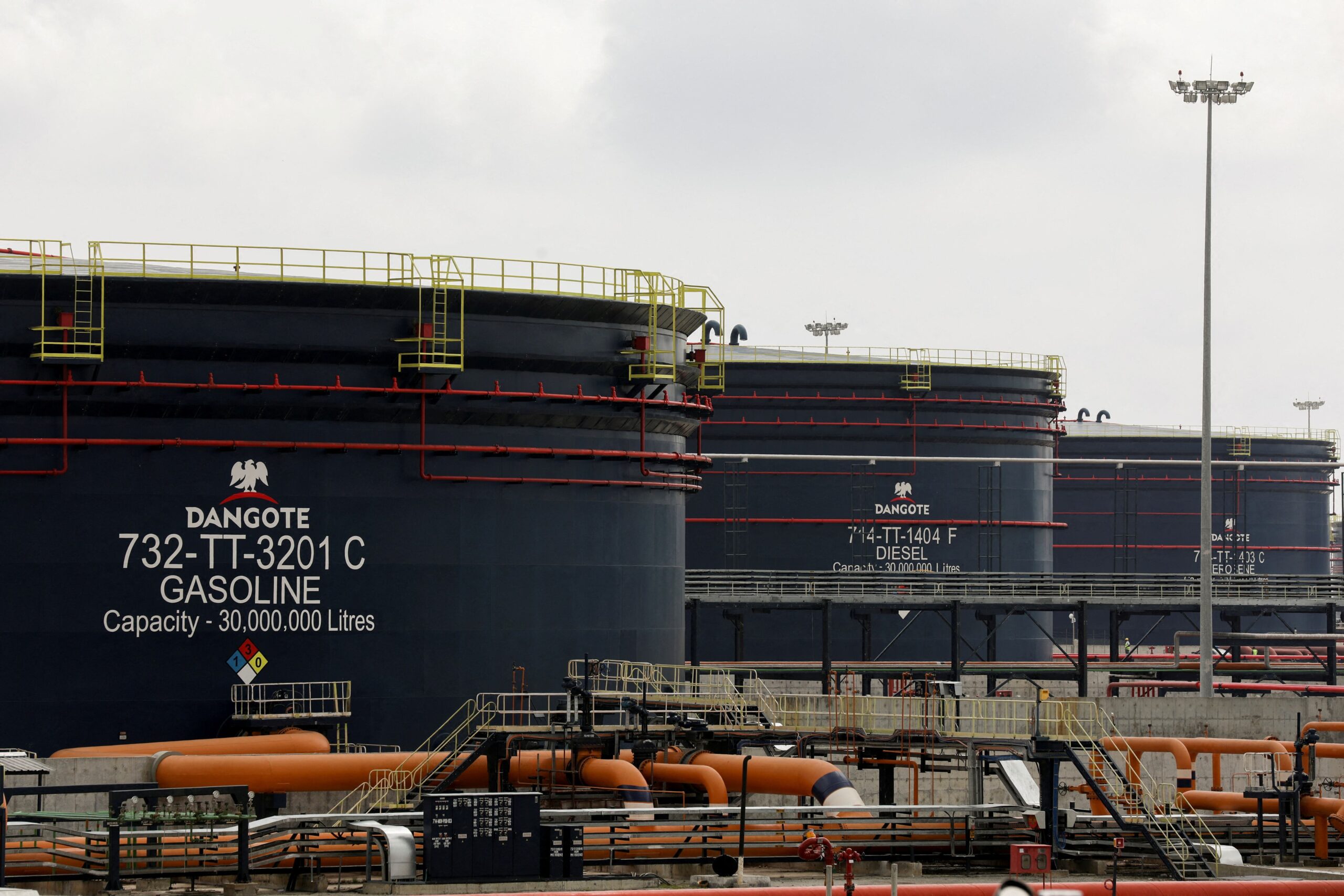
Nigeria’s beleaguered energy sector received a significant boost on Monday as the Dangote Oil Refinery commenced processing gasoline after protracted delays attributed to crude shortages. This development is poised to have far-reaching implications for the country’s economy, as Africa’s largest oil refinery, located on the fringes of Lagos, begins to address Nigeria’s chronic dependence on imported petroleum products.
The $20 billion refinery, an ambitious endeavour spearheaded by Aliko Dangote, Africa’s richest man, initiated its operations in January. The initial output comprised naphtha and jet fuel, but the advent of gasoline processing marks a pivotal moment in the refinery’s trajectory. With a formidable processing capacity of 650,000 barrels per day, the Dangote refinery stands as a cornerstone of Nigeria’s strategy to attain energy self-sufficiency, particularly in light of the acute financial strain currently afflicting the Nigerian National Petroleum Corporation (NNPC).
“We are testing the product [gasoline] and subsequently it will start flowing into the product tanks,” stated Devakumar Edwin, Vice President at Dangote Industries Limited. However, Edwin refrained from specifying the exact timeline for when the gasoline would be available in the domestic market.



The significance of this development cannot be overstated. Nigeria, despite being the continent’s leading oil producer, has long been hamstrung by the dismal state of its domestic refineries, necessitating a costly and unsustainable reliance on fuel imports. The commencement of gasoline production at the Dangote refinery is anticipated to alleviate some of the pressure on NNPC, which has struggled to maintain a stable fuel supply amid mounting debts.

NNPC, the country’s sole importer of gasoline, is reportedly the exclusive buyer of the refinery’s gasoline output. Edwin noted, “If no one is buying it, we will export it as we have been exporting our aviation jet fuel and diesel.” This pragmatic stance underscores the precarious financial situation of NNPC, which has accumulated an eye-watering $6 billion in debt to oil traders since January. This financial burden has severely impaired its ability to supply the local market, where fuel queues have become a grimly familiar sight since July.
The removal of fuel subsidies last year has further exacerbated the situation, with prices soaring by 45% from the official price of 617 naira ($0.3942). The arrival of gasoline from the Dangote refinery could offer some respite, though significant challenges remain.
Clementine Wallop, Director of Sub-Saharan Africa at political risk consultancy Horizon Engage, observed, “The news that Dangote is processing gasoline couldn’t come at a more crucial time given NNPC’s statement about its difficulties securing imported supply due to financial strain.” She added, “This prompts the question of how NNPC will manage purchasing from Dangote, and impresses the need for greater transparency in its finances.”
Indeed, transparency—or the lack thereof—has been a perennial issue in Nigeria’s oil sector, with NNPC’s opaque financial practices long a source of concern for industry watchers and analysts alike. The Dangote refinery, while offering a potential lifeline, also casts a spotlight on the broader structural issues that continue to plague Nigeria’s energy sector.
As Nigeria navigates these turbulent waters, the commencement of gasoline production at the Dangote refinery represents both a beacon of hope and a stark reminder of the challenges that lie ahead. The coming months will reveal whether this colossal project can deliver on its promise to transform Nigeria’s energy landscape—or whether it will merely underscore the scale of the task at hand.