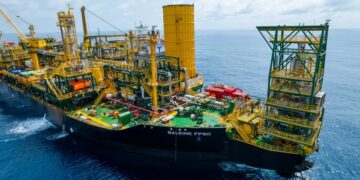
The Dangote Oil Refinery, an ambitious project established by Nigerian business magnate Aliko Dangote, has reportedly achieved the capacity to produce winter diesel suitable for the European market, according to statements from company executive Edwin Devakumar. This development marks a significant milestone for the 650,000-barrel-per-day refinery, located on the outskirts of Lagos, which began operations in January and has rapidly scaled up its production capabilities.
With the facility now capable of reaching production levels of 550,000 barrels per day, it is poised to export a range of refined products, including winter diesel, naphtha, jet fuel, and petrol, as well as carbon black feedstock and polypropylene. Since commencing the production of petrol in September, the refinery has built up a substantial stockpile of 500 million litres, much of which is now set for distribution as market conditions permit. Devakumar confirmed reports that the facility plans to dispatch its first gasoline export—a shipment of approximately 200,000 metric tonnes—aimed at markets in West Africa and the Caribbean.
This prospective integration into the European diesel market underscores the Dangote Refinery’s capacity to operate on a global scale, presenting a noteworthy addition to the competitive landscape of the oil refining industry. The refinery has already established export relationships for a range of its products, with Ghana among the countries expressing an interest in its diesel and aviation fuel.
Domestically, the refinery’s operations reflect a dynamic and evolving market. Following a recent pricing adjustment by the state-owned Nigerian National Petroleum Corporation (NNPC), the refinery is no longer bound by exclusive distribution agreements with NNPC, allowing other local distributors to engage directly with the facility. In line with this shift, the Independent Petroleum Marketers Association of Nigeria (IPMAN), which oversees more than 150,000 fuel outlets nationwide, has secured an agreement to source products directly from the Dangote Refinery at what IPMAN described as “cheaper” prices.
Despite these recent advances, the distribution of petrol within Nigeria continues to pose challenges, due in part to pricing issues that have affected the refinery’s ability to fully meet local demand. As a result, the refinery has been exporting the majority of its output of naphtha, diesel, and jet fuel, with petrol prices across Nigeria currently averaging approximately 1,090 naira ($0.65) in Lagos and closer to 1,200 naira in Abuja.
The Dangote Refinery’s emergence as a major player in both regional and international markets is already beginning to reshape the landscape of oil refining and distribution within Africa, with the potential for broader impacts on global supply dynamics. Given the refinery’s significant production scale and robust export capacity, it may well influence fuel supply patterns within West Africa and potentially challenge established sources of refined fuel products in Europe and beyond.