The Democratic Republic of Congo (DRC) and Rwanda have submitted a draft peace proposal as part of a U.S.-mediated initiative to end decades of conflict in eastern Congo, according to Massad Boulos, senior adviser to U.S. President Donald Trump for Africa and the Middle East.
The proposal aims to establish the groundwork for a trilateral accord involving the United States, with the intention of restoring stability in the region and facilitating billions of dollars in Western investments in mining and infrastructure projects. The eastern Congo region is renowned for its vast reserves of critical minerals such as tantalum, cobalt, copper, lithium, and gold.
The draft submission follows a prior agreement between the Rwandan and Congolese foreign ministers, reached in Washington last month during a meeting with U.S. Secretary of State Marco Rubio. The ministers had committed to submitting draft terms by 2 May. While neither Kinshasa nor Kigali has formally confirmed that the proposal was filed, Boulos posted on the social platform X on Monday that a draft had indeed been received from both parties and called it “an important step” towards peace.



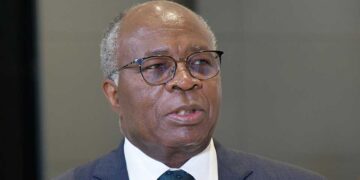
However, some ambiguity remains. Rwandan Foreign Minister Olivier Nduhungirehe noted on Saturday that the two sides’ contributions “have not yet been consolidated,” suggesting ongoing technical or political divergences. Nevertheless, U.S. officials plan to host further negotiations in mid-May in Washington, where Secretary Rubio is expected to meet both foreign ministers again in pursuit of a finalised agreement.
The United States has linked the peace process to two bilateral economic deals with the DRC and Rwanda. These agreements are designed to facilitate large-scale investment by American and allied firms in Congolese mining operations and in Rwandan mineral processing infrastructure. All three agreements — the peace accord and two economic accords — are expected to be signed concurrently within the next two months at a ceremony that may include President Trump.
Despite this diplomatic progress, the situation in eastern Congo remains dire. The M23 rebel group, long accused by the United Nations and Western governments of receiving material support from Rwanda, continues its military campaign. Rwanda maintains it has acted in self-defence against Congolese forces and militias linked to perpetrators of the 1994 Rwandan genocide.
On Saturday, Congolese army spokesperson Mak Hazukay confirmed that M23 forces had seized control of Lunyasenge, a strategically located town near Lake Edward. The Congolese military, Hazukay said, “reserves the right to retaliate”.

While the U.S.-mediated talks exclude M23, the rebel alliance’s spokesperson, Lawrence Kanyuka, told Reuters that “we encourage any peace initiative”. Separate negotiations facilitated by Qatar between the Congolese government and M23 have made limited headway. Though the two parties agreed in April to “work towards peace”, insiders have described the pace as sluggish and progress as minimal.
The situation highlights the layered complexity of the conflict in the Great Lakes region, where longstanding ethnic tensions, historical grievances, and transnational economic interests converge. The coming weeks will prove critical, as international stakeholders seek to consolidate a peace framework that includes both high-level diplomacy and tangible security improvements on the ground.