Wednesday, May 13, 2026
  • Login
The Southern African Times
  • Home
  • Southern Africa
  • Business
    • African Start ups
    • African Continental Free Trade Area
  • Technology
    • Lifestyle
      • Health
      • Culture
      • Food and Drink
      • Entertainment
  • Opinion
  • Sports
  • SAT Jobs
    • Events
  • About Us
    • Advertise with Us
    • Contact Us
No Result
View All Result
  • Home
  • Southern Africa
  • Business
    • African Start ups
    • African Continental Free Trade Area
  • Technology
    • Lifestyle
      • Health
      • Culture
      • Food and Drink
      • Entertainment
  • Opinion
  • Sports
  • SAT Jobs
    • Events
  • About Us
    • Advertise with Us
    • Contact Us
No Result
View All Result
The Southern African Times
No Result
View All Result
Home Opinion

China-Russia summit: What economic goals ahead?

by SAT Reporter
March 20, 2023
in Opinion
0
China-Russia summit: What economic goals ahead?

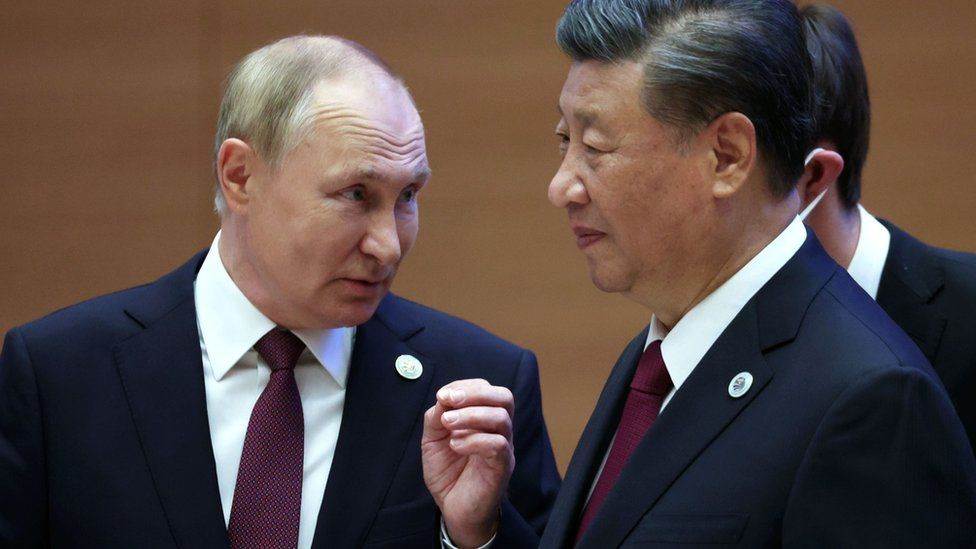
The visit of Chinese President Xi Jinping to Russia to meet Russian President Vladimir Putin is likely to feature a wide range of issues for discussion, with bilateral economic cooperation being one of the most critical areas that will need an in-depth analysis and an ambitious action plan.

As stated by the Chinese president in his article titled “Forging Ahead to Open a New Chapter of China-Russia Friendship, Cooperation and Common Development,” published in the Russian media on March 20, both countries “need to raise both the quality and quantity of investment and economic cooperation and step up policy coordination to create favorable conditions for the high-quality development of our investment cooperation.”

The track-record of intensifying the China-Russia economic cooperation in 2022 will need to be assessed with due consideration with regard to both the achievements as well as those areas where there remains substantial scope for boosting bilateral ties.


ADVERTISEMENT

On the bright side, there is the record-high trade turnover between China and Russia posted in 2022. A figure of around $190 billion in trade turnover comes close to the newly established $200 billion target for bilateral trade set for 2024. With annual growth in trade turnover reaching 34.3 percent in 2022, the momentum appears strong for the $200 billion target to be reached well ahead of schedule.

China’s optimization of COVID-19 measures and the liberalization of transportation regulations (including with respect to direct flights between China and Russia) will likely boost bilateral trade further, including in the services sector (most notably in the tourist segment).

On the other hand, figures on investment from China to Russia, most importantly long-term foreign direct investment (FDI) flows, show a significantly more moderate growth pace compared to the above-mentioned trade growth figures. The FDI data published by the Eurasian Development Bank suggests that the stock of FDI from China to Russia grew by 27.4 percent from 2016 to mid-2022, implying an annual average growth rate of a little over 3 percent. According to the forecasts coming from the Eurasian Development Bank, growth in FDI inflows from China into Russia is likely to continue, albeit still at a moderate pace.

Against the backdrop of these trends in trade and investment, the use of national currencies will very likely be another point of discussion at the China-Russia talks. Last year saw a substantial rise in the use of the rouble and the Chinese yuan in bilateral trade transactions. In the course of 2022, the share of the rouble and the yuan in Russia’s export operations increased from 12 percent and 0.5 percent to 34 percent and 16 percent, respectively; the share of the U.S. dollar and the Euro declined to less than 50 percent by end-2022.

As regards Russia’s imports the share of the yuan increased from 4 percent to 23 percent, while that of the Russian rouble declined from 29 percent to 27 percent, the share of the U.S. dollar and the Euro declined from 65 percent to 46 percent.
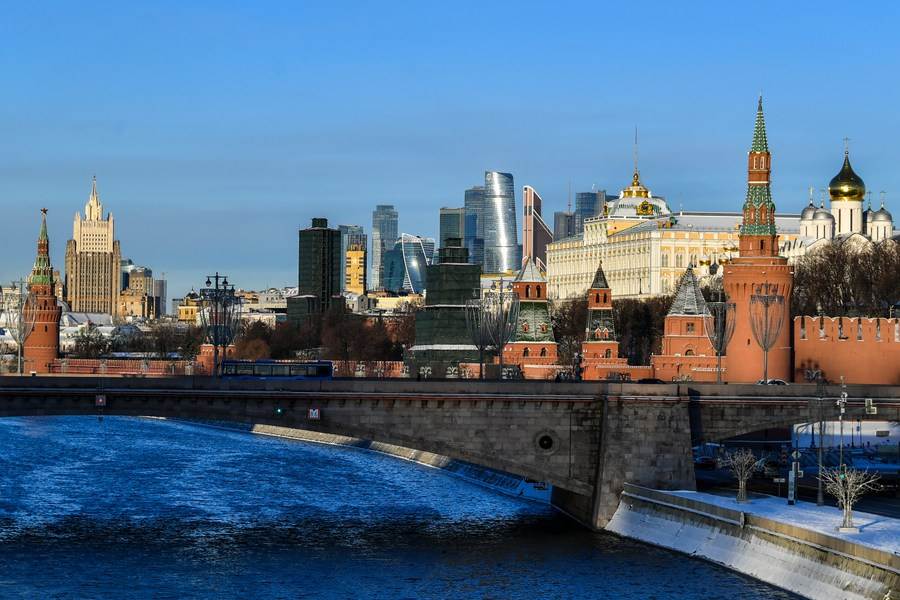
The scenery along the Moscow River in Moscow, Russia, March 13, 2023.

In spite of the impressive scale of de-dollarisation in bilateral trade, there is still ample scope to further increase the use of national currencies. This should be made possible by greater use of national and regional payment systems – not only on a bilateral basis, but also in the broader framework of BRICS via the introduction of the long-awaited BRICS Pay system.

Another possible venue to de-dollarization that may be discussed at the summit may be the launching of a new BRICS reserve currency – a project that Putin unveiled in mid-2022. The future of this new currency dubbed R5 (all five currencies of BRICS countries start with a letter “R”) to a significant degree will depend of the readiness of both China and Russia to pursue a coordinated approach to launching such an undertaking that may prove to be critical not only for the BRICS proper, but for the broader realm of the developing world.

To forge ahead with greater de-dollarization, it is critical to ensure greater coordination in international economic organizations. This is particularly important for the advancement of the global role of such groupings as BRICS that have taken on a rising prominence on the international arena, particularly after the successful BRICS chairmanship of China in 2022. Both countries play a crucial role in making BRICS a dynamic, open and inclusive platform, with one of the near-term issues being that of BRICS expansion and the possibility of the inclusion of new large emerging markets into the BRICS core.

In the end, the meeting between the leaders of China and Russia will present an opportunity to build on the strong momentum in boosting bilateral economic cooperation. Apart from the rising prominence of Global South, there is the resurgence of economic concerns in the West – against the backdrop of rising fragilities in the financial sector in the U.S. and Europe, boosting bilateral economic ties between China and Russia may be seen as lowering the susceptibility to the rising frequency of crisis waves emanating from developed economies.


Yaroslav Lissovolik, founder of “BRICS+ Analytics,” is a member of the Russian International Affairs Council (RIAC). The article reflects the author’s opinions and not necessarily the views of The Southern African Times. 

Previous Post

S.Africa to call it a wrap on current hikes with last 25 bps on March 30

Next Post

Let us safeguard the hard-won freedoms of our bill of rights – Ramaphosa

SAT Reporter

Related Posts

Can the United States Still Sanction China Into Compliance?
Opinion

Can the United States Still Sanction China Into Compliance?

by SAT Reporter
May 12, 2026
Op-Ed by President Ramaphosa | Reparations must help to address Africa’s colonial legacy
Opinion

Op-Ed by President Ramaphosa | Everyone in South Africa Must Respect and Uphold Our Laws

by SAT Reporter
May 12, 2026
Who Owns the American Story? Druski’s Viral Satire and Hollywood’s Identity Crisis
Opinion

Who Owns the American Story? Druski’s Viral Satire and Hollywood’s Identity Crisis

by Michelle Mungeni
May 12, 2026
SA’s agriculture is growing, but is it working for everyone?
Opinion

SA’s agriculture is growing, but is it working for everyone?

by SAT Reporter
May 7, 2026
Zimbabwe’s Lithium Strategy Is Not China’s Problem. It Is an Economic One
Opinion

Zimbabwe’s Lithium Strategy Is Not China’s Problem. It Is an Economic One

by SAT Reporter
May 5, 2026
Next Post
Let us safeguard the hard-won freedoms of our bill of rights – Ramaphosa

Let us safeguard the hard-won freedoms of our bill of rights – Ramaphosa

Browse by Category

  • Africa AI
  • African Continental Free Trade Area
  • African Debt
  • African Start ups
  • Agriculture
  • AI Africa
  • Algeria
  • All News
  • Analysis
  • Angola
  • Arts / Culture
  • Asia
  • Botswana
  • BOTSWANA
  • BREAKING NEWS
  • BRICS
  • Burkina Faso
  • Burundi
  • Business
  • Business
  • Business Wire
  • Cameroon
  • Central Africa
  • Chad
  • China
  • Climate Change
  • Climate Changev
  • Community
  • Congo Republic
  • Conservation
  • Côte d’Ivoire
  • COVID 19
  • CRYPTOCURRENCY
  • Culture
  • Democratic Republic of Congo
  • Diplomacy
  • Eastern Africa
  • Economic Development
  • Economy
  • Education
  • Egypt
  • Elections 2024
  • Energy
  • Entertainment
  • Environment
  • Eritrea
  • Ethiopia
  • Europe
  • Fashion
  • Feature
  • Finance
  • Financial Inclusion
  • Food
  • Food and Drink
  • Foods
  • GABON
  • Ghana
  • Global
  • Global Africa
  • Guinea
  • Health
  • Immigration
  • in Southern Africa
  • International news
  • International Relations
  • Investment
  • Ivory Coast
  • Just In
  • Kenya
  • Lesotho
  • Libya
  • Life Style
  • Lifestyle
  • Literature
  • Malawi
  • Malawi
  • Mali
  • Markets
  • Mauritius
  • Middle East
  • Mining in Africa
  • Morocco
  • Mozambique
  • Namibia
  • Niger
  • niger
  • Nigeria
  • North Africa
  • North-Eastern Africa
  • Obituaries
  • Obituary
  • Opinion
  • PARTNER CONTENT
  • Politics
  • Property
  • Racism
  • Rwanda
  • Rwanda
  • SADC
  • SAT Interviews
  • SAT Investigation
  • SAT Jobs
  • Saudi Arabia
  • Senegal
  • Seychelles
  • Somaliland
  • South Africa
  • South Sudan
  • Sports
  • Startup Africa
  • STOCK EXCHANGE
  • Sudan
  • Sustainability
  • Sustainablity
  • Tanzania
  • Technology
  • Telecommunications
  • The Editorial Board
  • The Power Of She
  • Togo
  • Trade
  • Travel
  • Travel
  • Tunisia
  • Uganda
  • Uncategorized
  • Wealth
  • West Africa
  • World
  • World
  • ZAMBIA
  • Zambia
  • ZIMBABWE
  • Zimbabwe

Browse by Tags

#NewsUpdate #SouthAfrica #SouthernAfricanTimes #TheSouthernAfricanTimes AfCFTA africa African Continental Free Trade Area African development African Development Bank African economies African economy African Union Agriculture Angola Botswana Business China Climate change Cyril Ramaphosa Economic Development economic growth energy transition fiscal policy industrialisation Inflation Infrastructure Infrastructure Development International relations Investment Kenya Mozambique Namibia news Nigeria Regional Integration renewable energy Rwanda SADC South Africa Southern Africa sustainable development Tanzania United States Zambia Zimbabwe
ADVERTISEMENT

WHO WE ARE

The Southern African Times is a regional bloc digital newspaper that covers Southern African and world news. The paper also gives a nuanced analysis on news and covers a wide range of reporting which include sports, entertainment, foreign affairs, arts and culture.

Welcome Back!

Login to your account below

Forgotten Password?

Retrieve your password

Please enter your username or email address to reset your password.

Log In

  • Home
  • Southern Africa
  • Business
    • African Start ups
    • African Continental Free Trade Area
  • Technology
    • Lifestyle
      • Health
      • Culture
      • Food and Drink
      • Entertainment
  • Opinion
  • Sports
  • SAT Jobs
    • Events
  • About Us
    • Advertise with Us
    • Contact Us
Are you sure want to unlock this post?
Unlock left : 0
Are you sure want to cancel subscription?