Friday, June 26, 2026
  • Login
The Southern African Times
  • Home
  • Southern Africa
  • Business
    • African Start ups
    • African Continental Free Trade Area
  • Technology
    • Lifestyle
      • Health
      • Culture
      • Food and Drink
      • Entertainment
  • Opinion
  • Sports
  • SAT Jobs
    • Events
  • About Us
    • Advertise with Us
    • Contact Us
No Result
View All Result
  • Home
  • Southern Africa
  • Business
    • African Start ups
    • African Continental Free Trade Area
  • Technology
    • Lifestyle
      • Health
      • Culture
      • Food and Drink
      • Entertainment
  • Opinion
  • Sports
  • SAT Jobs
    • Events
  • About Us
    • Advertise with Us
    • Contact Us
No Result
View All Result
The Southern African Times
No Result
View All Result
Home Opinion

China, Russia face sanctions from US states now. That’s dangerous

US states want to join Washington in imposing sanctions on foreign adversaries. That’s bad for the world — and the US.

by SAT Reporter
March 28, 2023
in Opinion
0
China, Russia face sanctions from US states now. That’s dangerous

Sanctions have become all the rage in international politics. The United States and its allies are imposing them on rivals with increasing frequency and severity. And those rivals are reciprocating where they can.

Now, American states, too, are increasingly getting in on the act. And that’s bad news — for the world, and for US foreign policy. A much-publicised episode of a Chinese balloon entering US airspace seems to have created new energy for such restrictions and has led to legislation being proposed in at least 11 states.

On Wednesday, the South Carolina State Senate passed a bill barring ownership of land in the state by citizens of US geopolitical adversaries Russia, China, North Korea, Iran and Cuba. The bill’s top sponsor even compared a planned purchase of South Carolina land by a Chinese biomedical firm with the Trojan Horse plot of Greek mythology.


ADVERTISEMENT

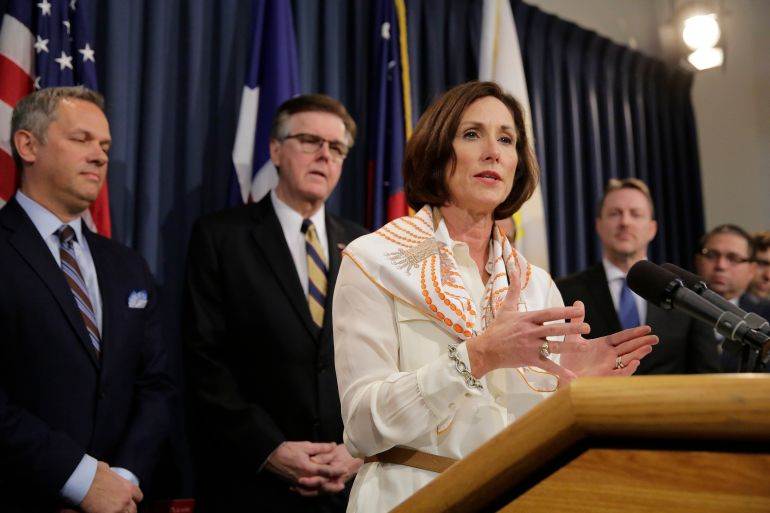
Meanwhile, Texas State Senator Lois Kolkhorst has proposed a similar law that has drawn strong condemnation on human rights grounds but has been defended by Greg Abbott, the state’s Republican governor. A simple reading of the original version of this bill would lead one to conclude that any individual who holds citizenship from any of the mentioned countries, or any firms which they own, would be barred from owning property. This would have included American citizens who hold dual citizenship. Since then, the language has been softened to protect dual citizens and permanent residents but not citizens of those countries residing in Texas on a visa.

Implementation of such language would impose new and unusual due diligence requirements on common land transactions. Meanwhile, creating special restrictions on various immigrant communities to own property poses human rights concerns.

Existing sanctions laws and Treasury Department designations already block leaders from those American adversaries from transferring money into the US or owning property in the country. Meanwhile, recently introduced federal legislation aims to ban US adversaries from purchasing large swaths of farmland in the US.

So why would a state engage in what is essentially a foreign policy and national security matter?

Why sanction?

On the one hand, some scholars see sanctions as often being a product of domestic politics, aimed at portraying muscle to the electorate, at times influenced by pressure groups such as “ethnic lobbies”. Those in this camp of scholars are more inclined to believe that sanctions are not particularly effective. If sanctions are for the satisfaction of domestic onlookers, they will not be designed and implemented with an eye towards efficacy and the security context.

Other scholars, however, argue that sanctions are indeed imposed due to a meaningful effort to address national security concerns.

Like many in the national security decision-making scholarship community, I feel both of these binary constructions frequently fail when confronted with the history of economic sanctions. The truth is that foreign policy choices are a product of complex national security matrices that accommodate both foreign policy and domestic political considerations.

Who sanctions?

Yet irrespective of one’s overall view on the efficacy of sanctions more broadly, it is hard for anyone to deny that policies against foreign nationals adopted by state governments can have little explanation other than domestic and even local politics.

Ultimately, sanctions are a tool of foreign policy and the capacity to modulate or even repeal them is critical to accomplishing the political goals behind sanctions campaigns. For the president or Congress to have to lobby with state governments, each representing a fraction of the overall population, to alter America’s sanctions against a country would represent a bizarre new obstacle to the federal government’s ability to carry out its foreign policy obligations.

The proposed Texas and South Carolina laws are textbook examples of sanctions as political grandstanding meant for domestic consumption. They are also a reminder of the jingoistic zeal that can be nurtured and exploited by foreign policy amateurs at the state level.

As we embark upon what scholar Peter A G van Bergeijk calls the “second wave” of global sanctions, states will likely look further to getting in on the act with human rights and global affairs.

Washington’s basic ability to carry out a coherent foreign policy hangs in the balance.

Ali Ahmadi is a scholar of sanctions and economic statecraft. He is an Executive Fellow at the Geneva Centre for Security Policy. The article reflects the author’s opinions and not necessarily the views of The Southern African Times. 
Previous Post

Kenya investors lobby says carbon trading regaining vibrancy

Next Post

Property Development firm Westprop to list on the Victoria Falls Stock Exchange

SAT Reporter

Related Posts

The Insurance Hack More Drivers Should Know
Opinion

The Insurance Hack More Drivers Should Know

by Times Reporter
June 22, 2026
Southern African Times Announces Brendan Amadi as Recipient of the 2026 Editorial Recognition of the Year Award
The Editorial Board

Southern African Times Announces Brendan Amadi as Recipient of the 2026 Editorial Recognition of the Year Award

by The Editorial Board
June 19, 2026
LONG READ | No Longer the World’s Dustbin: China’s Waste Ban and Africa’s Circular Economy Moment
Opinion

LONG READ | No Longer the World’s Dustbin: China’s Waste Ban and Africa’s Circular Economy Moment

by Times Reporter
June 12, 2026
OPINION | The Investors Southern Africa Refuses to See
Opinion

OPINION | The Investors Southern Africa Refuses to See

by Times Reporter
June 14, 2026
Faith, Miracles and the Crisis of Religious Authenticity
Opinion

Faith, Miracles and the Crisis of Religious Authenticity

by Brendan Amadi
June 10, 2026
Next Post
Property Development firm Westprop to list on  the Victoria Falls Stock Exchange

Property Development firm Westprop to list on the Victoria Falls Stock Exchange

Browse by Category

  • Africa AI
  • African Continental Free Trade Area
  • African Debt
  • African Start ups
  • Agriculture
  • AI Africa
  • Algeria
  • All News
  • Analysis
  • Angola
  • Arts / Culture
  • Asia
  • Botswana
  • BOTSWANA
  • BREAKING NEWS
  • BRICS
  • Burkina Faso
  • Burundi
  • Business
  • Business
  • Business Wire
  • Cameroon
  • Central Africa
  • Chad
  • China
  • Climate Change
  • Climate Changev
  • Community
  • Congo Republic
  • Conservation
  • Côte d’Ivoire
  • COVID 19
  • CRYPTOCURRENCY
  • Culture
  • Democratic Republic of Congo
  • Diplomacy
  • Eastern Africa
  • Economic Development
  • Economy
  • Education
  • Egypt
  • Elections 2024
  • Energy
  • Entertainment
  • Environment
  • Eritrea
  • Ethiopia
  • Europe
  • Fashion
  • Feature
  • Finance
  • Financial Inclusion
  • Food
  • Food and Drink
  • Foods
  • GABON
  • Ghana
  • Global
  • Global Africa
  • Guinea
  • Health
  • Humanitarian Aid
  • Immigration
  • in Southern Africa
  • International news
  • International Relations
  • Investment
  • Ivory Coast
  • Just In
  • Kenya
  • Lesotho
  • Libya
  • Life Style
  • Lifestyle
  • Literature
  • Malawi
  • Malawi
  • Mali
  • Markets
  • Mauritius
  • Middle East
  • Mining in Africa
  • Morocco
  • Mozambique
  • Namibia
  • niger
  • Niger
  • Nigeria
  • North Africa
  • North-Eastern Africa
  • Obituaries
  • Obituary
  • Opinion
  • PARTNER CONTENT
  • Politics
  • Property
  • Racism
  • Rwanda
  • Rwanda
  • SADC
  • SAT Interviews
  • SAT Investigation
  • SAT Jobs
  • Saudi Arabia
  • Senegal
  • Seychelles
  • Somaliland
  • South Africa
  • South Sudan
  • Sports
  • Startup Africa
  • STOCK EXCHANGE
  • Sudan
  • Sustainability
  • Sustainablity
  • Tanzania
  • Technology
  • Telecommunications
  • The Editorial Board
  • The Power Of She
  • Togo
  • Trade
  • Travel
  • Travel
  • Tunisia
  • Uganda
  • Uncategorized
  • Wealth
  • West Africa
  • World
  • World
  • ZAMBIA
  • Zambia
  • ZIMBABWE
  • Zimbabwe

Browse by Tags

#NewsUpdate #SouthAfrica #SouthernAfricanTimes #TheSouthernAfricanTimes AfCFTA africa African Continental Free Trade Area African development African Development Bank African economies African economy African Union Agriculture Angola Botswana China Climate change Cyril Ramaphosa Economic Development economic growth energy transition fiscal policy governance industrialisation Inflation Infrastructure Infrastructure Development International relations Investment Kenya Mozambique Namibia news Nigeria Regional Integration renewable energy Rwanda SADC South Africa Southern Africa sustainable development Tanzania United States Zambia Zimbabwe
ADVERTISEMENT

WHO WE ARE

The Southern African Times is a regional bloc digital newspaper that covers Southern African and world news. The paper also gives a nuanced analysis on news and covers a wide range of reporting which include sports, entertainment, foreign affairs, arts and culture.

Welcome Back!

Login to your account below

Forgotten Password?

Retrieve your password

Please enter your username or email address to reset your password.

Log In
  • Home
  • Southern Africa
  • Business
    • African Start ups
    • African Continental Free Trade Area
  • Technology
    • Lifestyle
      • Health
      • Culture
      • Food and Drink
      • Entertainment
  • Opinion
  • Sports
  • SAT Jobs
    • Events
  • About Us
    • Advertise with Us
    • Contact Us
Not enough quota to unlock this post
Unlock left : 0
Are you sure want to cancel subscription?