Friday, May 1, 2026
  • Login
The Southern African Times
  • Home
  • Southern Africa
  • Business
    • African Start ups
    • African Continental Free Trade Area
  • Technology
    • Lifestyle
      • Health
      • Culture
      • Food and Drink
      • Entertainment
  • Opinion
  • Sports
  • SAT Jobs
    • Events
  • About Us
    • Advertise with Us
    • Contact Us
No Result
View All Result
  • Home
  • Southern Africa
  • Business
    • African Start ups
    • African Continental Free Trade Area
  • Technology
    • Lifestyle
      • Health
      • Culture
      • Food and Drink
      • Entertainment
  • Opinion
  • Sports
  • SAT Jobs
    • Events
  • About Us
    • Advertise with Us
    • Contact Us
No Result
View All Result
The Southern African Times
No Result
View All Result
Home Economy

China Posts Record $1 Trillion Trade Surplus as Global Partners Reassess Economic Ties

by SAT Reporter
January 14, 2026
in Economy
0
China Posts Record $1 Trillion Trade Surplus as Global Partners Reassess Economic Ties

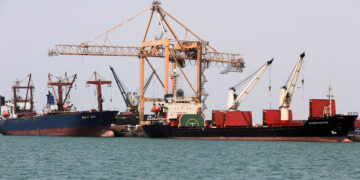
China concluded 2025 with a historic trade surplus exceeding one trillion dollars, reaffirming its dominant position in the global trading system even amid intensified tariff measures from the Trump administration in Washington. Customs data released in Beijing on Wednesday showed that China’s full-year trade surplus reached 1.189 trillion dollars, marking the first time the figure has breached the trillion mark. The scale of this surplus rivals the gross domestic product of a major economy such as Saudi Arabia and underscores the enduring strength of China’s export machine in a complex geopolitical and economic environment.

This record figure was underpinned by an unexpected surge in exports and a strategic diversification of trading partners. Despite facing renewed U.S. tariffs, Chinese firms have adapted by expanding their presence in Southeast Asia, Africa, and Latin America, effectively cushioning the impact of Western trade restrictions. Wang Jun, a vice minister at the General Administration of Customs, stated that “China’s ability to withstand external risks has been significantly enhanced” as the country strengthens its trade ties with emerging economies. He added that the fundamentals of China’s foreign trade “remain solid,” even as global trade growth slows.

Exports from the world’s second-largest economy grew 6.6 percent year-on-year in December, beating expectations of a 3 percent rise, while imports increased 5.7 percent compared with a forecast of under 1 percent. Analysts attributed the stronger performance to continued demand for Chinese goods, ranging from consumer electronics to industrial materials, and to a weaker yuan, which has made Chinese exports more competitive on global markets.


ADVERTISEMENT

China’s automotive industry, a key driver of its manufacturing strength, posted particularly strong results. The country exported 5.79 million vehicles in 2025, representing a 19.4 percent increase from the previous year. Electric vehicle shipments surged by nearly 49 percent, consolidating China’s position as the world’s largest automobile exporter for the third consecutive year since surpassing Japan in 2023. Industry experts suggest that this shift reflects not only China’s technological capacity but also its strategic emphasis on new energy industries as part of its broader global industrial ambitions.

However, the rapid expansion of China’s exports has also stirred unease among some of its trading partners. Economies in both the Global North and South have expressed concerns about overcapacity, trade imbalances, and the potential crowding out of local manufacturing sectors. In response, Chinese Premier Li Qiang recently called for policies that “proactively expand imports and promote balanced trade development.” His remarks, delivered during a televised address, signalled Beijing’s growing awareness of the need to rebalance its economic model towards greater domestic consumption and equitable trade relationships.

China has also taken limited steps to address international criticisms regarding state support for exporters. The government has withdrawn certain tax incentives for the solar energy industry, a measure long viewed by European policymakers as a form of industrial subsidy. In December, lawmakers fast-tracked amendments to the Foreign Trade Law, completing them after only two readings rather than the usual three. The accelerated legislative process was widely interpreted as a gesture to reassure partners within trans-Pacific trade frameworks that Beijing is committed to fostering more open and rules-based trade.

The geopolitical context remains tense. Since President Donald Trump’s return to office in January 2025, the United States has reinstated tariffs averaging 47.5 percent on Chinese goods. Although both sides reached a limited truce in late October, the underlying tensions remain unresolved. Many Chinese manufacturers have responded by establishing production hubs in countries such as Vietnam, Malaysia, and Mexico, which allow them to access U.S. and European markets at reduced tariff rates. This strategy reflects a longer-term restructuring of China’s global trade footprint rather than a short-term circumvention of sanctions.

For Africa, China’s record surplus and trade resilience present a double-edged dynamic. On one hand, the continent benefits from increased access to affordable Chinese goods, infrastructure investment, and technology transfer. On the other, the imbalance of trade flows raises critical questions about value addition and economic sovereignty. Economists across Africa have pointed out that while Chinese financing has accelerated industrialisation and improved logistics networks, there remains a pressing need for African economies to cultivate their own manufacturing bases and move up the value chain.

As the world’s trade architecture continues to evolve, Africa’s strategic engagement with China could play a decisive role in shaping a more equitable global order. By strengthening intra-African trade through frameworks such as the African Continental Free Trade Area and leveraging partnerships with China for industrial development rather than raw commodity exports, the continent can reposition itself as an equal partner in the emerging multipolar economy.

Ultimately, China’s trillion-dollar surplus is both a marker of resilience and a reflection of broader structural shifts in the global economy. It highlights how developing economies are increasingly central to trade realignment and how countries across the Global South are redefining their participation in international commerce. As trade patterns evolve under the weight of shifting geopolitical tides, Africa’s challenge will be to ensure that its relationship with China is defined not by dependency but by mutual development, technological cooperation, and long-term shared growth.

Tags: Africa-China relationsAfrican industrialisationChina trade surplusChinese manufacturingDonald Trump tariffselectric vehicle exportsforeign tradeglobal economyGlobal MarketsSouth-South cooperation
Previous Post

Angola Extends $1 Billion Debt Facility with JPMorgan and Secures Additional $500 Million

Next Post

Uganda Cuts Internet Ahead of High Stakes Presidential Election

SAT Reporter

Related Posts

Tanzania Telecom and Internet Use Surge as Infrastructure Expands
Economy

Tanzania Telecom and Internet Use Surge as Infrastructure Expands

by SAT Reporter
May 1, 2026
Africa’s Waters Under Siege: Foreign Fleets and the Fight for the Blue Economy
Economy

Africa’s Waters Under Siege: Foreign Fleets and the Fight for the Blue Economy

by SAT Reporter
April 26, 2026
China’s zero tariff policy signals recalibration in Africa trade relations
Trade

China’s zero tariff policy signals recalibration in Africa trade relations

by The Editorial Board
April 26, 2026
Nigeria–South Africa Trade Reaches 2.16 Billion Dollars as Energy Ties Grow
Economy

Nigeria–South Africa Trade Reaches 2.16 Billion Dollars as Energy Ties Grow

by SAT Reporter
April 25, 2026
South Africa secures 54 billion dollars in investment commitments as execution gap persists
Economy

South Africa secures 54 billion dollars in investment commitments as execution gap persists

by SAT Reporter
April 23, 2026
Next Post
Uganda Cuts Internet Ahead of High Stakes Presidential Election

Uganda Cuts Internet Ahead of High Stakes Presidential Election

Browse by Category

  • Africa AI
  • African Continental Free Trade Area
  • African Debt
  • African Start ups
  • Agriculture
  • AI Africa
  • Algeria
  • All News
  • Analysis
  • Angola
  • Arts / Culture
  • Asia
  • Botswana
  • BOTSWANA
  • BREAKING NEWS
  • BRICS
  • Burkina Faso
  • Burundi
  • Business
  • Business
  • Business Wire
  • Cameroon
  • Central Africa
  • Chad
  • China
  • Climate Change
  • Climate Changev
  • Community
  • Congo Republic
  • Conservation
  • Côte d’Ivoire
  • COVID 19
  • CRYPTOCURRENCY
  • Culture
  • Democratic Republic of Congo
  • Diplomacy
  • Eastern Africa
  • Economic Development
  • Economy
  • Education
  • Egypt
  • Elections 2024
  • Energy
  • Entertainment
  • Environment
  • Eritrea
  • Ethiopia
  • Europe
  • Fashion
  • Feature
  • Finance
  • Financial Inclusion
  • Food
  • Food and Drink
  • Foods
  • GABON
  • Ghana
  • Global
  • Global Africa
  • Guinea
  • Health
  • Immigration
  • in Southern Africa
  • International news
  • International Relations
  • Investment
  • Ivory Coast
  • Just In
  • Kenya
  • Lesotho
  • Libya
  • Life Style
  • Lifestyle
  • Literature
  • Malawi
  • Malawi
  • Mali
  • Markets
  • Mauritius
  • Middle East
  • Mining in Africa
  • Morocco
  • Mozambique
  • Namibia
  • Niger
  • niger
  • Nigeria
  • North Africa
  • North-Eastern Africa
  • Obituaries
  • Obituary
  • Opinion
  • PARTNER CONTENT
  • Politics
  • Property
  • Racism
  • Rwanda
  • Rwanda
  • SADC
  • SAT Interviews
  • SAT Investigation
  • SAT Jobs
  • Saudi Arabia
  • Senegal
  • Seychelles
  • Somaliland
  • South Africa
  • South Sudan
  • Sports
  • Startup Africa
  • STOCK EXCHANGE
  • Sudan
  • Sustainability
  • Sustainablity
  • Tanzania
  • Technology
  • Telecommunications
  • The Editorial Board
  • The Power Of She
  • Togo
  • Trade
  • Travel
  • Travel
  • Tunisia
  • Uganda
  • Uncategorized
  • Wealth
  • West Africa
  • World
  • World
  • ZAMBIA
  • Zambia
  • Zimbabwe
  • ZIMBABWE

Browse by Tags

#NewsUpdate #SouthAfrica #SouthernAfricanTimes #TheSouthernAfricanTimes AfCFTA africa African Continental Free Trade Area African development African Development Bank African economies African economy African Union Agriculture Angola Botswana Business China Climate change Cyril Ramaphosa Economic Development economic growth energy transition fiscal policy industrialisation Inflation Infrastructure Infrastructure Development International relations Investment Kenya Mozambique Namibia news Nigeria Regional Integration renewable energy Rwanda SADC South Africa Southern Africa sustainable development Tanzania United States Zambia Zimbabwe
ADVERTISEMENT

WHO WE ARE

The Southern African Times is a regional bloc digital newspaper that covers Southern African and world news. The paper also gives a nuanced analysis on news and covers a wide range of reporting which include sports, entertainment, foreign affairs, arts and culture.

Welcome Back!

Login to your account below

Forgotten Password?

Retrieve your password

Please enter your username or email address to reset your password.

Log In

  • Home
  • Southern Africa
  • Business
    • African Start ups
    • African Continental Free Trade Area
  • Technology
    • Lifestyle
      • Health
      • Culture
      • Food and Drink
      • Entertainment
  • Opinion
  • Sports
  • SAT Jobs
    • Events
  • About Us
    • Advertise with Us
    • Contact Us
Are you sure want to unlock this post?
Unlock left : 0
Are you sure want to cancel subscription?