Tuesday, June 30, 2026
  • Login
The Southern African Times
  • Home
  • Southern Africa
  • Business
    • African Start ups
    • African Continental Free Trade Area
  • Technology
    • Lifestyle
      • Health
      • Culture
      • Food and Drink
      • Entertainment
  • Opinion
  • Sports
  • SAT Jobs
    • Events
  • About Us
    • Advertise with Us
    • Contact Us
No Result
View All Result
  • Home
  • Southern Africa
  • Business
    • African Start ups
    • African Continental Free Trade Area
  • Technology
    • Lifestyle
      • Health
      • Culture
      • Food and Drink
      • Entertainment
  • Opinion
  • Sports
  • SAT Jobs
    • Events
  • About Us
    • Advertise with Us
    • Contact Us
No Result
View All Result
The Southern African Times
No Result
View All Result
Home Opinion

China is not responsible for African debt distress

by SAT Reporter
January 25, 2023
in Opinion
0
China is not responsible for African debt distress

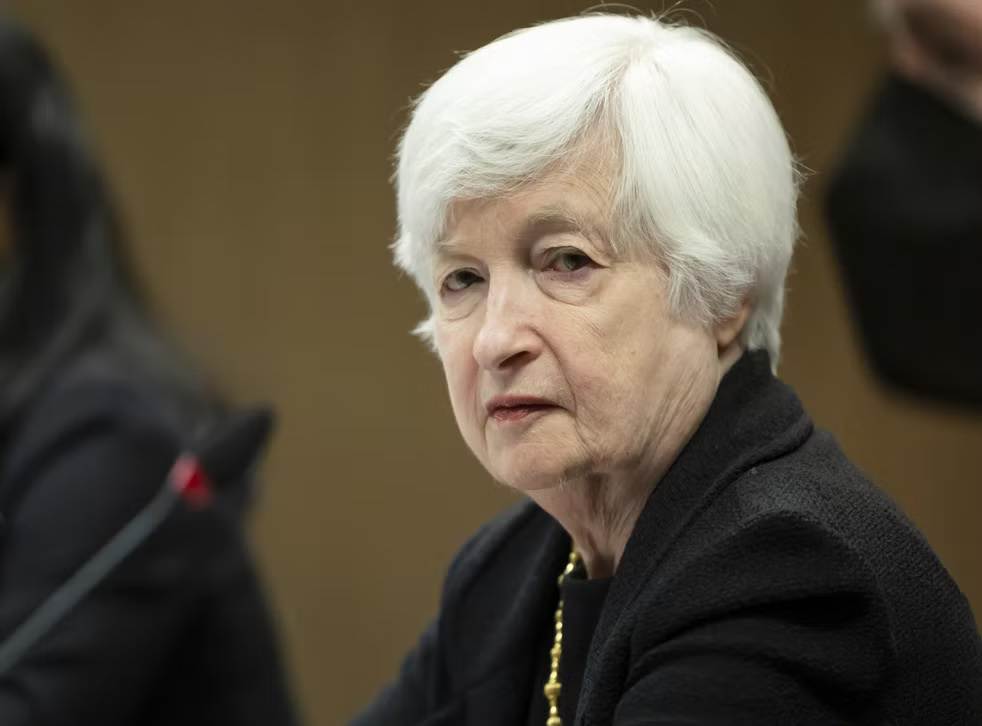
U.S. Treasury Secretary Janet Yellen is on a 10-day visit to African countries from January 17 to January 28 that aims at promoting economic ties along possible lines of partnership between the U.S. and Africa. On her second leg of a tour of African countries, she visited Zambia on January 23 and called on China to address Zambia’s heavy debt burden. Yellen has demonstrated the U.S. commitment to continue alleging China-driven “debt-trap” problems in Africa while storming the global South-South cooperation that aspires to bring equal development for all.

Africa has long been engulfed by infrastructural development gaps, which have had a negative impact on its economic and social structures as well as its large population. It is an obvious fact that many African countries are deficient in financial capacity to build all these infrastructural projects and transform the status quo. As a result, the fundamental socio-political reality that has solely pushed the continent to seek loans from China was not created by any political factor, nor does China mandate that states be enticed to accept these loans. Chinese development assistance follows a casual business practice that prefers a recipient-driven model determined by bilateral deals as well as other important political and economic interests. Furthermore, Chinese loans to Africa are primarily low-interest rates with a longer maturity period and no strings attached, which is in sharp contrast to multilateral financial institutions that have experienced low demand rates.

Moreover, in 2022, the sub-Saharan African debt burden reached a record high of $789 billion, according to a World Bank report. Yet, among these, Chinese lenders constitutes only below one fourth of the total amount while multilateral financial institutions and commercial creditors hold nearly three-quarters of Africa’s total external debt as global financial resources disclosed it.  Hence, if there are any responsible entities that would be accountable for Africa’s heavy burden problems, it should be all the creditors, including multilateral institutions and creditors altogether; there cannot be any single actor blamed for all the mess.


ADVERTISEMENT
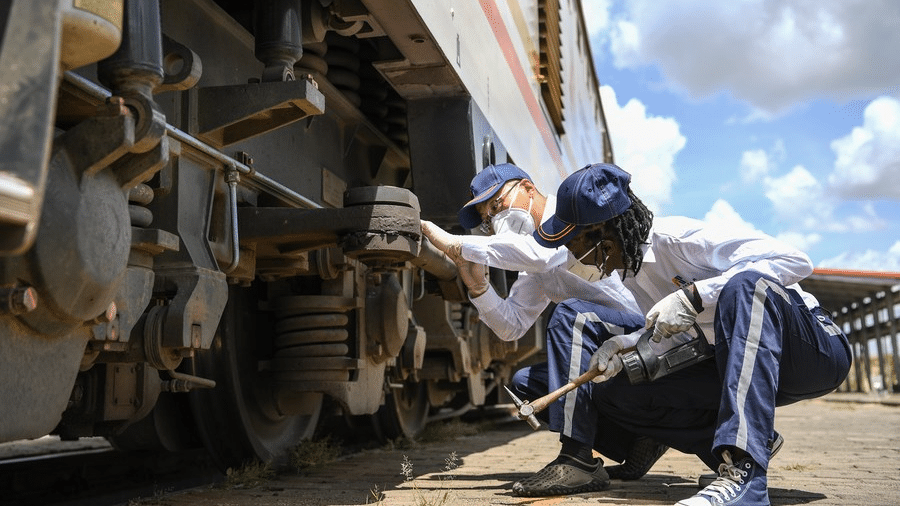
Staff members check a train at Nairobi station of Mombasa-Nairobi Standard Gauge Railway (SGR) in Nairobi, Kenya, March 22, 2021

Despite this, U.S. politicians and their enablers have been peddling the narrative that African countries are burdened by debt imposed by the Chinese government. The so-called African “debt-trap” has long been touted by both Democrats and Republicans, and more importantly, it has been further advanced by value-laden U.S. corporations and agencies, including media outlets. Yet, no African countries are complaining about any forms of “debt-trap;” rather, the agenda is now being exported and more pronounced by outsiders. This clearly implies that the term “debt-trap” is a fairy tale and an obscuring description of China’s relationship with Africa, intended to reverse the gains of this mutually beneficial partnership. However, there is not an ounce of truth regarding the narration; everything is destined to be nullified.

“Debt-trap” is an organized campaign and diplomatic containment strategy aimed at preventing Chinese economic and political influence in Africa. Thus, Yellen’s trip to Africa, particularly to Zambia, goes beyond stated objectives and is slanted towards discrediting China’s development financing assistance to African countries. It also has more to do with defaming China as a country that prefers to use accumulated debt to achieve long-term strategic political and economic goals. This single charge contrasts sharply with the pragmatic reality on the ground, which is that China is a reliable ally to many African countries.

Chinese Foreign Minister Qin Gang recently said that “China has always been committed to helping Africa ease its debt burden, actively participating in the Group of 20 (G20) Debt Service Suspension Initiative.”

China has also been actively engaged in the case-by-case debt treatment for some countries under the G20 Common Framework while mentioning China’s decision to channel $10 billion to Africa countries from its share of the International Monetary Fund’s new allocation of Special Drawing Rights, and this is in progress.

Last August, the Chinese government announced it would write off 23 interest-free loans in 17 African countries. In addition, between 2000 and 2019, China restructured $ 15 billion in debt and forgiven $3.4 billion in loans to African countries.

This all indicated that, despite all these allegations, China has been executing its responsibility of alleviating Africa’s debt burden in line with the principle of common action and fair burden-sharing along with other creditors. Aside from that, African countries must implement appropriate fiscal and monetary policies to shift the economy into a positive trajectory and manage their sovereign debt.

The U.S., besides accusing China of driving Africa into a “debt trap,” has been busy figuring out how to carve out a plan to recalibrate its relations with African countries to put the partnership on a new course that could counter China’s further economic cooperation with the continent. The move also included exploring new areas of engagement as well as refreshing the existing trade and investment relations that experienced falloff and were also well below average in comparison to China.


Bereket Sisay is a commentator of international affairs, with a special focus on Africa. The article reflects the author’s opinions, and not necessarily the views of The Southern African Times. 

Previous Post

Nigeria opens ‘game changer’ billion-dollar deep seaport in Lagos

Next Post

“Let us act to transform Africa’s cities”—African Development Bank President

SAT Reporter

Related Posts

LONG READ | The Oldest Alibi: South Africa’s Xenophobia and the Economic Ruin It Presages
Opinion

LONG READ | The Oldest Alibi: South Africa’s Xenophobia and the Economic Ruin It Presages

by Times Reporter
June 30, 2026
President Cyril Ramaphosa’s Opinion: How South Africa’s Natural Splendour Can Drive Inclusive Growth
Opinion

Op-Ed by President Ramaphosa | Protest Is Both a Right and a Responsibility

by Times Reporter
June 29, 2026
The Insurance Hack More Drivers Should Know
Opinion

The Insurance Hack More Drivers Should Know

by Times Reporter
June 22, 2026
Southern African Times Announces Brendan Amadi as Recipient of the 2026 Editorial Recognition of the Year Award
The Editorial Board

Southern African Times Announces Brendan Amadi as Recipient of the 2026 Editorial Recognition of the Year Award

by The Editorial Board
June 19, 2026
LONG READ | No Longer the World’s Dustbin: China’s Waste Ban and Africa’s Circular Economy Moment
Opinion

LONG READ | No Longer the World’s Dustbin: China’s Waste Ban and Africa’s Circular Economy Moment

by Times Reporter
June 12, 2026
Next Post
“Let us act to transform Africa’s cities”—African Development Bank President

“Let us act to transform Africa’s cities”—African Development Bank President

Browse by Category

  • Africa AI
  • African Continental Free Trade Area
  • African Debt
  • African Start ups
  • Agriculture
  • AI Africa
  • Algeria
  • All News
  • Analysis
  • Angola
  • Arts / Culture
  • Asia
  • Botswana
  • BOTSWANA
  • BREAKING NEWS
  • BRICS
  • Burkina Faso
  • Burundi
  • Business
  • Business
  • Business Wire
  • Cameroon
  • Central Africa
  • Chad
  • China
  • Climate Change
  • Climate Changev
  • Community
  • Congo Republic
  • Conservation
  • Côte d’Ivoire
  • COVID 19
  • CRYPTOCURRENCY
  • Culture
  • Democratic Republic of Congo
  • Diplomacy
  • Eastern Africa
  • Economic Development
  • Economy
  • Education
  • Egypt
  • Elections 2024
  • Energy
  • Entertainment
  • Environment
  • Eritrea
  • Ethiopia
  • Europe
  • Fashion
  • Feature
  • Finance
  • Financial Inclusion
  • Food
  • Food and Drink
  • Foods
  • GABON
  • Ghana
  • Global
  • Global Africa
  • Guinea
  • Health
  • Humanitarian Aid
  • Immigration
  • in Southern Africa
  • International news
  • International Relations
  • Investment
  • Ivory Coast
  • Just In
  • Kenya
  • Lesotho
  • Libya
  • Life Style
  • Lifestyle
  • Literature
  • Malawi
  • Malawi
  • Mali
  • Markets
  • Mauritius
  • Middle East
  • Mining in Africa
  • Morocco
  • Mozambique
  • Namibia
  • niger
  • Niger
  • Nigeria
  • North Africa
  • North-Eastern Africa
  • Obituaries
  • Obituary
  • Opinion
  • PARTNER CONTENT
  • Politics
  • Property
  • Racism
  • Rwanda
  • Rwanda
  • SADC
  • SAT Interviews
  • SAT Investigation
  • SAT Jobs
  • Saudi Arabia
  • Senegal
  • Seychelles
  • Somaliland
  • South Africa
  • South Sudan
  • Sports
  • Startup Africa
  • STOCK EXCHANGE
  • Sudan
  • Sustainability
  • Sustainablity
  • Tanzania
  • Technology
  • Telecommunications
  • The Editorial Board
  • The Power Of She
  • Togo
  • Trade
  • Travel
  • Travel
  • Tunisia
  • Uganda
  • Uncategorized
  • Wealth
  • West Africa
  • World
  • World
  • ZAMBIA
  • Zambia
  • ZIMBABWE
  • Zimbabwe

Browse by Tags

#NewsUpdate #SouthAfrica #SouthernAfricanTimes #TheSouthernAfricanTimes AfCFTA africa African Continental Free Trade Area African development African Development Bank African economies African economy African Union Agriculture Angola Botswana China Climate change critical minerals Cyril Ramaphosa Economic Development economic growth energy transition governance industrialisation Inflation Infrastructure Infrastructure Development International relations Investment Kenya Mozambique Namibia news Nigeria Regional Integration renewable energy Rwanda SADC South Africa Southern Africa sustainable development Tanzania United States Zambia Zimbabwe
ADVERTISEMENT

WHO WE ARE

The Southern African Times is a regional bloc digital newspaper that covers Southern African and world news. The paper also gives a nuanced analysis on news and covers a wide range of reporting which include sports, entertainment, foreign affairs, arts and culture.

Welcome Back!

Login to your account below

Forgotten Password?

Retrieve your password

Please enter your username or email address to reset your password.

Log In
  • Home
  • Southern Africa
  • Business
    • African Start ups
    • African Continental Free Trade Area
  • Technology
    • Lifestyle
      • Health
      • Culture
      • Food and Drink
      • Entertainment
  • Opinion
  • Sports
  • SAT Jobs
    • Events
  • About Us
    • Advertise with Us
    • Contact Us
Not enough quota to unlock this post
Unlock left : 0
Are you sure want to cancel subscription?