Thursday, June 4, 2026
  • Login
The Southern African Times
  • Home
  • Southern Africa
  • Business
    • African Start ups
    • African Continental Free Trade Area
  • Technology
    • Lifestyle
      • Health
      • Culture
      • Food and Drink
      • Entertainment
  • Opinion
  • Sports
  • SAT Jobs
    • Events
  • About Us
    • Advertise with Us
    • Contact Us
No Result
View All Result
  • Home
  • Southern Africa
  • Business
    • African Start ups
    • African Continental Free Trade Area
  • Technology
    • Lifestyle
      • Health
      • Culture
      • Food and Drink
      • Entertainment
  • Opinion
  • Sports
  • SAT Jobs
    • Events
  • About Us
    • Advertise with Us
    • Contact Us
No Result
View All Result
The Southern African Times
No Result
View All Result
Home Analysis

CHINA adopts CIPS to avert Hong Kong sanctions on SWIFT

by SAT Reporter
August 3, 2020
in Analysis, Business, International news, Just In, Opinion
0
CHINA adopts CIPS to avert Hong Kong sanctions on SWIFT

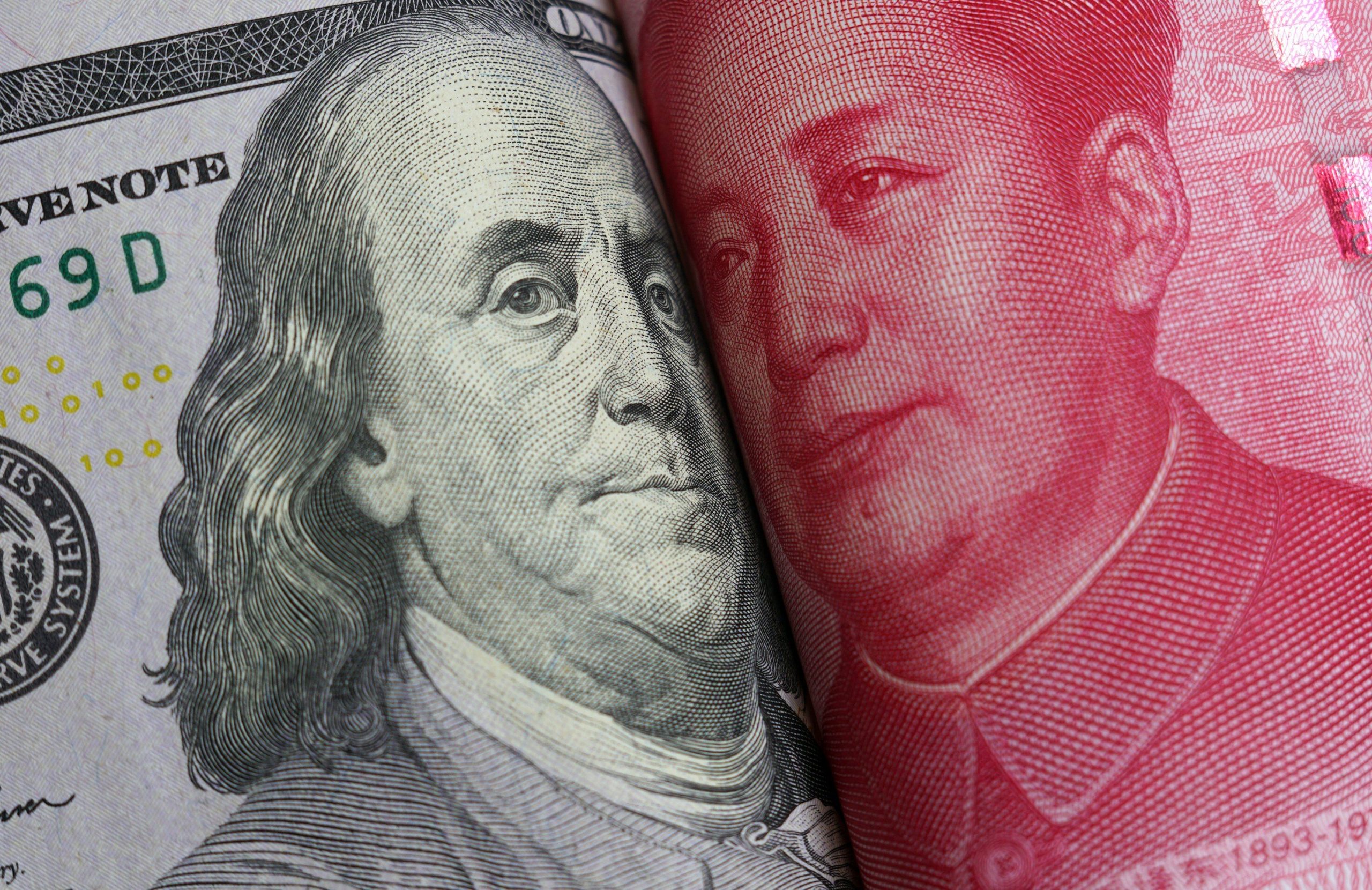
LONDON (The Southern African Times) – This article is an analysis of China’s adoption of Cross-border Interbank Payment System (CIPS) as an alternative to the Belgian-based internationally used conglomerate known as the Society for Worldwide Interbank Financial Telecommunication (SWIFT).

1. Internationalisation of the Yuan to rival the USD:

CIPS is planned to accelerate yuan internationalisation by creating a bigger and more diverse group of clearing banks and making yuan clearing cheaper. Whereas current clearing channels involve different language codes and document formats in China and globally, CIPS is expected to adopt the international standard, smoothing the process.


ADVERTISEMENT

2. It’s a technical sanction on US economy:

Most global trade, including virtually all commerce in petroleum, is conducted in U.S. dollars. Most all international transactions electronically or physically pass through the United States via American banks in New York with their payments settled by America’s central bank, the Federal Reserve, and are thus occurring on American soil and subject to American law. Such transactions are principally governed by SWIFT, which is heavily influenced by American oversight and increasingly since 2001 by American foreign policy priorities.

Indeed, well more than half of all foreign central bank reserves are held in American dollars. Of course, the United States and its allies also control the predominant share of voting rights at the World Bank and IMF and continue to leverage their priorities through international financial institutions and Western-based private banks and investment funds.

These extraordinary advantages, the so-called “exorbitant privilege,” allow the United States to run enormous trade deficits, budget deficits, and indeed personal financial deficits, adding up to the world’s largest debt (25 trillion U.S. dollars and counting), without yet dramatically sacrificing its standard of living and  economic power on the global stage, while borrowing in its own currency with favorable rates. Now, China’s CIPS, by creating a cheaper and standardised and unpolitically swayed alternative platform, poses a better alternative and thus may move a big chunk of the global trade. This resuktantky entails progressively lesser financial leverage for the US economy and with it reduced ability to leverage the world economy for the western world’s benefit.

3. Options for developing world:

CIPS, by being an alternative, also gives the developing world a chance to avoid rules and values attached with being allowed to transact on SWIFT. This may be a double edged sword. First it limits the western world’s power to use access as part of control, sanctions even. on the other hand less democratic nations who were easier to sway into path of democracy by being stifled financially may now act with impunity and still access world markets through CIPS. A definite though is that the developing world trades more with China than the west as they push unbenefitiated raw materials and now will save on fees (and scrutiny) by circumventing Brussels and New York to dealing direct with Beijing.

4. However:

Please note, for now, CIPS uses the SWIFT network for cross-border RMB clearing and payment services which means all transactions are still routed as before. But if need be the system can stand alone at short notice. Much like Huawei still uses open source and mostly US originated android, but has it’s own EMUI software working on android, for now, but completely capable to be switched to a stand alone OS at a moment’s notice. China is putting contingencies on all sectors. In event of sanctions, effects of these financial sanctions won’t catapult China into economic turmoil.

5. Conclusion:

CIPS is a powerful, viable, convenient (depending on who you are) alternative to SWIFT. But the fact that it is itself on SWIFT means China understands the global reach and efficiency of SWIFT. Also, China’s corruption, the opacity of the country’s financial markets, concerns about the rule of law and a bumpy economic rebalancing makes savvy investors cautious about China. The value, reliability and credibility of the dollar aren’t seriously threatened, as yet, by the Renminbi. Nor will China anytime soon undermine America’s status as the world’s largest, most stable and most liquid financial system.

So CIPS in my final analysis stands more as a notice of intent and sign of resistance by China more than it is a new financial behemoth from the land of the rising sun threatening to set the sun of the western world financial dominion of world trade.

ADMIRE MAPARADZA DUBE is a Financial Analyst currently engaged in the United  Kingdom. He has over 17 years experience in this sector covering FMCGS, Agribusiness, Banks and a Tax Authority in four countries spread over three continents. He is a CFA (CHARTERED FINANCIAL ANALYST) Charter holder, Banking degree, MSc Development Finance among other certificates and is a PhD student with London South Bank University (LSBU). He writes analysis pieces on financial matters and the subsequent social impact.

Previous Post

African Champions League final to be played Oct. 16-17

Next Post

Zimbabwe’s president names his deputy as new health minister

SAT Reporter

Related Posts

The Southern African Times Announces 2026 Editorial Recognition List (Shortlist Phase)
The Editorial Board

The Southern African Times Announces 2026 Editorial Recognition List (Shortlist Phase)

by The Editorial Board
June 2, 2026
Education and the Making of Responsible Citizens
Opinion

Education and the Making of Responsible Citizens

by Brendan Amadi
June 2, 2026
LONG READ | Zimbabwe Is Open for Business. But at What Price?
Opinion

LONG READ | Zimbabwe Is Open for Business. But at What Price?

by SAT Reporter
June 2, 2026
As Cuba Suffocates Under Siege, Why Is Africa Silent?
Opinion

As Cuba Suffocates Under Siege, Why Is Africa Silent?

by The Editorial Board
June 1, 2026
AI Needs Oversight, Not Faith: Lessons from South Africa’s Policy Reversal
Opinion

AI Needs Oversight, Not Faith: Lessons from South Africa’s Policy Reversal

by Sonny Iroche
May 27, 2026
Next Post
Zimbabwe’s president names his deputy as new health minister

Zimbabwe's president names his deputy as new health minister

Browse by Category

  • Africa AI
  • African Continental Free Trade Area
  • African Debt
  • African Start ups
  • Agriculture
  • AI Africa
  • Algeria
  • All News
  • Analysis
  • Angola
  • Arts / Culture
  • Asia
  • BOTSWANA
  • Botswana
  • BREAKING NEWS
  • BRICS
  • Burkina Faso
  • Burundi
  • Business
  • Business
  • Business Wire
  • Cameroon
  • Central Africa
  • Chad
  • China
  • Climate Change
  • Climate Changev
  • Community
  • Congo Republic
  • Conservation
  • Côte d’Ivoire
  • COVID 19
  • CRYPTOCURRENCY
  • Culture
  • Democratic Republic of Congo
  • Diplomacy
  • Eastern Africa
  • Economic Development
  • Economy
  • Education
  • Egypt
  • Elections 2024
  • Energy
  • Entertainment
  • Environment
  • Eritrea
  • Ethiopia
  • Europe
  • Fashion
  • Feature
  • Finance
  • Financial Inclusion
  • Food
  • Food and Drink
  • Foods
  • GABON
  • Ghana
  • Global
  • Global Africa
  • Guinea
  • Health
  • Humanitarian Aid
  • Immigration
  • in Southern Africa
  • International news
  • International Relations
  • Investment
  • Ivory Coast
  • Just In
  • Kenya
  • Lesotho
  • Libya
  • Life Style
  • Lifestyle
  • Literature
  • Malawi
  • Malawi
  • Mali
  • Markets
  • Mauritius
  • Middle East
  • Mining in Africa
  • Morocco
  • Mozambique
  • Namibia
  • Niger
  • niger
  • Nigeria
  • North Africa
  • North-Eastern Africa
  • Obituaries
  • Obituary
  • Opinion
  • PARTNER CONTENT
  • Politics
  • Property
  • Racism
  • Rwanda
  • Rwanda
  • SADC
  • SAT Interviews
  • SAT Investigation
  • SAT Jobs
  • Saudi Arabia
  • Senegal
  • Seychelles
  • Somaliland
  • South Africa
  • South Sudan
  • Sports
  • Startup Africa
  • STOCK EXCHANGE
  • Sudan
  • Sustainability
  • Sustainablity
  • Tanzania
  • Technology
  • Telecommunications
  • The Editorial Board
  • The Power Of She
  • Togo
  • Trade
  • Travel
  • Travel
  • Tunisia
  • Uganda
  • Uncategorized
  • Wealth
  • West Africa
  • World
  • World
  • Zambia
  • ZAMBIA
  • ZIMBABWE
  • Zimbabwe

Browse by Tags

#NewsUpdate #SouthAfrica #SouthernAfricanTimes #TheSouthernAfricanTimes AfCFTA africa African Continental Free Trade Area African development African Development Bank African economies African economy African Union Agriculture Angola Botswana China Climate change Cyril Ramaphosa Economic Development economic growth energy transition Ghana governance industrialisation Inflation Infrastructure Infrastructure Development International relations Investment Kenya Mozambique Namibia news Nigeria Regional Integration renewable energy Rwanda SADC South Africa Southern Africa sustainable development Tanzania United States Zambia Zimbabwe
ADVERTISEMENT

WHO WE ARE

The Southern African Times is a regional bloc digital newspaper that covers Southern African and world news. The paper also gives a nuanced analysis on news and covers a wide range of reporting which include sports, entertainment, foreign affairs, arts and culture.

Welcome Back!

Login to your account below

Forgotten Password?

Retrieve your password

Please enter your username or email address to reset your password.

Log In
  • Home
  • Southern Africa
  • Business
    • African Start ups
    • African Continental Free Trade Area
  • Technology
    • Lifestyle
      • Health
      • Culture
      • Food and Drink
      • Entertainment
  • Opinion
  • Sports
  • SAT Jobs
    • Events
  • About Us
    • Advertise with Us
    • Contact Us
Not enough quota to unlock this post
Unlock left : 0
Are you sure want to cancel subscription?