Tuesday, May 26, 2026
  • Login
The Southern African Times
  • Home
  • Southern Africa
  • Business
    • African Start ups
    • African Continental Free Trade Area
  • Technology
    • Lifestyle
      • Health
      • Culture
      • Food and Drink
      • Entertainment
  • Opinion
  • Sports
  • SAT Jobs
    • Events
  • About Us
    • Advertise with Us
    • Contact Us
No Result
View All Result
  • Home
  • Southern Africa
  • Business
    • African Start ups
    • African Continental Free Trade Area
  • Technology
    • Lifestyle
      • Health
      • Culture
      • Food and Drink
      • Entertainment
  • Opinion
  • Sports
  • SAT Jobs
    • Events
  • About Us
    • Advertise with Us
    • Contact Us
No Result
View All Result
The Southern African Times
No Result
View All Result
Home Analysis

Can South Africa and the AU Drive G20 Support for Africa’s Infrastructure Needs?

by The Editorial Board
December 5, 2024
in Analysis
0
Can South Africa and the AU Drive G20 Support for Africa’s Infrastructure Needs?

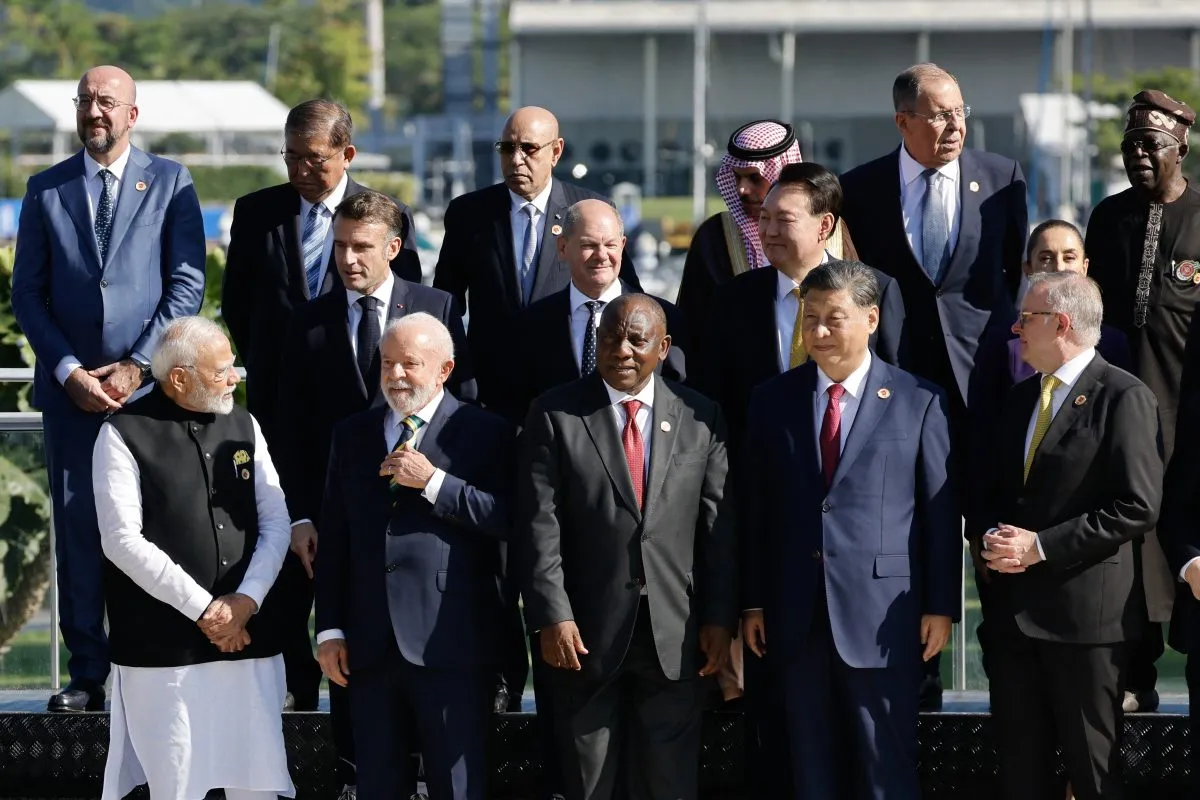
The convergence of two significant events this week — the African Union (AU) hosting the 8th Program for Infrastructure Development in Africa (PIDA) conference and South Africa’s initiation of its G20 Presidency — marks an unprecedented opportunity to place Africa’s pressing infrastructure demands at the forefront of global dialogue. This alignment of events holds considerable promise for transforming the global approach to infrastructure financing for the continent.

Africa’s infrastructure financing gap is both vast and urgent. The African Development Bank (AfDB) has estimated that the continent requires approximately $86.7 billion in external financing per year to achieve the AU’s Agenda 2063 goals, with a significant portion allocated to infrastructure. Yet, research reveals that Africa itself contributes nearly half of its infrastructure funding. While African governments and regional banks such as the AfDB account for roughly 38% and 8% of financing, respectively, the external support has been notably insufficient in bridging the gap.

Historically, the G20 has not played a leading role in Africa’s infrastructure financing, despite its substantial economic influence. China, over the past two decades, has emerged as the largest partner, committing approximately $87 billion to infrastructure development on the continent, primarily through bilateral loans and concessional finance from the China Export-Import Bank. The Arab Coordination Group (ACG), notably led by Saudi Arabia, has also contributed significantly, with $2.2 billion in infrastructure finance directed to Africa. In contrast, European and American financial contributions to African infrastructure remain minimal.


ADVERTISEMENT

For example, debt owed to European G20 countries, including EU institutions, is below $15 billion, while the U.S., despite being the largest individual economy in the G20, has consistently ranked among the least active players in financing Africa’s infrastructure. While U.S. foreign assistance has reached between $1 billion and $2 billion annually from 2012 to 2022, this is a fraction of the funding allocated for health and humanitarian needs. The global institutions where the U.S. exerts significant influence, such as the World Bank, have increasingly shifted focus from infrastructure to governance, technical assistance, and social spending, further exacerbating Africa’s infrastructure deficit.

The question now is whether South Africa and the African Union can transform the G20 into a more substantial partner in addressing Africa’s infrastructure needs. There are three clear imperatives to this agenda.

First, there is an urgent need for more comprehensive and up-to-date research into Africa’s infrastructure requirements. While the Global Infrastructure Hub, a G20 initiative, has attempted to provide a data-driven approach, it currently covers only 15 African countries and largely relies on outdated data. Expanding its remit to include all AU members and ensuring the data reflects the continent’s current and future needs would provide a more robust foundation for G20 action. This should be a priority for South Africa’s G20 presidency in 2025, offering a tangible step towards aligning G20 policies with Africa’s development trajectory.

Second, the G20’s existing financial strategies must be recalibrated to align more closely with Africa’s priorities. Initiatives such as the African Continental Free Trade Area (AfCFTA) and flagship projects like PIDA are central to the AU’s vision for regional integration. G20 countries must go beyond rhetoric and actively channel more resources into concessional finance mechanisms, particularly through the AfDB’s African Development Fund, which is due for replenishment in 2025. Increasing contributions to multilateral funding channels would signal a genuine commitment to Africa’s development aspirations.

Third, innovative financial models are essential. Africa’s infrastructure needs are often cross-border in nature, requiring creative solutions that go beyond traditional bilateral loans. One potential avenue for innovation is the creation of a ‘borrower’s club’, which could pool risk and attract private investment by offering creditors greater security. The G20’s infrastructure working group has already explored cross-border infrastructure challenges in other regions, but has largely neglected Africa. By broadening its scope and experimenting with risk-sharing models, the G20 could unlock new sources of funding and accelerate infrastructure development across the continent.

Looking ahead, South Africa’s G20 presidency presents a critical juncture to put Africa’s infrastructure development at the centre of global priorities. By leveraging the G20’s economic and financial clout, the AU and South Africa have the potential to reshape the landscape of international development finance and create lasting solutions to the continent’s infrastructure financing needs.

Tags: Africa's developmentAfrican Development BankAfrican UnionAgenda 2063Cross-border ProjectsG20Global Infrastructure HubGlobal Partnershipsinfrastructure financingInfrastructure LoansSouth Africa
Previous Post

Ghana’s Currency Crisis Takes Centre Stage Ahead of 2024 Election

Next Post

British Army Could Collapse in Six Months Against Russia, Warns Minister

The Editorial Board

Related Posts

Approaching Equity Investing During High Geopolitical and Stagflation Risks
Analysis

Approaching Equity Investing During High Geopolitical and Stagflation Risks

by SAT Reporter
April 27, 2026
Zimbabwe’s Fuel Boom Masks a Laundering Economy
Analysis

Zimbabwe’s Fuel Boom Masks a Laundering Economy

by SAT Reporter
April 22, 2026
LONG READ: Why Sanctions Will Not Solve the Rwanda–DRC Conflict
Analysis

LONG READ: Why Sanctions Will Not Solve the Rwanda–DRC Conflict

by The Editorial Board
April 12, 2026
Kagame’s Wake Up Call: The End of Leadership Without Consequence?
Analysis

Kagame’s Wake Up Call: The End of Leadership Without Consequence?

by Farai Muvuti
April 4, 2026
UPDATED: Leveraging AfCFTA for Continental Trade Integration: Lessons from KEDA Ceramics
Analysis

UPDATED: Leveraging AfCFTA for Continental Trade Integration: Lessons from KEDA Ceramics

by Development Reimagined
March 12, 2026
Next Post
British Army Could Collapse in Six Months Against Russia, Warns Minister

British Army Could Collapse in Six Months Against Russia, Warns Minister

Browse by Category

  • Africa AI
  • African Continental Free Trade Area
  • African Debt
  • African Start ups
  • Agriculture
  • AI Africa
  • Algeria
  • All News
  • Analysis
  • Angola
  • Arts / Culture
  • Asia
  • Botswana
  • BOTSWANA
  • BREAKING NEWS
  • BRICS
  • Burkina Faso
  • Burundi
  • Business
  • Business
  • Business Wire
  • Cameroon
  • Central Africa
  • Chad
  • China
  • Climate Change
  • Climate Changev
  • Community
  • Congo Republic
  • Conservation
  • Côte d’Ivoire
  • COVID 19
  • CRYPTOCURRENCY
  • Culture
  • Democratic Republic of Congo
  • Diplomacy
  • Eastern Africa
  • Economic Development
  • Economy
  • Education
  • Egypt
  • Elections 2024
  • Energy
  • Entertainment
  • Environment
  • Eritrea
  • Ethiopia
  • Europe
  • Fashion
  • Feature
  • Finance
  • Financial Inclusion
  • Food
  • Food and Drink
  • Foods
  • GABON
  • Ghana
  • Global
  • Global Africa
  • Guinea
  • Health
  • Humanitarian Aid
  • Immigration
  • in Southern Africa
  • International news
  • International Relations
  • Investment
  • Ivory Coast
  • Just In
  • Kenya
  • Lesotho
  • Libya
  • Life Style
  • Lifestyle
  • Literature
  • Malawi
  • Malawi
  • Mali
  • Markets
  • Mauritius
  • Middle East
  • Mining in Africa
  • Morocco
  • Mozambique
  • Namibia
  • Niger
  • niger
  • Nigeria
  • North Africa
  • North-Eastern Africa
  • Obituaries
  • Obituary
  • Opinion
  • PARTNER CONTENT
  • Politics
  • Property
  • Racism
  • Rwanda
  • Rwanda
  • SADC
  • SAT Interviews
  • SAT Investigation
  • SAT Jobs
  • Saudi Arabia
  • Senegal
  • Seychelles
  • Somaliland
  • South Africa
  • South Sudan
  • Sports
  • Startup Africa
  • STOCK EXCHANGE
  • Sudan
  • Sustainability
  • Sustainablity
  • Tanzania
  • Technology
  • Telecommunications
  • The Editorial Board
  • The Power Of She
  • Togo
  • Trade
  • Travel
  • Travel
  • Tunisia
  • Uganda
  • Uncategorized
  • Wealth
  • West Africa
  • World
  • World
  • ZAMBIA
  • Zambia
  • Zimbabwe
  • ZIMBABWE

Browse by Tags

#NewsUpdate #SouthAfrica #SouthernAfricanTimes #TheSouthernAfricanTimes AfCFTA africa African Continental Free Trade Area African development African Development Bank African economies African economy African Union Agriculture Angola Botswana China Climate change Cyril Ramaphosa Economic Development economic growth energy transition governance IMF industrialisation Inflation Infrastructure Infrastructure Development International relations Investment Kenya Mozambique Namibia news Nigeria Regional Integration renewable energy Rwanda SADC South Africa Southern Africa sustainable development Tanzania United States Zambia Zimbabwe
ADVERTISEMENT

WHO WE ARE

The Southern African Times is a regional bloc digital newspaper that covers Southern African and world news. The paper also gives a nuanced analysis on news and covers a wide range of reporting which include sports, entertainment, foreign affairs, arts and culture.

Welcome Back!

Login to your account below

Forgotten Password?

Retrieve your password

Please enter your username or email address to reset your password.

Log In
  • Home
  • Southern Africa
  • Business
    • African Start ups
    • African Continental Free Trade Area
  • Technology
    • Lifestyle
      • Health
      • Culture
      • Food and Drink
      • Entertainment
  • Opinion
  • Sports
  • SAT Jobs
    • Events
  • About Us
    • Advertise with Us
    • Contact Us
Not enough quota to unlock this post
Unlock left : 0
Are you sure want to cancel subscription?