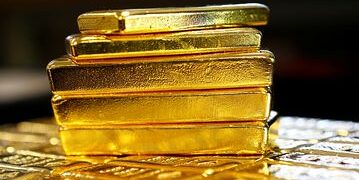
Goldman Sachs and UBS have revised their projections for gold prices sharply upward, underscoring the intensifying global appetite for safe-haven assets amid mounting economic and geopolitical uncertainty. Both investment banks cited sustained central bank demand, tightening market liquidity, and a strategic shift in investor portfolios as key drivers expected to support a continued rally in bullion prices through 2025 and into mid-2026.
According to a recent note from Goldman Sachs analysts led by Lina Thomas, the price of gold is projected to reach $3,700 per ounce by the end of 2025, with a further rise to $4,000 by mid-2026. These forecasts mark a significant recalibration from previous estimates issued in March and reflect the commodity’s robust performance in recent weeks. Gold prices have risen 6.6% over the past week alone, culminating in a new all-time high above $3,245 per ounce earlier this month.
UBS Group AG, in a separate communication, has also expressed a similarly bullish stance. Strategist Joni Teves indicated that UBS now expects gold to reach $3,500 per ounce by December 2025. Teves emphasised that the momentum is being sustained across a diverse spectrum of demand segments, including sovereign reserves, long-term institutional portfolios, macro hedge funds, and individual investors seeking to hedge against volatility in risk assets.



This optimistic outlook is reinforced by macroeconomic indicators signalling increased recessionary risk. Goldman Sachs economists currently place the probability of a U.S. recession at 45%, up from earlier forecasts. If recessionary conditions materialise, inflows into gold-backed exchange traded funds (ETFs) are likely to accelerate, thereby applying further upward pressure on bullion prices. The bank anticipates that under such a scenario, gold could approach $3,880 per ounce by year-end.
Central bank activity has emerged as a particularly powerful force behind the rally. According to Goldman Sachs’ revised estimates, official-sector purchases are expected to average 80 metric tonnes per month in 2025 — a notable increase from the previous projection of 70 tonnes. These purchases, often undertaken as part of broader reserve diversification strategies, represent a continuation of the trend observed in recent years, particularly among emerging market economies seeking insulation from geopolitical and currency volatility.
UBS’s Teves echoed this view, noting that the strategic role of gold in national reserves has only grown more prominent. As trust in fiat currencies fluctuates and geopolitical realignments persist, gold’s traditional role as a monetary anchor appears to be undergoing a modern resurgence. According to Teves, “The investor base has broadened significantly since the financial crisis of 2008, and the need to diversify portfolios has never been more evident.”

Beyond demand-side factors, supply constraints may also contribute to price volatility and upward momentum. Gold production remains constrained by limited mine supply growth, while a substantial portion of existing gold remains tied up in central bank reserves and long-term ETF holdings. This diminished liquidity is likely to exaggerate price movements, especially in the face of surging demand from multiple investor classes.
In terms of market positioning, there is still headroom for additional exposure to the yellow metal. UBS contends that current allocations remain moderate compared to historical peaks, such as those recorded in the 2012–13 period. While investor positioning in gold has increased, it has yet to reach saturation levels that might suggest an overheated market. This leaves room for further upward momentum as economic and political uncertainty persists.
The current rally occurs in the broader context of policy shifts and trade tensions under the administration of U.S. President Donald Trump. Recent announcements concerning reciprocal tariffs have introduced fresh uncertainty into global markets, prompting investors to retreat from risk assets and reallocate towards havens like gold. Such geopolitical dynamics only add to the commodity’s appeal as both a hedge and a store of value.
This pattern is particularly relevant for Southern African economies, many of which are heavily exposed to fluctuations in global commodity markets. South Africa, as one of the world’s leading gold producers, stands to benefit from stronger prices in terms of export revenues and foreign exchange stability. However, the broader macroeconomic environment — including potential inflationary spillovers and currency pressures — remains a key variable for policymakers to monitor.
While forecasts are inherently subject to change, the growing consensus among global financial institutions lends significant weight to the bullish narrative surrounding gold. Investors, asset managers, and policymakers alike will be watching closely as this upward trajectory unfolds, seeking to navigate a complex and shifting global landscape where safe-haven assets are once again assuming centre stage.
For full details on Goldman Sachs’ gold outlook, visit their latest report. UBS’s market commentary can be accessed through their investment research portal.