Wednesday, June 24, 2026
  • Login
The Southern African Times
  • Home
  • Southern Africa
  • Business
    • African Start ups
    • African Continental Free Trade Area
  • Technology
    • Lifestyle
      • Health
      • Culture
      • Food and Drink
      • Entertainment
  • Opinion
  • Sports
  • SAT Jobs
    • Events
  • About Us
    • Advertise with Us
    • Contact Us
No Result
View All Result
  • Home
  • Southern Africa
  • Business
    • African Start ups
    • African Continental Free Trade Area
  • Technology
    • Lifestyle
      • Health
      • Culture
      • Food and Drink
      • Entertainment
  • Opinion
  • Sports
  • SAT Jobs
    • Events
  • About Us
    • Advertise with Us
    • Contact Us
No Result
View All Result
The Southern African Times
No Result
View All Result
Home Opinion

BRICS expansion: Forging a new era of global pluralism

by SAT Reporter
August 25, 2023
in Opinion
0
BRICS expansion: Forging a new era of global pluralism

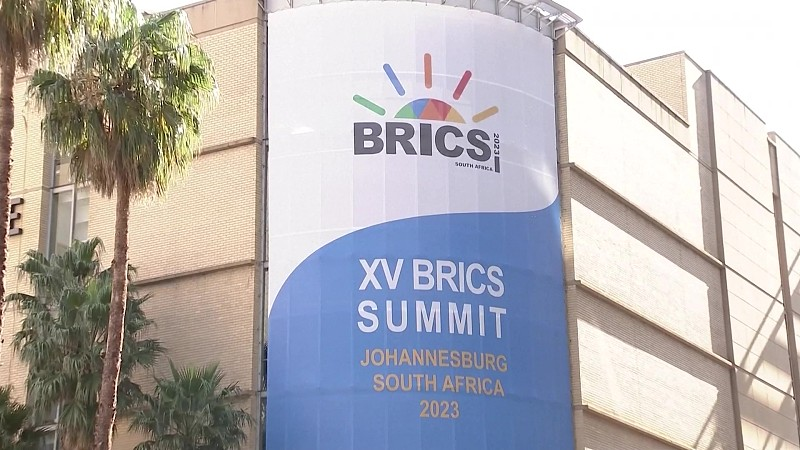
The recent pronouncement regarding the BRICS’ enlargement to encompass Saudi Arabia, Iran, the United Arab Emirates, Argentina, Egypt, and Ethiopia serves as a watershed moment in the realm of worldwide geopolitics and economic collaboration. This pivotal decision comes on the heels of the annual BRICS summit hosted in Johannesburg, South Africa, and stands as the first grand expansion of the group since its inception. As these fresh participants gear up to integrate into the fold on the dawn of January 1, 2024, the globe is witnessing a more polycentric world order characterized by comprehensive cooperation and collective consensus.

The foundational BRICS members, consisting of Brazil, Russia, India, China, and South Africa, materialized in response to the dominion of Western powers in global affairs. With time, BRICS has provided a platform for prominent emerging economies to deliberate over shared interests, exchange insights, and collectively grapple with global quandaries. The inclusion of six new members elevates this mandate, ushering in voices from the Middle East, Africa, and Latin America into the narrative.

South African President Cyril Ramaphosa highlighted the consensus on guiding principles, criteria, and procedures for expanding within BRICS. Narendra Modi, the Indian prime minister, commended this step, expressing his belief that it would bolster BRICS and align it with changing times. Chinese President Xi Jinping viewed the expansion as a new beginning for cooperation, with a focus on advancing global peace and development. Russian President Vladimir Putin warmly embraced and endorsed the expansion’s significance.


ADVERTISEMENT

This move vividly underlines BRICS’ evolving role in tackling worldwide challenges, promoting economic synergy, and advocating for a multipolar world order. The expansion stands as an effort to unite diverse economies for collective advancement, reaffirming the pivotal role of BRICS in reshaping the global scenario.

This expansion surpasses mere symbolism; it carries momentous implications for regional and worldwide dynamics. For Saudi Arabia, the planet’s premier exporter of crude oil, being positioned within the same economic framework as China, the foremost oil importer globally, lays the foundation for collaborative energy strategies and economic diversification. The incorporation of Iran offers an avenue for dialogue and economic partnership, potentially fostering stability in a volatile milieu.

The UAE’s stature as a financial and commercial nucleus, Argentina’s agricultural prowess, Egypt’s strategic geographical location, and Ethiopia introduce a spectrum of viewpoints and resources to the discourse. This expansion aligns harmoniously with the tenets of pluralism, wherein nations boasting diverse competencies and priorities converge in pursuit of common interests.
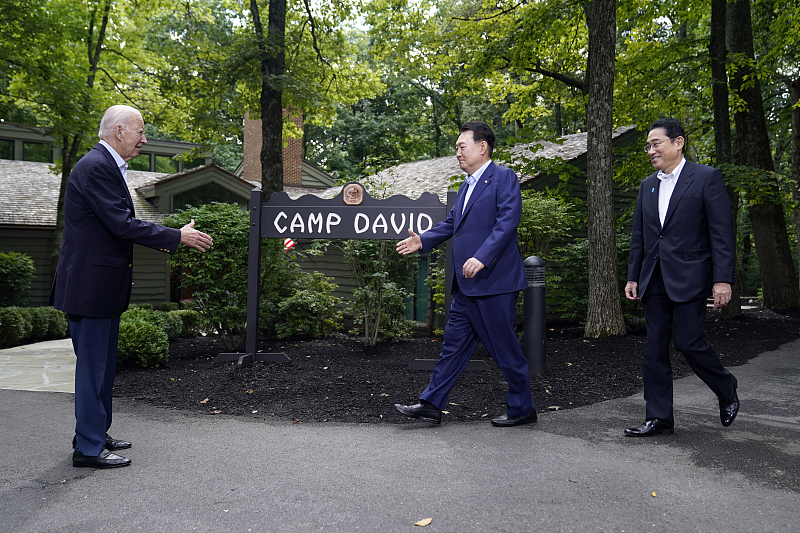
President Joe Biden greets South Korea’s President Yoon Suk Yeol, center, and Japan’s Prime Minister Fumio Kishida, right, on Friday, Aug. 18, 2023, at Camp David, the presidential retreat, near Thurmont, Md. (AP Photo/Andrew Harnik)

A stark contrast emerges with unilateral approaches epitomized by initiatives such as AUKUS and the U.S.-Japan-ROK trilateral summit. The amplification of BRICS underscores the importance of consensus-driven decision-making. The incumbent BRICS constituents have emphasized that the guiding principles, benchmarks, criteria, and procedures pertinent to expansion were collectively endorsed. This collaborative ethos, coupled with entities like the New Development Bank, challenges the hegemony of Western-dominated financial frameworks and fosters a more all-encompassing global economic edifice.

Built upon the multipolar fabric of our world, the BRICS approach encompasses not just major powers but also emerging economies, echoing a fairer allotment of influence. By championing the assimilation and inclusion of varied economies, BRICS underscores the principle that universal challenges necessitate a tapestry of viewpoints. Solutions ought to be crafted through consensus, not imposition

In the past, BRICS widespread structure, encompassing an array of political ambitions and historical distinctions among member nations, may have tempered its influence. Nevertheless, an alternate outlook presents the expansion as a deliberate step forward in tackling precisely these challenges. As the collective body progressively mirrors the diverse economic and cultural panorama of our world, it positions itself aptly to recognize and address the intricate array of concerns emanating from the Global South. This evolution is a testament to its potential to foster positive transformation on multiple fronts.

The ramifications of the BRICS expansion extend beyond economic contours. The admission of nations from the Middle East and Africa underscores the pertinence of their perspectives in sculpting global agendas. By extending the embrace to countries from these domains, BRICS reasserts its fidelity to pluralism, which contradicts Western powers’ unilateral tendencies. As the group welcomes new entrants and deals with intricate matters such as a unified currency, it underscores its readiness to navigate complexities through dialogue and collaboration.

In an epoch besieged by predicaments from climate transformation to economic asymmetry, the BRICS expansion engenders a glimmer of optimism for collaborative remedies. The collective vigor of diverse economies, cultures and geopolitical outlooks can reconfigure global governance, positioning the voices of the Global South in the vanguard. While uncertainties persist in the global world, the gravity of this expansion remains unrivaled. It signifies a stride toward a more equitable and inclusive realm – one where the intricacies of pluralism are embraced, and the prospect of shared prosperity occupies a pole position.


Shahid Hussain, is the founder and CEO of the UAE-based company Green Proposition. The article reflects the author’s opinions, and not necessarily the views of The Southern African Times.

Previous Post

JP Markets Returns to the South African CFDs Market with ODP License

Next Post

The key to greening heavy industry

SAT Reporter

Related Posts

The Insurance Hack More Drivers Should Know
Opinion

The Insurance Hack More Drivers Should Know

by Times Reporter
June 22, 2026
Southern African Times Announces Brendan Amadi as Recipient of the 2026 Editorial Recognition of the Year Award
The Editorial Board

Southern African Times Announces Brendan Amadi as Recipient of the 2026 Editorial Recognition of the Year Award

by The Editorial Board
June 19, 2026
LONG READ | No Longer the World’s Dustbin: China’s Waste Ban and Africa’s Circular Economy Moment
Opinion

LONG READ | No Longer the World’s Dustbin: China’s Waste Ban and Africa’s Circular Economy Moment

by Times Reporter
June 12, 2026
OPINION | The Investors Southern Africa Refuses to See
Opinion

OPINION | The Investors Southern Africa Refuses to See

by Times Reporter
June 14, 2026
Faith, Miracles and the Crisis of Religious Authenticity
Opinion

Faith, Miracles and the Crisis of Religious Authenticity

by Brendan Amadi
June 10, 2026
Next Post
The key to greening heavy industry

The key to greening heavy industry

Browse by Category

  • Africa AI
  • African Continental Free Trade Area
  • African Debt
  • African Start ups
  • Agriculture
  • AI Africa
  • Algeria
  • All News
  • Analysis
  • Angola
  • Arts / Culture
  • Asia
  • Botswana
  • BOTSWANA
  • BREAKING NEWS
  • BRICS
  • Burkina Faso
  • Burundi
  • Business
  • Business
  • Business Wire
  • Cameroon
  • Central Africa
  • Chad
  • China
  • Climate Change
  • Climate Changev
  • Community
  • Congo Republic
  • Conservation
  • Côte d’Ivoire
  • COVID 19
  • CRYPTOCURRENCY
  • Culture
  • Democratic Republic of Congo
  • Diplomacy
  • Eastern Africa
  • Economic Development
  • Economy
  • Education
  • Egypt
  • Elections 2024
  • Energy
  • Entertainment
  • Environment
  • Eritrea
  • Ethiopia
  • Europe
  • Fashion
  • Feature
  • Finance
  • Financial Inclusion
  • Food
  • Food and Drink
  • Foods
  • GABON
  • Ghana
  • Global
  • Global Africa
  • Guinea
  • Health
  • Humanitarian Aid
  • Immigration
  • in Southern Africa
  • International news
  • International Relations
  • Investment
  • Ivory Coast
  • Just In
  • Kenya
  • Lesotho
  • Libya
  • Life Style
  • Lifestyle
  • Literature
  • Malawi
  • Malawi
  • Mali
  • Markets
  • Mauritius
  • Middle East
  • Mining in Africa
  • Morocco
  • Mozambique
  • Namibia
  • niger
  • Niger
  • Nigeria
  • North Africa
  • North-Eastern Africa
  • Obituaries
  • Obituary
  • Opinion
  • PARTNER CONTENT
  • Politics
  • Property
  • Racism
  • Rwanda
  • Rwanda
  • SADC
  • SAT Interviews
  • SAT Investigation
  • SAT Jobs
  • Saudi Arabia
  • Senegal
  • Seychelles
  • Somaliland
  • South Africa
  • South Sudan
  • Sports
  • Startup Africa
  • STOCK EXCHANGE
  • Sudan
  • Sustainability
  • Sustainablity
  • Tanzania
  • Technology
  • Telecommunications
  • The Editorial Board
  • The Power Of She
  • Togo
  • Trade
  • Travel
  • Travel
  • Tunisia
  • Uganda
  • Uncategorized
  • Wealth
  • West Africa
  • World
  • World
  • ZAMBIA
  • Zambia
  • ZIMBABWE
  • Zimbabwe

Browse by Tags

#NewsUpdate #SouthAfrica #SouthernAfricanTimes #TheSouthernAfricanTimes AfCFTA africa African Continental Free Trade Area African development African Development Bank African economies African economy African Union Agriculture Angola Botswana China Climate change Cyril Ramaphosa Economic Development economic growth energy transition Ghana governance industrialisation Inflation Infrastructure Infrastructure Development International relations Investment Kenya Mozambique Namibia news Nigeria Regional Integration renewable energy Rwanda SADC South Africa Southern Africa sustainable development Tanzania United States Zambia Zimbabwe
ADVERTISEMENT

WHO WE ARE

The Southern African Times is a regional bloc digital newspaper that covers Southern African and world news. The paper also gives a nuanced analysis on news and covers a wide range of reporting which include sports, entertainment, foreign affairs, arts and culture.

Welcome Back!

Login to your account below

Forgotten Password?

Retrieve your password

Please enter your username or email address to reset your password.

Log In
  • Home
  • Southern Africa
  • Business
    • African Start ups
    • African Continental Free Trade Area
  • Technology
    • Lifestyle
      • Health
      • Culture
      • Food and Drink
      • Entertainment
  • Opinion
  • Sports
  • SAT Jobs
    • Events
  • About Us
    • Advertise with Us
    • Contact Us
Not enough quota to unlock this post
Unlock left : 0
Are you sure want to cancel subscription?