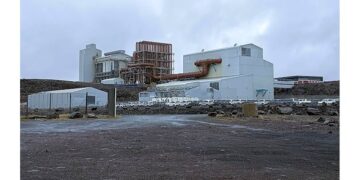
The expansion of Botswana’s coal mining sector continues to gain momentum with the development of the country’s third coal mine, situated near Mookane in the Mmamabula Coal Field, Central Botswana. The project, which is progressing towards initial production later this year, owes much of its success to the expertise provided by South African geological consultancy firm, Gemecs. The company has played a crucial role in exploration, resource modelling, and mine planning, contributing to what could become a significant player in the Southern African coal market.
Botswana, traditionally reliant on diamond mining, has increasingly turned its attention to coal as a means of economic diversification. With an estimated resource of 94 million tonnes, the new mine is projected to produce 1.2 million tonnes of coal per year using both opencast and underground mining methods. Phase 1 of the mine plan is targeting an initial output of 100,000 tonnes per month, with the potential to scale up production to 300,000 tonnes per month. This expansion remains contingent on the completion of the proposed Waterberg rail link, which would facilitate coal exports, as well as the establishment of a second mine in the region.
Gemecs, a South African consultancy with extensive expertise in coal resource management, has been integral to the project’s development. The company’s managing director and consulting geologist, Nico Denner, emphasises that their involvement spans the entire coal resource value chain. From initial prospecting and permit evaluations to core logging, geological modelling, and competent person reporting, Gemecs has provided comprehensive support to ensure the viability of the operation. The firm also collaborates closely with mine planning consultants and technical specialists to develop precise short- and long-term production strategies.




A key aspect of the company’s approach lies in its adoption of cutting-edge technology for geological modelling and mine planning. The consultancy employs GEOVIA Minex software for modelling, while its recent acquisition of Minescape has enhanced its ability to generate 3D geological models and refine mine design strategies. Minescape’s capacity to interpret geological borehole data, consolidate information, and streamline mine planning processes is expected to significantly enhance operational efficiency. Additionally, the firm utilises Micromine’s Geobank software to maintain high-quality geological databases, ensuring accurate data storage and verification for its clients.
Despite global concerns regarding the environmental impact of coal mining, Botswana has positioned itself as a key player in the regional coal industry, particularly given its vast reserves and the increasing demand for coal exports. The country has sought to balance economic development with sustainability by exploring cleaner coal technologies. Gemecs, recognising these industry shifts, has actively engaged in discussions on the future of coal mining in Southern Africa. The firm has supported industry events, including FFF Carbon’s Coal Conference in Middelburg, and maintains collaborations with organisations such as Future Coal to stay informed on emerging trends and regulatory developments.
As the coal sector evolves, Gemecs aims to strengthen its presence in Botswana, contributing further to the country’s resource-based development. The company’s commitment to technological innovation, data-driven decision-making, and industry engagement underscores its role as a leading geological consultancy in the region. With the Mmamabula Coal Field’s potential and the anticipated expansion of infrastructure, Botswana’s coal industry is poised to play an increasingly prominent role in Southern Africa’s energy landscape.