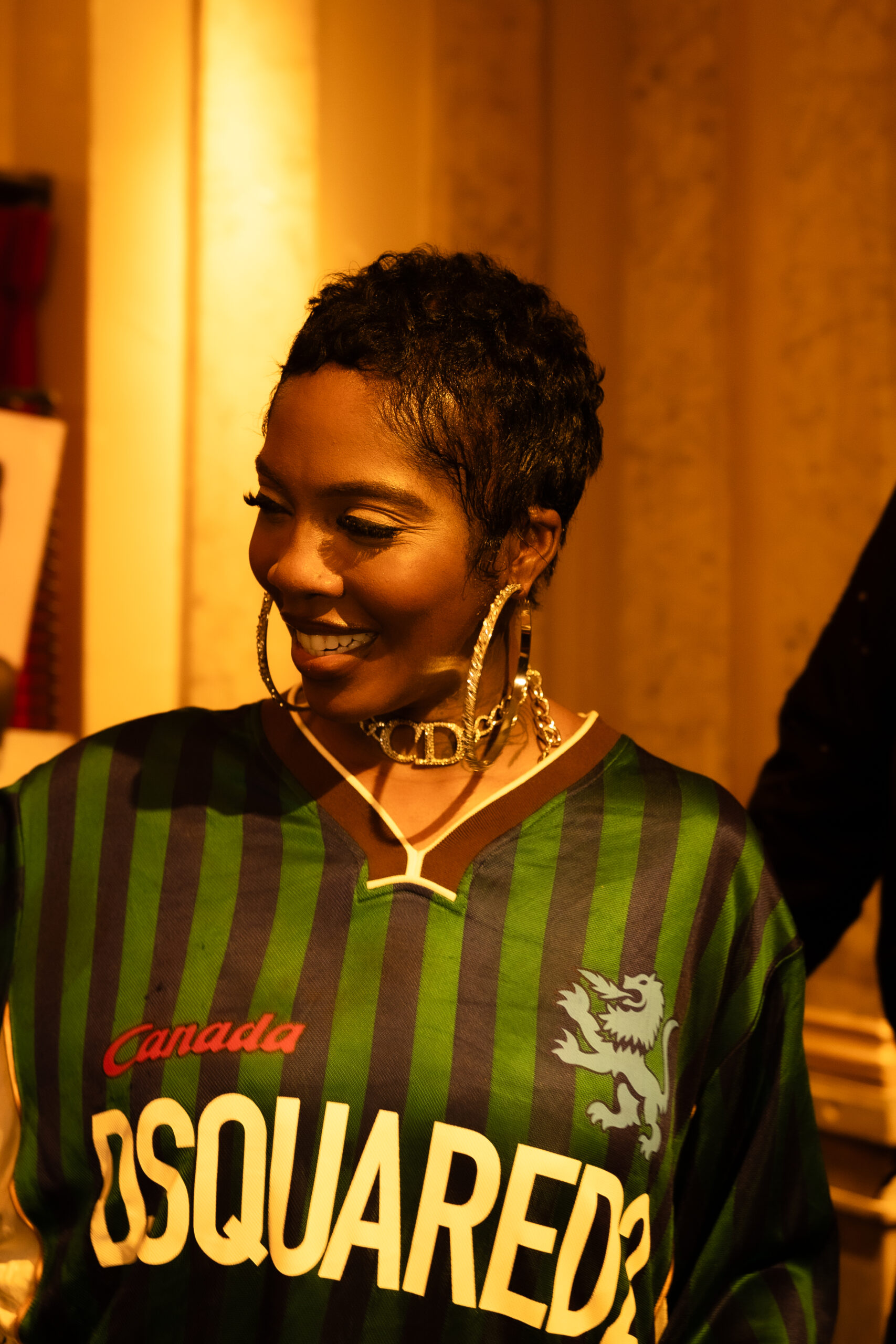
The Queen of Afrobeats, Tiwa Savage, has returned to the stage and, in many ways, to herself. On 30 August, London’s KOKO Camden overflowed with 1,500 fans for the launch of her fifth studio album, This One Is Personal. Ahead of the show, Savage hosted a Camden pop-up, where fans recreated the striking imagery from her album cover by posing on the now-iconic mattress throne.
During the free concert, she surprised the crowd by bringing her son, Jamil, on stage. Performing On The Low, JamJam captivated the audience by rapping Skepta’s verse—a moment that rippled across social media. It symbolised the essence of this new project: intimacy, candour and love stripped of performance. This One Is Personal is Savage’s most confessional body of work to date, a raw chronicle of heartbreak, healing and resilience.
Savage’s path to this moment has been anything but linear. Born in Lagos and raised between Nigeria and London, she studied music at Berklee College of Music before cutting her teeth as a backup singer for Mary J. Blige and George Michael. In 2010, she returned to Nigeria to carve her own space, becoming one of the first women to break into a male-dominated Afrobeats scene.



Since then, she has amassed MOBO, MTV EMA and Headies awards, collaborated with Beyoncé and Brandy, and performed to sold-out venues across continents. Yet her ascent has been punctuated by misogyny, age-shaming and criticism for presenting herself as the global pop star she is—pressures rarely applied to her male peers. These battles inform the defiance and honesty that underpin her new project. Contemporary scholarship has described Afrobeats as both “a soundtrack of urban youth identity and a transnational cultural force” (Omoniyi, Popular Music and Society, 2020). Within this framework, Savage has emerged not merely as a performer but as a cultural architect, pushing the genre’s boundaries while embodying its resilience.

📸: OluwaFemi, The.Femi
“This is the most vulnerable I have ever been on a record,” Savage told Apple Music before the release. Recorded over two years across London, Nashville and San Francisco, the 15-track album delves into some of her darkest chapters. Where her previous projects leaned on Afropop’s global shimmer, This One Is Personal confronts stark honesty. “I have done what people, labels and others have wanted for so long,” she explained. “This album is for me.”
The guest list is restrained yet deliberate: Skepta on On The Low, Nigerian newcomer Taves on Addicted, and Grammy-winning songwriter James Fauntleroy on Change. Zimbabwean-British artist Donel Mangena co-wrote several tracks, including Angel Dust and For One Night, shaping the album’s lyrical intensity. This pared-down approach allows Savage’s voice to bear the emotional weight.
The record opens with I’m Done, a stark piano ballad that sets the confessional tone. It moves through defiance (You’re Not the First, You’re Just the Worst), introspection (Twisted), and yearning (For One Night). You4Me, a reimagining of Tamia’s So Into You, nods to her London upbringing and 1990s R&B influences. On On The Low, featuring Skepta, Savage reframes secrecy as seduction. “It is the first time we have really heard Skepta rap in a romantic way,” she observed. The closing track, Change, written with Fauntleroy, pivots toward spirituality, addressed not to a lover but to God. “This was a very dark time for me, and it was very therapeutic too,” Savage reflected. “Every single line was personal.”

📸: OluwaFemi, The.Femi
The KOKO launch was less a marketing exercise than a gift to her fans. By staging the show free of charge, Savage cultivated an atmosphere of gratitude and closeness rather than exclusivity. The evening underscored her commitment to sharing this new chapter directly with her audience. Singles On The Low and You4Me have already found rotation on BBC 1Xtra and Capital Xtra. Earlier that week, she recorded an exclusive BBC Radio 1Xtra session at Maida Vale Studios, performing selections and dissecting the album track by track. Speaking candidly, she admitted to being “scared of love” after heartbreak, recognising her own toxic patterns, and finding solace in faith. “After all was said and done, the only person I could run to was God,” she said.
Savage has long carried the title of “Queen of Afrobeats,” though she resists being boxed in. “Being called an Afrobeats artist does not limit me,” she told 1Xtra. “Beyoncé has been called an R&B artist and she just did a country record. For me, it is about execution. I can do Afrobeats, I can do R&B. The title does not box me in.” That freedom has been hard-won. Throughout her career, she has endured double standards: misogyny, dismissal, relentless scrutiny over her age, and criticism for performing and dressing like the pop star she is. Where men are celebrated, she has been questioned. Still, she has persisted, refusing to diminish herself to appease narrow expectations.
For over a decade she has been hailed as the “foremother of Afrobeats,” a recognition of her trailblazing influence and staying power. Yet This One Is Personal is not about crowns or accolades. It is about stripping them away and revealing the scars beneath. When JamJam clasped her hand under the lights at KOKO Camden, the moment made clear that Savage’s reign is measured not in awards or numbers, but in her willingness to stand fully, vulnerably human. And for Afrobeats, that may be her most radical act yet.