The Energy Progress Report 2025, released on 25 June by the International Energy Agency, in collaboration with key partners, finds that 92% of the world’s population now has access to electricity—a milestone indicative of global progress towards the Sustainable Development Goal 7 (SDG 7) of universal energy access. However, the report tempers this optimism with the stark reality that sub-Saharan Africa remains a significant frontier in the electricity access agenda, accounting for approximately 85% of the global population still living without electricity. This equates to 565 million people across the region, with the bulk residing in rural, low-income, and often conflict-affected areas.
The global electrification trend shows encouraging momentum, but the pace remains insufficient to achieve universal access by 2030. According to the IEA, the remaining unconnected populations are predominantly located in remote geographies where extending national grids is cost-prohibitive and often unreliable. The report stresses that a more transformative approach, combining decentralised energy solutions and targeted policy frameworks, is essential to bridge this gap.
Within the African continent, progress has been markedly uneven. Northern Africa reduced its electricity deficit from 25 million in 2010 to 18 million in 2023, with countries such as Algeria, Morocco, and Tunisia demonstrating significant advancements. Eastern Africa also made gains, cutting the access deficit from 272 million to 241 million over the same period. However, Central Africa experienced a reversal, with the deficit rising from 101 million to 130 million. Southern Africa maintained a relatively stable outlook, with the number of people without access reducing modestly from 13 million in 2010 to 10 million in 2021, and remaining stagnant through 2023. West Africa’s trajectory was mixed, with access deficits rising to 186 million in 2021, before a slight drop to 184 million in 2023.



Eighteen of the twenty countries with the largest electricity access deficits are located in sub-Saharan Africa. As of 2023, Nigeria leads with 86.6 million people without access, followed by the Democratic Republic of Congo (79.6 million) and Ethiopia (56.4 million). Combined, these three nations account for over one-third of the global electricity access gap.
The IEA’s report makes it clear that electrification efforts must focus acutely on sub-Saharan Africa, not only due to the magnitude of the challenge but also because of the region’s demographic trajectory. Africa is currently the fastest-growing continent, with a population exceeding 1.4 billion. However, electricity supply continues to lag behind demographic growth, resulting in a widening energy access shortfall unless counterbalanced by decisive action.
Encouragingly, the report highlights some momentum through policy initiatives, such as the 2025 Dar es Salaam Declaration, endorsed by 48 African states. This declaration commits to accelerating electricity access, scaling up renewable energy deployment, and promoting clean cooking solutions—key pillars for achieving SDG 7.

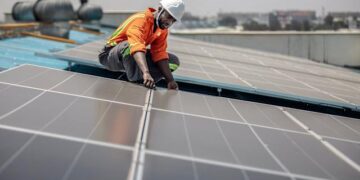
The IEA emphasises that universal electricity access will not be attainable through grid expansion alone, particularly in sparsely populated and hard-to-reach rural areas, where 84% of the unconnected population resides. In these contexts, decentralised energy solutions such as mini-grids and off-grid solar systems present more viable alternatives. These systems offer flexibility, speed of deployment, and adaptability to local needs, and are increasingly backed by technological innovations and cost reductions.
Achieving universal access also hinges on enabling environments that facilitate investment. The report calls for more granular energy data, bespoke funding mechanisms, and technical expertise to inform strategy and implementation. Equally important is the need to address regulatory barriers and bureaucratic bottlenecks that often delay or deter investment in energy infrastructure.

The report concludes with a strong appeal for renewed international commitment, strategic ambition, and integrated planning. A transformative energy future for Africa will require not only capital and innovation, but also partnerships that bridge global expertise with local realities.