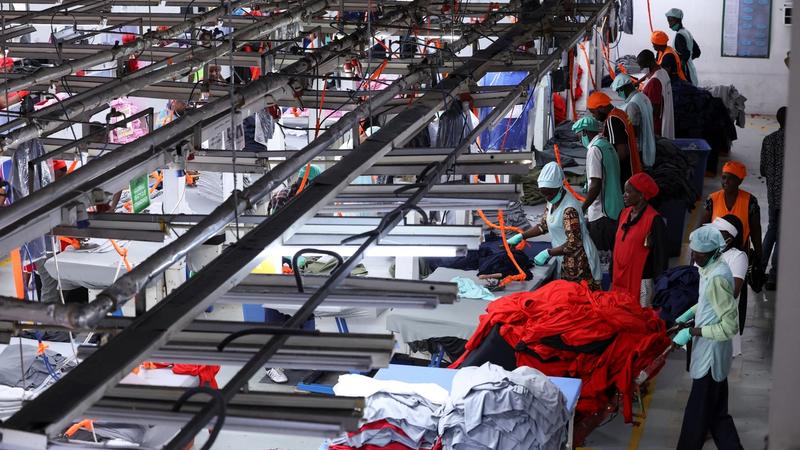
Africa’s economic growth is forecast to outpace that of Asia in 2026 according to recent projections by the International Monetary Fund. The latest IMF World Economic Outlook indicates that average output expansion in Sub Saharan Africa is expected to reach about 4.6 percent compared with an estimated 4.1 percent across Asia. If realised this would mark the first time that Sub Saharan Africa as a region grows more rapidly than Asia in recent decades.
The headline figures derive from the IMF’s regular global projections which are grounded in national accounts data reported by member states and supplemented with IMF staff estimates. Within Sub Saharan Africa a number of economies are anticipated to post particularly strong performance. Recent IMF and World Bank country notes point to double digit growth prospects in a small group of states that have experienced major structural shifts including those benefitting from new energy production capacity or large scale infrastructure and technology investments though such high rates are not uniform across the continent.
Demographic trends remain central to the narrative surrounding Africa’s longer term prospects. The continent is home to the world’s youngest population with a median age of roughly 19 years according to United Nations data. The UN projects that Africa will account for about a quarter of the global population by 2050 which implies a rapidly expanding labour force and consumer base. Analysts at the African Development Bank and other regional institutions argue that if this demographic momentum is matched by sustained investment in skills infrastructure and productive sectors it could support several decades of robust growth.



At the same time international and African experts emphasise that demographic change alone does not guarantee broad based prosperity. The French Development Agency has underlined in recent commentary that African countries will need to significantly expand investment in education health and vocational training in order to equip young people for a changing labour market shaped by digital technologies urbanisation and the transition to low carbon development. Regional development banks estimate that hundreds of millions of decent formal sector jobs will need to be created over the next generation to absorb new entrants and reduce underemployment.
African policymakers and researchers frequently point to the structure and cost of external finance as a constraint on these ambitions. Governments across the continent have argued in forums such as the African Union the African Development Bank Annual Meetings and United Nations climate and development conferences that sovereign borrowing costs do not always reflect the underlying fundamentals of their economies. They describe this as a mispricing of risk which contributes to higher interest rates shorter maturities and limited access to private capital compared with peers in other regions. This in turn complicates efforts to finance infrastructure climate resilience and social investment at the scale required.
Empirical studies by institutions including the United Nations Economic Commission for Africa and academic researchers have noted that African issuers often face wider bond spreads even when macroeconomic indicators are comparable to those of countries elsewhere. These findings are contested by some market participants who attribute higher borrowing costs primarily to debt sustainability concerns governance indicators and currency risk. The debate illustrates the complexity of assessing risk in diverse African contexts and the importance of transparent data and differentiated analysis rather than generalised assumptions.
Capital formation trends reinforce the centrality of investment to Africa’s growth outlook. Data compiled by the World Bank and the IMF show that gross capital formation as a share of gross domestic product in Sub Saharan Africa has tended to track below the global average for sustained periods with country by country variation. While some economies have increased public and private investment in energy transport digital infrastructure and manufacturing others remain constrained by limited fiscal space and volatile capital flows. A comparative chart of capital investment as a share of GDP for the world and for Sub Saharan Africa underlines this structural gap and points to the need for more stable long term financing.
Within the continent the picture is heterogeneous. Resource exporting states are navigating fluctuating commodity prices and seeking to diversify into manufacturing services and agricultural value chains. More diversified economies in regions such as East Africa and parts of West and Southern Africa have experienced relatively steady growth driven by services telecommunications financial innovation and expanding internal markets. Regional economic communities are also advancing integration initiatives aimed at reducing trade barriers improving cross border infrastructure and implementing the African Continental Free Trade Area which aspires to deepen intra African trade and industrial linkages.

African scholars and policymakers increasingly stress the importance of framing these developments through an African centred lens that recognises the agency of local institutions communities and entrepreneurs. Rather than viewing the continent only through narratives of vulnerability or risk they highlight examples of innovation in fields ranging from mobile finance and creative industries to climate smart agriculture and urban planning. At the same time they acknowledge the scale of ongoing challenges including income inequality climate vulnerability debt pressures and governance issues that differ markedly across countries.
International partners public development banks and private investors are being urged to engage with Africa in ways that reflect this diversity and complexity. Proposals include expanding concessional finance for climate and development scaling up local currency lending strengthening mechanisms for debt restructuring where needed and supporting domestic capital market development. The aim is to align external financing with national and regional priorities as articulated in African Union Agenda 2063 and in country development strategies while ensuring that investment decisions are grounded in rigorous analysis and transparent risk assessment.
A pan African perspective also brings into focus the importance of intra African cooperation. Cross border initiatives in energy corridors transport links regional payment systems and research collaboration are being designed to harness economies of scale and support resilience against external shocks. As global economic conditions evolve from shifts in monetary policy in major economies to changing demand for critical minerals and green technologies African states are seeking to position themselves not only as suppliers of raw materials but as hubs of processing manufacturing and knowledge production.

The IMF’s forecast that Sub Saharan Africa’s growth may outpace Asia’s in 2026 therefore sits within a wider and more nuanced context. It underscores the potential of a continent shaped by a young and growing population structural reforms regional integration and rising domestic markets yet it also highlights the central role of sustained investment sound macroeconomic management and equitable access to finance. Whether the projected figures translate into durable improvements in living standards will depend on policy choices within African states the responsiveness of international financial systems and the capacity of societies across the continent to steer development paths that reflect their own priorities and perspectives.
For further information readers may consult the IMF World Economic Outlook and regional economic reports produced by institutions such as the African Development Bank and the United Nations Economic Commission for Africa which provide detailed country data and analysis.