Financing for renewable energy projects across Africa is expected to increase significantly over the next two years as the African Development Bank’s Sustainable Energy Fund for Africa strengthens its role in mobilising private capital for the continent’s energy transition. According to officials from the African Development Bank Group, the fund anticipates mobilising approximately US$2.5 billion in commercial capital in the near term as demand grows for catalytic financing and technical support for renewable energy projects across multiple African regions.
The Sustainable Energy Fund for Africa, administered by the African Development Bank, is a multi donor facility established to accelerate investment in renewable energy and energy efficiency initiatives while expanding electricity access across the continent. Since its creation, the fund has mobilised roughly US$1 billion in commercial capital alongside its own financing commitments, reflecting the increasing involvement of private investors in Africa’s evolving energy landscape.
Recent financial data presented during the fund’s governing council meeting indicate that contributions to the facility rose to approximately US$88 million in 2025, up from US$54.3 million the previous year. Much of this support came from European partners, although the fund’s portfolio increasingly reflects collaboration between African institutions, international partners and private investors. Germany committed US$40.1 million during the COP30 climate summit in Brazil to support the fund’s programmes on universal energy access and emerging green hydrogen initiatives. Italy also announced an additional US$5.9 million contribution.



Officials at the African Development Bank note that catalytic financing mechanisms such as SEFA are designed to address investment barriers that have historically constrained renewable energy development across many African markets. Academic research indicates that concessional finance and targeted technical assistance can reduce perceived risks and encourage greater private sector participation in infrastructure projects that support sustainable development and climate resilience across the continent (Michaelowa et al., 2021; Sankoh and Muregasan, 2021).
Despite an overall increase in available financing, the number of new project approvals has remained relatively stable. In 2025, the fund approved 13 renewable energy projects valued at about US$97 million, compared with 14 projects worth US$108 million in the previous year. Over the past two years the fund has approved 27 projects in total, a level broadly comparable with earlier investment cycles but reflecting greater emphasis on scaling existing initiatives and supporting early stage project preparation.
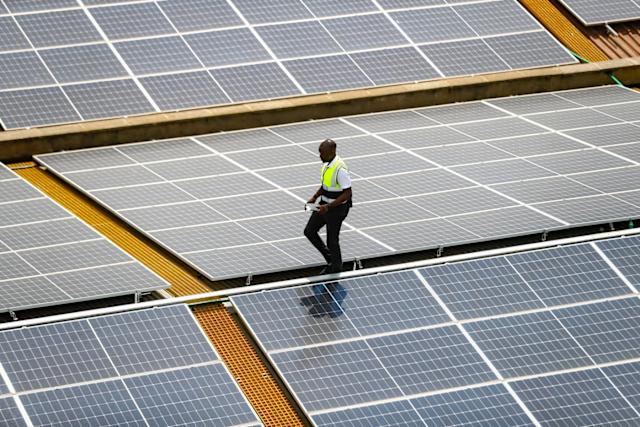
Across Africa, SEFA supported 14 renewable energy initiatives in 2024 in countries including Kenya, Nigeria, Burkina Faso, Ethiopia and Chad. These projects collectively added approximately 840 megawatts of generation capacity and facilitated around 1.5 million new electricity connections. Eight of these projects were categorised as green baseload energy, designed to provide stable electricity generation capable of supporting national grids. Two initiatives focused on mini grid deployment in decentralised energy systems while four addressed energy efficiency programmes.
The portfolio reflects the diversity of Africa’s energy transition pathways, which increasingly combine large scale renewable projects with decentralised energy systems serving rural and peri urban communities. Scholars examining renewable energy financing in Africa note that development finance institutions can play a catalytic role by combining concessional capital with private investment to support projects that might otherwise struggle to reach financial close (Schwerhoff and Sy, 2017; Yorke, Adom and Ng, 2023).

Recent approvals also illustrate growing interest in emerging energy technologies on the continent. In December 2025, SEFA approved a US$10 million loan for Hyphen Hydrogen Energy, a company developing renewable hydrogen and ammonia production in Namibia. The fund also issued an US$8.14 million guarantee to support a social currency bond in Côte d’Ivoire aimed at financing approximately 400000 new electricity connections.
Beyond utility scale generation projects, the fund is increasingly directing investment toward decentralised and distributed energy systems, including mini grid developers and investment platforms focused on smaller scale electricity production. These initiatives seek to expand energy access in areas where traditional grid infrastructure remains limited, while supporting locally driven economic activity.
Energy access remains a central development priority across Africa. According to international energy analyses, hundreds of millions of people across the continent still lack reliable electricity access, a challenge that has implications for education, health systems and industrial development. Programmes such as SEFA therefore seek not only to expand renewable energy capacity but also to address broader development objectives linked to the United Nations Sustainable Development Goal on affordable and clean energy.
Research examining climate finance mechanisms suggests that blended finance structures combining public funding, concessional loans and private capital can help scale renewable energy infrastructure while lowering investment risk in emerging markets (Kwanhi et al., 2025; Imasiku et al., 2025). Within this framework, African institutions and regional development banks increasingly play a coordinating role in shaping investment strategies that reflect both local development priorities and global climate commitments.

Looking ahead, the African Development Bank expects the fund’s portfolio to mobilise more than US$10 billion in commercial capital by 2030 as the pipeline of renewable energy and energy access projects expands across multiple regions. While financing alone cannot resolve the continent’s complex energy challenges, development finance institutions and regional partners argue that targeted investment frameworks can help accelerate infrastructure development while supporting locally defined energy transitions.
Across Africa, the expansion of renewable energy financing continues to reflect a broader shift toward diversified energy systems that combine large scale generation with community level solutions. For policymakers and investors alike, the question is increasingly how these investments can support inclusive economic development while strengthening long term energy resilience across the continent.