African leaders and senior officials are convening in Davos, Switzerland, for the 56th Annual Meeting of the World Economic Forum (WEF), taking place between 19 and 23 January 2026. With the overarching theme of this year’s summit being A Spirit of Dialogue, Africa’s participation is guided by a nuanced objective: to recast the continent not as a peripheral actor in global development, but as a pivotal partner shaping the world’s future economic landscape.
The delegation from the continent includes several Heads of State and Government, cabinet ministers, institutional leaders, and influential private sector representatives. Their collective agenda focuses on fostering cross-border infrastructure, enhancing digital ecosystems, scaling sustainable energy initiatives, and accelerating regional trade integration through the African Continental Free Trade Area (AfCFTA). This coordinated effort reflects an evolving pan African strategy to consolidate the continent’s demographic and resource assets into investible opportunities grounded in long term partnerships rather than aid dependence.




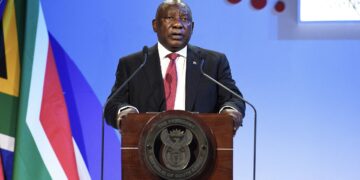
Among the African leaders attending is President Cyril Ramaphosa of South Africa, who is accompanied by Finance Minister Enoch Godongwana and Ronald Lamola, the Minister of International Relations and Cooperation. President Nana Akufo-Addo of Ghana is holding strategic coordination meetings aligned with the Accra Reset Initiative, a domestic policy platform aimed at strengthening economic sovereignty. The Democratic Republic of Congo, represented at a high level, seeks to spotlight its rising influence in the global minerals market. Morocco, Mozambique and other nations are also present with delegations aiming to advance their economic trajectories through global engagement.
The AfCFTA Secretariat is represented by Secretary-General Wamkele Mene, reflecting the centrality of intra African trade as a core pillar in the continent’s structural transformation. This engagement gains further depth with the presence of Dr George Elombi, President and Chairman of the Afreximbank, and Chido Munyati, Head of Africa at the World Economic Forum. Together, these institutions underscore a continental shift towards export development, industrial finance, and trade facilitation mechanisms that favour African production value chains.

Also in attendance is Ngozi Okonjo Iweala, Director General of the World Trade Organization, whose presence signals a confluence of multilateralism and African trade integration. Nigeria’s participation, marked by Minister of Industry, Trade and Investment Dr Jumoke Oduwole and Nigerian Investment Promotion Commission Executive Secretary Aisha Rimi, is focused on securing strategic capital flows and presenting Nigeria as a nexus for scaleable start ups and industrial hubs.
The private sector’s voice is being amplified by African business leaders including Sim Tshabalala, CEO of Standard Bank, Phuthi Mahanyele Dabengwa, CEO of Naspers South Africa, Kola Aina of Ventures Platform, and Jurie Strydom, CEO of Old Mutual. These individuals bring forward perspectives rooted in African capital markets, innovation ecosystems and corporate strategies that align with inclusive growth models.

The forum, which brings together over 3000 participants from 130 countries including more than 400 political leaders, 850 chief executives and founders of global companies, and representatives of 100 leading unicorns and technology pioneers, offers a high visibility platform for Africa’s repositioning. The African presence this year is notably stronger and more unified, in part due to coordinated platforms such as the Africa Collective, which seeks to bridge continental narratives with global opportunities through strategic storytelling, policy alignment, and coalition building.

Rather than relying on traditional appeals for development support, the African delegations are advancing a forward looking narrative. Central to this narrative is the demographic dividend represented by Africa’s young population, and the potential to harness this for industrialisation, innovation and regional self reliance. Such themes echo beyond economic metrics, challenging long held perceptions and inviting a broader dialogue on Africa’s role in a rapidly shifting multipolar world.
With structural reforms underway in many countries, and a growing emphasis on pan African collaboration over bilateral dependencies, Africa’s engagement at Davos is not simply symbolic. It reflects a deeper intention to anchor the continent’s growth strategy within a global context that recognises mutual benefit, shared responsibility, and long term partnership. Whether this translates into material investments or policy shifts remains to be seen, but the tone and ambition set by African leaders at the forum signal a continent increasingly determined to define its own future.