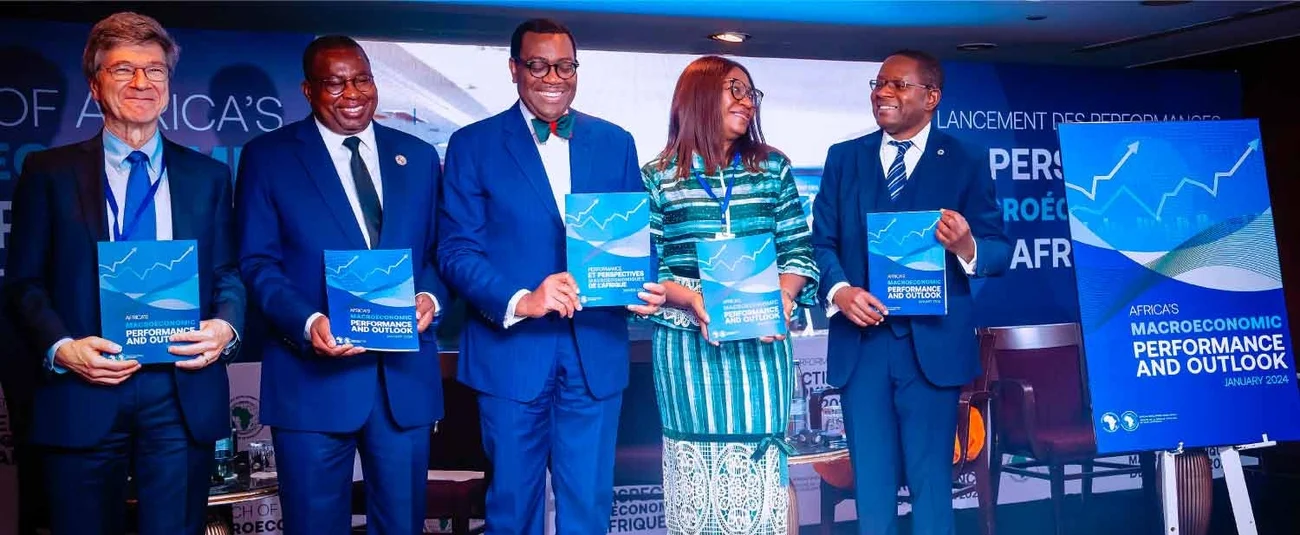
In a recent report released by the African Development Bank Group, Africa is poised to lead the world in economic growth, with eleven of the continent’s countries expected to rank among the world’s 20 fastest-growing economies in 2024.
The report, titled Africa’s Macroeconomic Performance and Outlook, projects a robust growth trajectory for the continent, with real gross domestic product (GDP) expected to average 3.8% in 2024 and 4.2% in 2025. These figures surpass the projected global averages of 2.9% and 3.2%, respectively, positioning Africa as the second-fastest-growing region after Asia.
Key highlights of the report include:



- Top Performing Economies: Niger, Senegal, Libya, Rwanda, Cote d’Ivoire, Ethiopia, Benin, Djibouti, Tanzania, Togo, and Uganda are forecasted to experience strong economic performance, with growth rates ranging from 6% to 11.2%.
- Fiscal Improvements: The report notes a stabilization of fiscal deficits at 4.9% in 2023, attributed to faster-than-expected recovery from the pandemic and fiscal consolidation measures in countries with high risks of debt distress.
- Regional Growth: Despite challenges, the medium-term growth outlook for Africa’s five regions is improving, reflecting the resilience of Africa’s economies.
Addressing the media, Dr. Akinwumi Adesina, President of the African Development Bank Group, emphasized the need for larger pools of financing and policy interventions to sustain Africa’s growth momentum. He underscored the importance of cautious optimism, given the challenges posed by global and regional risks such as geopolitical tensions and political instability.
Prof. Kevin Urama, Chief Economist and Vice President of the African Development Bank, highlighted factors contributing to Africa’s economic growth, including economic diversification, strategic investment, and rising consumption.
Ambassador Albert Muchanga, Commissioner for Economic Development, Trade, Tourism, Industry, and Minerals at the African Union Commission, emphasized the importance of economic integration to enhance Africa’s competitiveness in the global market.
The report’s recommendations will be made available to African heads of state and will inform the African Union’s proposals to the G20, an informal gathering of the world’s largest economies.
In response to the report, Prof. Mthuli Ncube, Zimbabwe’s Minister of Finance and Economic Development, acknowledged the challenges facing his country, including climate shocks and debt restructuring. He emphasized the need for economic and governance reforms to boost growth.

Noted economist Prof. Jeffrey Sachs called for long-term affordable financing for Africa and advocated for a larger African Development Bank to meet the continent’s financing needs.
Despite positive growth projections, the report acknowledges the need for Africa to address challenges such as climate change, debt sustainability, and governance reforms to ensure sustained economic growth.
Economic Outlook Across Regions
- Southern Africa: Growth in the region is expected to remain sluggish at 2.2% and 2.6% in 2024 and 2025, respectively, primarily due to economic weakness in South Africa, the region’s largest economy.
In conclusion, Africa’s economic outlook is promising, with significant growth potential across various sectors. However, addressing challenges and implementing the necessary reforms will be crucial to sustaining this growth trajectory and ensuring shared prosperity across the continent.