Foreign direct investment across Africa is once again redefining global economic alignments, with both the United States and China recalibrating their approaches to the continent’s vast reserves of strategic resources. Recent data from the China Africa Research Initiative (CARI) at Johns Hopkins University indicates a notable shift in investment flows. In 2023, US companies invested just under 8 billion US dollars in Africa, nearly double the figure from China during the same period. Yet, behind these figures lies a more complex picture of motivations, methods, and long-term implications for African development.
The United States’ renewed engagement in Africa is largely driven by private sector interests and framed around profitability and market expansion. Analysts such as James Shikwati, founder of the Inter Region Economic Network in Nairobi, argue that American investment patterns tend to fluctuate, reflecting the decisions of privately held corporations rather than sustained state strategy. In contrast, China’s economic footprint across the continent remains state-directed, embedded within its broader Belt and Road Initiative and focused on securing long-term access to critical minerals and infrastructure routes.

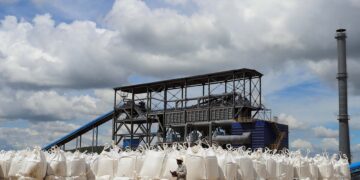
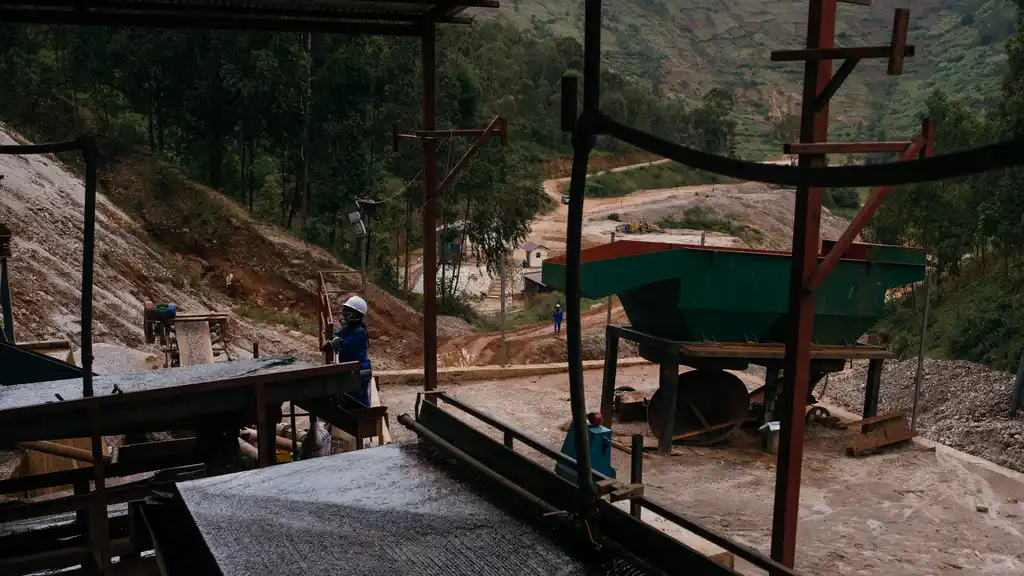
China’s sustained presence in African mining and construction has positioned it as a pivotal partner in many countries. Figures from the Brookings Institution show that in 2023 alone, Chinese investment reached almost 8 billion US dollars, channelled into sectors such as lithium extraction in Zimbabwe and Mali, and copper and coltan mining in the Democratic Republic of Congo (DRC). Chinese companies have maintained operations in politically sensitive regions where Western firms have often scaled back due to instability or environmental concerns. As Jimmy Munguriek of the NGO Resource Matters in the DRC observes, China’s willingness to operate in volatile environments has allowed it to dominate strategic mining zones that are vital to global technology supply chains.




Meanwhile, the United States has been reshaping its engagement with Africa through the US International Development Finance Corporation (DFC), established in 2019 to merge private investment with development objectives. Under the current administration, this approach has evolved into a more overtly strategic framework designed to “expand US global leadership” and counterbalance China’s influence. In recent months, President Donald Trump’s administration has shifted emphasis from aid to trade, positioning Africa as a commercial frontier rather than an aid recipient. Trump’s remarks to African leaders earlier this year highlighted this pivot, describing trade as “more effective and sustainable” than traditional development assistance.

Both powers are competing not merely for resources but also for influence over Africa’s future industrial and technological trajectory. Africa possesses the majority of the world’s reserves of platinum, cobalt, tantalum, and manganese, all essential for the global transition toward renewable energy and digital infrastructure. Yet, the continent continues to export much of its raw material output without adequate domestic value addition. The African Union’s Green Commodities Strategy, introduced in 2024, seeks to address this imbalance by imposing export tariffs on unprocessed minerals and encouraging local processing and manufacturing capacity. The initiative reflects a growing recognition across African capitals that true economic sovereignty will depend on controlling not just the extraction of raw materials, but also the means of production and refinement.
Infrastructure remains a defining arena of this contest. China’s long-term investments, such as the Standard Gauge Railway connecting Nairobi to Mombasa, are emblematic of a cross-continental vision linking resource-rich regions to global markets. In response, the United States and its allies have backed the Lobito Corridor, an initiative that connects the DRC’s copper belt to Angola’s Atlantic coast. Supported by the European Union’s Global Gateway programme, the project represents an alternative model of partnership that combines commercial opportunity with political alignment. Angola’s emergence as a strategic partner in this corridor underscores how African nations are beginning to negotiate from positions of greater agency, aligning projects with their national and regional interests rather than external geopolitical agendas.


The renewed competition between the United States and China, therefore, offers both opportunities and risks for Africa. It has created avenues for employment, skills transfer, and infrastructure development, yet it also risks reinforcing patterns of dependency if resource extraction continues to dominate without corresponding industrial diversification. As Shikwati notes, both powers provide distinct forms of engagement—American firms bringing technology and professional expertise, and Chinese projects providing jobs in labour-intensive sectors—but neither alone guarantees long-term structural transformation.
The central question remains whether African nations can leverage this global rivalry to advance their own developmental priorities. With initiatives such as the African Continental Free Trade Area (AfCFTA) and the AU’s Agenda 2063 providing frameworks for continental integration, the balance may yet shift. The future of Africa’s engagement with global powers will depend not solely on the scale of investment but on the terms under which those investments are made. For now, Africa’s role in the evolving world economy is not that of a passive stage for external competition, but increasingly that of a decisive actor in shaping the direction of global resource governance.