

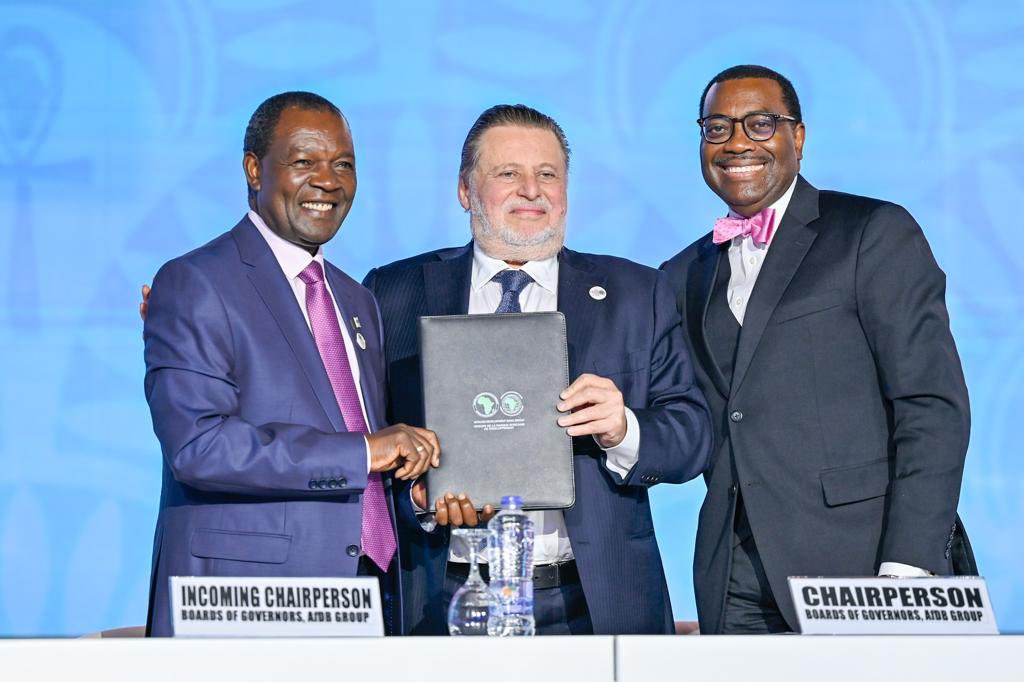
The full implementation of the African Continental Free Trade Area (AfCFTA) promises to foster inclusive growth across the continent, according to African experts speaking at the 59th Annual Meeting of the Board of Governors of the African Development Bank (AfDB) held in Nairobi on Monday.
Vincent Nmehielle, Secretary General of the AfDB Group, emphasised that liberalising trade within Africa by removing import duties on goods produced on the continent will significantly boost intra-African commerce, offering substantial benefits to small businesses. “More trade among African countries will also help the continent diversify its export basket, thereby creating more jobs and employment opportunities,” Nmehielle stated.
The AfCFTA, which aims to create a single market for goods and services, seeks to address long-standing trade barriers and enhance economic integration among African nations. By doing so, it is expected to reduce Africa’s reliance on traditional Western markets and promote self-sufficiency.



John Bosco Kalisa, Chief Executive Officer of the East African Business Council, highlighted efforts to educate small and women-owned enterprises on trading procedures under the AfCFTA regime. Kalisa pointed out that Africa’s exports are predominantly unprocessed minerals and agricultural commodities. The AfCFTA, therefore, holds the promise of adding more value to these products within the continent, leading to inclusive growth.
“Intra-African trade currently stands at 18 percent, in stark contrast to 50 percent in Asia and 70 percent in Europe,” Kalisa noted. “By streamlining trade processes and reducing tariffs, we can significantly increase this percentage, ensuring that more African products are consumed within Africa.”
Monale Ratsoma, Director-General of the BRICS New Development Bank Africa Regional Centre, underscored the importance of infrastructure development in facilitating easier intra-continental trade. He mentioned that his organisation is prioritising the development of infrastructure projects across Africa to support the AfCFTA’s objectives.

“The AfCFTA, with an estimated population of 1.2 billion people, is expected to deliver numerous social benefits, addressing Africa’s inequalities by empowering marginalised communities,” Ratsoma said. Improved infrastructure, he argued, will be crucial in achieving these goals, enabling smoother and more efficient trade routes across the continent.
The experts agreed that the AfCFTA has the potential to transform Africa’s economic landscape by promoting sustainable growth and reducing poverty. By fostering a more integrated African market, the agreement is expected to create new economic opportunities and stimulate innovation across various sectors.
Furthermore, the full implementation of the AfCFTA is seen as a critical step towards realising the African Union’s Agenda 2063, which envisions a prosperous and united Africa driven by its own citizens. The agreement is expected to enhance Africa’s global trade position, making it a more competitive player on the international stage.

As the AfCFTA moves towards full implementation, African nations are encouraged to harmonise their trade policies and collaborate on infrastructure projects. The collective effort is anticipated to lead to a more resilient and diversified African economy, capable of withstanding global economic shocks.
In conclusion, the AfCFTA represents a monumental shift towards greater economic integration and self-reliance for Africa. By boosting intra-continental trade and adding value to African products, the agreement is set to drive inclusive growth and create a more equitable economic landscape for all African nations.


