Addis Ababa has become the diplomatic heartbeat of the continent once more, as heads of state and government from across Africa begin to arrive for the 39th Ordinary Session of the Assembly of the African Union. The summit, which is being held at the African Union Headquarters, comes at a time of shifting geopolitical currents and heightened urgency around issues of peace, continental integration, sustainable development and African-centred governance.
The Ethiopian capital, long regarded as the institutional seat of Pan-Africanism, is receiving dignitaries with the customary hospitality associated with its role as host of the Union. Among the leaders already in the city is President Evariste Ndayishimiye of Burundi, who was received at Bole International Airport by Ethiopia’s Minister of Innovation and Technology, Belete Molla, alongside Ambassador Berhanu Tsegaye, the State Minister for Foreign Affairs.




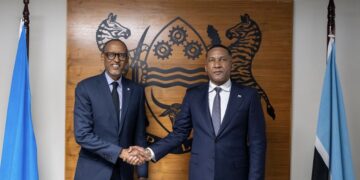
Joining him is President Duma Gideon Boko of Botswana, whose arrival further signals the growing emphasis on Southern African participation in shaping the continental agenda. His welcome by the same senior Ethiopian officials reflects the continuity of diplomatic protocol extended to all incoming delegations and underscores Ethiopia’s efforts to maintain neutrality as host.


Angolan President João Manuel Gonçalves Lourenço, the current Chairperson of the African Union, has also landed in Addis Ababa and is expected to steer the summit’s discussions with particular emphasis on advancing the Union’s strategic framework. His position as AU Chair places him at the centre of key deliberations, particularly in areas such as climate policy, continental peace mechanisms and reforming Africa’s engagement with global governance institutions.
Also in attendance is President Ismail Omar Guelleh of Djibouti, reinforcing the diverse regional representation that characterises the African Union’s approach to consensus building. Djibouti’s involvement, particularly in discussions surrounding the Horn of Africa and maritime cooperation, adds strategic weight to the summit’s broader security deliberations.
With the summit taking place amid evolving global realignments, African leaders are expected to reassert the continent’s agency in matters ranging from economic transformation and environmental resilience to digital sovereignty and governance reform. Discussions are anticipated to reflect the Union’s Agenda 2063 blueprint, which envisions a continent that is integrated, prosperous and driven by its own citizens.
The significance of the summit extends beyond its formal agenda. It reflects an enduring commitment by African states to resolve challenges through African-led dialogue, and to articulate solutions that reflect the continent’s diverse socio-political and cultural realities. Far from monolithic or ceremonial, the assembly remains a vital space for African voices to shape the future trajectory of the continent from within.
As deliberations unfold in Addis Ababa, the 39th AU Summit is widely expected to produce outcomes that reinforce Pan-African solidarity and further consolidate Africa’s collective voice on the global stage. The emphasis remains firmly on shared growth, mutual respect and a reimagined continental identity grounded in self-determination rather than dependency.