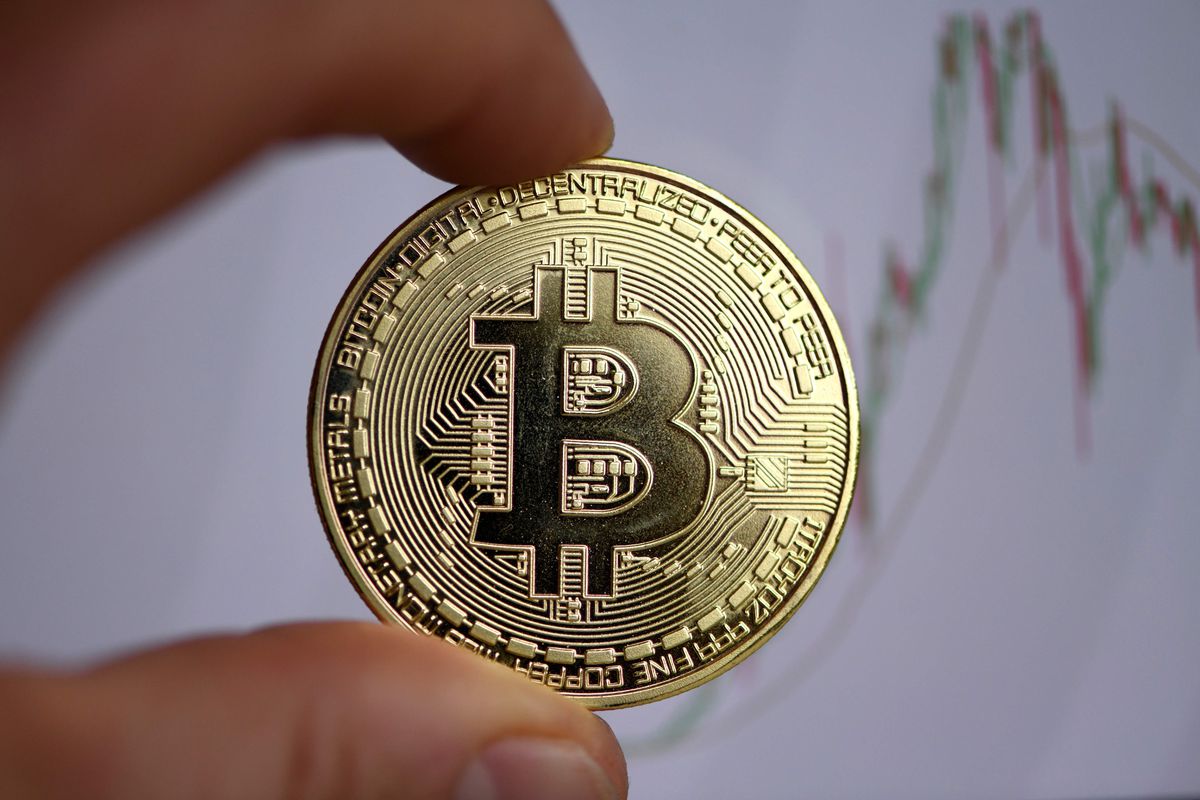
JOHANNESBURG, (The Southern African Times) – As the price of Bitcoin breached $50,000, the fear of missing out once again hit all-time highs for many investors.
However, South African actuary Imran Lorgat says a sure way of telling that you are about to make an investment mistake is when you are being spurred on by a strong fear of missing out.
Lorgat has been investing in Bitcoin for the past five years. While he considers Bitcoin a breakthrough technology, he also cautions that cryptocurrencies are highly speculative digital commodities and that they will challenge investors with extreme volatility.



If the “should I or shouldn’t I” question is keeping you awake at night, Lorgat’s advice is to take guidance from tried and tested investment principles.
Attempts to digitise a currency had, however, failed until 2008 when an anonymous developer, or group of developers, under the pseudonym of Satoshi Nakamoto succeeded in creating Bitcoin, the world’s first successful digital currency.
Lorgat explains that Bitcoin, in essence, is a new technology. “It is a digital currency that is not issued or controlled by a government or a central bank.
Instead, it is managed by its users who secure the system using software that anyone can download. People can send Bitcoin to each other without the need for a bank or financial intermediary. And they can store it in their own digital wallets.”
But beware, says Lorgat. “A wallet held on a cryptocurrency exchange is not the same as a wallet that can only be accessed by you.
The wallet on an exchange is like a bank account where money is held on your behalf. A Bitcoin is only truly yours if it is held in your personal wallet, on your laptop, phone, or wallet device.”
Understand the risk
While Bitcoin is arguably the world’s most volatile currency, Lorgat points out that it is important to differentiate between short-term volatility and long-term investment fundamentals.
“The price of Bitcoin over the long-term is driven by supply and demand, as well as adoption and technological development of the currency. However, in the short term, the price is driven mainly by hype and emotion.”
Lorgat says the Bitcoin volatility experienced in 2017 showed that market hype was driving the price rather than informed choices based on facts.
“Investors who had done their research and who had insights into the enormous technological developments taking place in the Bitcoin space were holding on to their Bitcoins, while retail investors were buying to get rich quick, and then selling just as quickly.
In the end the Bitcoin price crashed and people lost a lot of money.”
Lorgat points out that an additional risk is the high propensity for fraud in the cryptocurrency space. “It is easy to take advantage of people who do not have a good understanding of how cryptocurrencies work.
These people can be lured into trading schemes, cloud-mining schemes, Bitcoin copycats, or even outright ponzi schemes while mistakenly believing they are investing in Bitcoin.”
According to Lorgat, there are over 8 000 cryptocurrencies, not including the ones that have already failed. Yet, he adds, over 60% of the total cryptocurrency market cap is Bitcoin alone.
“New cryptocurrencies are launched every day, and many of them fail soon after launch. Often projects that have little in common are jumbled under the umbrella ‘cryptocurrency’.
Bitcoin, for example, is a currency. Ethereum on the other hand, is a platform for running applications, like Android or Windows.”

Lorgat says choosing an established and credible exchange when buying cryptocurrency is critically important. “There are many horror stories of exchanges getting hacked with millions of dollars’ worth of investments being stolen.
If you decide to put substantial amounts of money into Bitcoin, then spend some time researching safe offline storage. Consider purchasing a hardware wallet from a reputable company.”
Time in the market
Lorgat agrees that the Bitcoin success story makes it tempting to spend big money on buying the cryptocurrency. He cautions, however, that there is no guarantee that the Bitcoin price will continue to increase in the future.
He adds that the investment adage “you can’t time the markets” applies to Bitcoin as well.

“Bitcoin has been around for about 13 years and in that time public interest in it has waxed and waned. There is a lot that can happen that will drive the price either up or down.”
Lorgat makes the point that investors who resisted the temptation to trade their Bitcoin through the highs and lows have probably gained the most.
However, he adds, if you bought Bitcoin in the middle of a hype and then panic sold when the price crashed, you would have made huge losses.
“The conventional wisdom of ‘dollar-cost averaging’ applies to Bitcoin as well and is popular amongst Bitcoin investors.
This means investing the same amount every month, without checking the price or trying to time the market. I follow this strategy myself.
This way, highs and lows balance out over time. It is also common to combine this strategy with a long-term view, typically five to ten years or longer.”
So should you or shouldn’t you?
Bitcoin started 2020 with a market cap north of $131 billion, larger than many government currencies, yet remained largely outside of the public eye. However, as the world buckled under Covid-19 related woes, institutional investors started considering Bitcoin as a possible hedge against inflation and financial instability.
Lorgat explains that while a central bank can print money when the need arises, thereby devaluing a currency, Bitcoin is a finite resource.
There will only ever be 21 million Bitcoins and, at the time of writing, around 18.6 million were in circulation. This is why Bitcoin is increasingly seen as a commodity with scarcity value and is frequently called “digital gold”.
Nevertheless, Bitcoin has a notoriously volatile trading history and the events of the past few months once again highlight how unpredictable cryptocurrencies are.
Lorgat therefore strongly cautions against borrowing money to buy Bitcoin or using money that you cannot afford to lose.
“Before you decide to invest, ask yourself whether you can afford to lose that money without jeopardising your financial situation.”
According to Lorgat, unless you are prepared to buy and “hodl” for the long term, Bitcoin should not be on your shopping list.
The term “hodl” originates from a misspelling of “holding” on a Bitcoin forum by a trader who refused to sell during a crash. The term “hodl” has since become synonymous with a “buy and hold” strategy, where investors take a longer-term view of Bitcoin, instead of following short-term hype.
“If you decide to buy Bitcoin, make sure you can hodl,” said Lorgat.