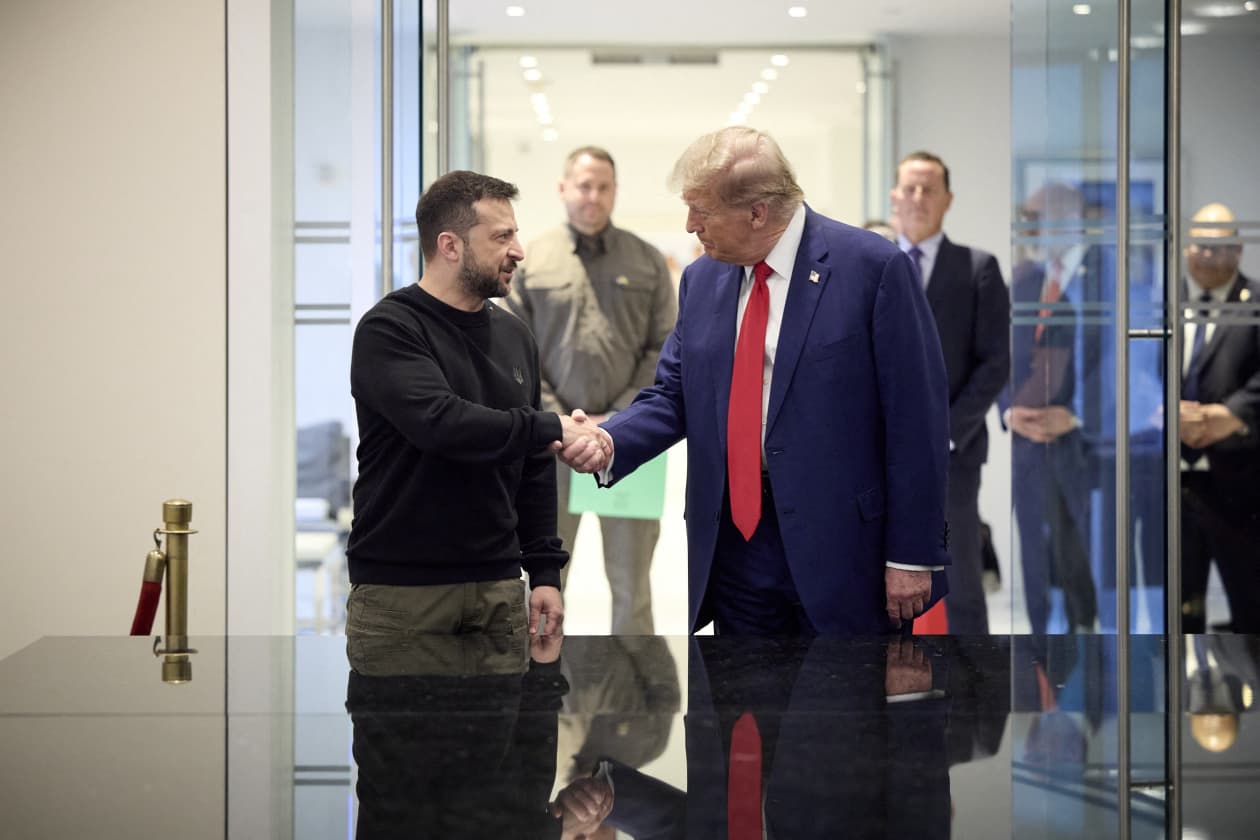
In a stunning electoral upset, Donald Trump has been re-elected as President of the United States, sending shockwaves through the geopolitical landscape. His victory signals a potential shift in U.S. foreign policy, particularly regarding the ongoing war in Ukraine. While Trump’s supporters laud his “peace through strength” approach, critics fear his stance may destabilize international alliances and embolden autocratic regimes.
Trump’s foreign policy narrative has long been marked by bold claims, often lacking detailed strategies. Throughout his campaign, he claimed he could end the Russia-Ukraine war “in a day,” though he offered no specifics on how he would achieve this feat. Trump’s criticism of President Joe Biden’s support for Ukraine underscores a stark policy divergence, with Trump hinting at a potential reduction in U.S. aid to Kyiv.
Ukrainian President Volodymyr Zelensky views Trump’s return with trepidation. Zelensky has expressed concerns about Trump’s perceived leniency towards Russian President Vladimir Putin. During Trump’s first term, his relationship with Putin raised eyebrows and spurred allegations of undue friendliness with the Kremlin. Zelensky fears that Trump’s approach might press Ukraine into a disadvantageous peace settlement, potentially compelling Kyiv to cede territory to Russia—a move Zelensky staunchly opposes.



A recent paper authored by two of Trump’s former national security chiefs suggests that U.S. military support for Ukraine should be conditional upon Kyiv engaging in peace talks with Russia. The proposal advocates delaying Ukraine’s NATO membership as a bargaining tool to entice Russia into negotiations. While it remains unclear how closely Trump aligns with this viewpoint, the document likely reflects advice he would receive.
Critics argue that such a strategy would reward Russian aggression and erode Ukraine’s sovereignty. Trump’s Democratic opponents, who accuse him of pandering to Putin, warn that this approach amounts to a concession for Ukraine and endangers broader European security.

Trump’s “America First” doctrine has historically included a critical view of NATO, which he has accused of allowing European members to “free-ride” on U.S. defense commitments. During his previous term, Trump’s rhetoric led to tensions within NATO, leaving European allies anxious about the alliance’s stability under his renewed leadership. Some allies argue that Trump’s hardline stance may be a tactic to push Europe toward increased defense spending. However, the uncertainty around his intentions has fueled fears over NATO’s future and its capability to deter adversaries.
International reactions to Trump’s re-election are mixed, with many world leaders preparing for a potentially unpredictable U.S. foreign policy. Allies remain wary of Trump’s unconventional approach, while adversaries may view it as an opportunity to exploit perceived U.S. weaknesses.
Zelensky’s concerns are particularly acute. As Russia continues to consolidate control in eastern Ukraine’s Donbas region, Kyiv’s reliance on U.S. military aid remains crucial. Any reduction in support could place Ukraine in a precarious position, potentially leading to concessions that would reshape the conflict’s trajectory.
Trump’s return to the White House marks a pivotal moment for global security and diplomatic alliances. His “peace through strength” rhetoric will face intense scrutiny as the world watches to see whether his strategies foster stability or exacerbate existing tensions. With Zelensky’s concerns over Trump’s rapport with Putin and the uncertainty surrounding future U.S. support for Ukraine, the coming term could reshape the global order in profound and unpredictable ways.
As Trump prepares to assume office in January, the stakes could not be higher. His presidency represents a critical juncture for the Ukraine conflict and for international relations at large. Whether his approach will yield the promised peace or intensify geopolitical rifts remains to be seen.
Written by Kundai Darlington Vambe is a Legal Consultant, Political Researcher and a Member of the Global Alliance for Justice Education. The article reflects the author’s opinions and not necessarily those of The Southern African Times.