Wednesday, June 17, 2026
  • Login
The Southern African Times
  • Home
  • Southern Africa
  • Business
    • African Start ups
    • African Continental Free Trade Area
  • Technology
    • Lifestyle
      • Health
      • Culture
      • Food and Drink
      • Entertainment
  • Opinion
  • Sports
  • SAT Jobs
    • Events
  • About Us
    • Advertise with Us
    • Contact Us
No Result
View All Result
  • Home
  • Southern Africa
  • Business
    • African Start ups
    • African Continental Free Trade Area
  • Technology
    • Lifestyle
      • Health
      • Culture
      • Food and Drink
      • Entertainment
  • Opinion
  • Sports
  • SAT Jobs
    • Events
  • About Us
    • Advertise with Us
    • Contact Us
No Result
View All Result
The Southern African Times
No Result
View All Result
Home Analysis

Mozambique: Looking to its Past for Lasting Peace

by SAT Reporter
April 14, 2021
in Analysis, Opinion
0
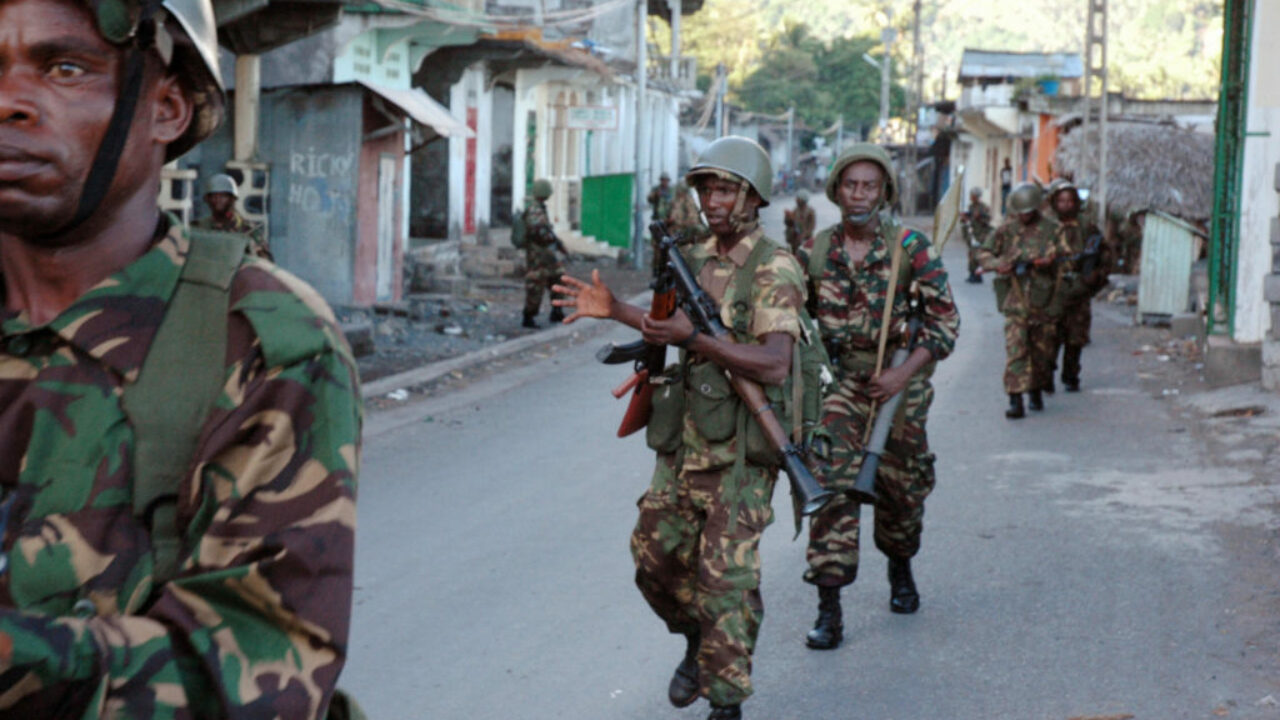
Total shuts down gas plant after Mozambique jihadist attacks

The government of Mozambique has taken many approaches to end conflict and encourage economic development in the past fifty years. Colonial independence, nationalization, villagization, and Marxism were all tried, with accompanying political upheavals, civil war, and massacres.

Peace and economic stability was finally reached in the 1990’s, under the newly elected democratic government. Former Mozambique President Joaquim Alberto Chissano credited the sustained peace and resulting economic development to the implementation of Invincible Defense Technology (IDT) under the Mozambique military and police.


IDT is a brain based technology which utilizes the non-religious Transcendental Meditation (TM) techniques. Hundreds of scientific studies have been conducted at more than 200 independent universities and research institutions, published in peer-reviewed scientific and medical journals. These studies confirm that regular practice of TM produces major increases in calmness, happiness, creativity, energy, and clarity of mind. Over six million people worldwide of all religions, cultures and ages have learned TM and experience these benefits.


ADVERTISEMENT

When sufficient numbers practice TM, and particularly the more advanced TM-Sidhi program in large groups together, a powerful field effect of coherence and peace is generated. This effect spills over into the surrounding population.

This field effect has been substantiated by extensive research published in the following refereed journals: Alcoholism Treatment Quarterly, International Journal of Neuroscience, Journal of Conflict Resolution, Journal of Crime and Justice, Journal of Mind and Behavior, Journal of Offender Rehabilitation, Journal of Social Behavior and Personality, Psychological Reports, Psychology Crime and Law, Social Indicators Research, Social Science Perspectives Journal, Society of Neuroscience Abstracts, and Studies in Asian Social Science.


This field effect was demonstrated in 1993, when over 4000 TM experts gathered in Washington, DC as a “National Demonstration Project to Reduce Violent Crime and Improve Governmental Effectiveness in Washington.” As predicted, research published in Social Indicators Research showed that crime dropped 24% and public approval of the US president suddenly changed from a negative trend to a positive trend.

Research indicates that such calming effects can also be created on a national level. A recent study published in Studies in Asian Social Science showed that large group practice of these programs in Cambodia between 1993 and 2008 was associated with a 96.2% decline in sociopolitical violence in that war-torn country compared to violence in the preceding three years.

The authors conclude the likelihood this reversal in the rising 1990–1992 trend of violence occurred randomly was one chance in 10 million. Other published research has shown that after advanced TM was applied, Cambodia’s gross domestic product (GDP) growth rates averaged 8.9%, and poverty was reduced by 63% between 1994 and 2008. By 2010 Cambodia was ranked 63rd out of 152 countries on the international scale of poverty, an unprecedented jump of 89 places in less than one generation.

After Mozambique’s implementation of IDT, a study published in Canadian Centres for Teaching Peace documented these positive changes in Mozambique. Unfortunately, once President Joaquim Alberto Chissano left office, cynics dismissed IDT as being the most important conveyor of such positive changes, resulting in the disbanding of the military and police IDT coherence-creating groups.


Today Mozambique faces a daunting task: uniting the country in the midst of a raging pandemic with its resulting economic devastation and societal discord; all overshadowed by the recent specter of Islamist insurrection.

It would be wise at this time for Mozambique to again establish IDT coherence-creating groups to deploy this simple and cost-effective approach and thereby create national unity and lasting peace. Any large group of experts trained in the advanced TM techniques could produce these results.

The groups could be comprised of military units, congregations at places of worship, prisoners, the elderly in retirement homes, even students as was done in Cambodia. The important factor is that the techniques be performed by trained TM experts consistently in groups twice a day. Simply by doing this Mozambique’s current high societal tensions could again be eradicated.


Violence has historically been the response to national differences, despite its costs both in financial and human terms. What Mozambique needs now is for its leaders to recognize that there is a more effective proven way to resolve differences. TM is that scientifically-verified approach, and now is the time for Mozambique’s leaders to again utilize IDT to dissolve high political tensions, improve the economy and create lasting peace.


Arlene J. Schar has served as Dr. Leffler’s Executive Assistant at the Center for Advanced Military Science (CAMS) http://www.StrongMilitary.org since 2015. She has edited and co-authored many of Dr. Leffler’s articles.


Dr. David Leffler served as an Associate of the Proteus Management Group at the Center for Strategic Leadership, US Army War College. Currently, he serves as the Executive Director at CAMS.


Previous Post

Regional bloc probes Mozambique terror threat level

Next Post

China’s exports rise at robust pace in March, imports growth highest in four years

SAT Reporter

Related Posts

LONG READ | No Longer the World’s Dustbin: China’s Waste Ban and Africa’s Circular Economy Moment
Opinion

LONG READ | No Longer the World’s Dustbin: China’s Waste Ban and Africa’s Circular Economy Moment

by Times Reporter
June 12, 2026
OPINION | The Investors Southern Africa Refuses to See
Opinion

OPINION | The Investors Southern Africa Refuses to See

by Times Reporter
June 14, 2026
Faith, Miracles and the Crisis of Religious Authenticity
Opinion

Faith, Miracles and the Crisis of Religious Authenticity

by Brendan Amadi
June 10, 2026
How DRC President Leveraged Geopolitics to Secure Political Survival
Opinion

How DRC President Leveraged Geopolitics to Secure Political Survival

by Dr. Alex Ntung
June 9, 2026
Zimbabwe’s Child Online Safety Moment and Why It Matters Beyond 2030
Opinion

Zimbabwe’s Child Online Safety Moment and Why It Matters Beyond 2030

by Kundai Vambe
June 5, 2026
Next Post
China’s exports rise at robust pace in March, imports growth highest in four years

China's exports rise at robust pace in March, imports growth highest in four years

Browse by Category

  • Africa AI
  • African Continental Free Trade Area
  • African Debt
  • African Start ups
  • Agriculture
  • AI Africa
  • Algeria
  • All News
  • Analysis
  • Angola
  • Arts / Culture
  • Asia
  • BOTSWANA
  • Botswana
  • BREAKING NEWS
  • BRICS
  • Burkina Faso
  • Burundi
  • Business
  • Business
  • Business Wire
  • Cameroon
  • Central Africa
  • Chad
  • China
  • Climate Change
  • Climate Changev
  • Community
  • Congo Republic
  • Conservation
  • Côte d’Ivoire
  • COVID 19
  • CRYPTOCURRENCY
  • Culture
  • Democratic Republic of Congo
  • Diplomacy
  • Eastern Africa
  • Economic Development
  • Economy
  • Education
  • Egypt
  • Elections 2024
  • Energy
  • Entertainment
  • Environment
  • Eritrea
  • Ethiopia
  • Europe
  • Fashion
  • Feature
  • Finance
  • Financial Inclusion
  • Food
  • Food and Drink
  • Foods
  • GABON
  • Ghana
  • Global
  • Global Africa
  • Guinea
  • Health
  • Humanitarian Aid
  • Immigration
  • in Southern Africa
  • International news
  • International Relations
  • Investment
  • Ivory Coast
  • Just In
  • Kenya
  • Lesotho
  • Libya
  • Life Style
  • Lifestyle
  • Literature
  • Malawi
  • Malawi
  • Mali
  • Markets
  • Mauritius
  • Middle East
  • Mining in Africa
  • Morocco
  • Mozambique
  • Namibia
  • Niger
  • niger
  • Nigeria
  • North Africa
  • North-Eastern Africa
  • Obituaries
  • Obituary
  • Opinion
  • PARTNER CONTENT
  • Politics
  • Property
  • Racism
  • Rwanda
  • Rwanda
  • SADC
  • SAT Interviews
  • SAT Investigation
  • SAT Jobs
  • Saudi Arabia
  • Senegal
  • Seychelles
  • Somaliland
  • South Africa
  • South Sudan
  • Sports
  • Startup Africa
  • STOCK EXCHANGE
  • Sudan
  • Sustainability
  • Sustainablity
  • Tanzania
  • Technology
  • Telecommunications
  • The Editorial Board
  • The Power Of She
  • Togo
  • Trade
  • Travel
  • Travel
  • Tunisia
  • Uganda
  • Uncategorized
  • Wealth
  • West Africa
  • World
  • World
  • Zambia
  • ZAMBIA
  • ZIMBABWE
  • Zimbabwe

Browse by Tags

#NewsUpdate #SouthAfrica #SouthernAfricanTimes #TheSouthernAfricanTimes AfCFTA africa African Continental Free Trade Area African development African Development Bank African economies African economy African Union Agriculture Angola Botswana China Climate change Cyril Ramaphosa Economic Development economic growth energy transition Ghana governance industrialisation Inflation Infrastructure Infrastructure Development International relations Investment Kenya Mozambique Namibia news Nigeria Regional Integration renewable energy Rwanda SADC South Africa Southern Africa sustainable development Tanzania United States Zambia Zimbabwe
ADVERTISEMENT

WHO WE ARE

The Southern African Times is a regional bloc digital newspaper that covers Southern African and world news. The paper also gives a nuanced analysis on news and covers a wide range of reporting which include sports, entertainment, foreign affairs, arts and culture.

Welcome Back!

Login to your account below

Forgotten Password?

Retrieve your password

Please enter your username or email address to reset your password.

Log In
  • Home
  • Southern Africa
  • Business
    • African Start ups
    • African Continental Free Trade Area
  • Technology
    • Lifestyle
      • Health
      • Culture
      • Food and Drink
      • Entertainment
  • Opinion
  • Sports
  • SAT Jobs
    • Events
  • About Us
    • Advertise with Us
    • Contact Us
Not enough quota to unlock this post
Unlock left : 0
Are you sure want to cancel subscription?