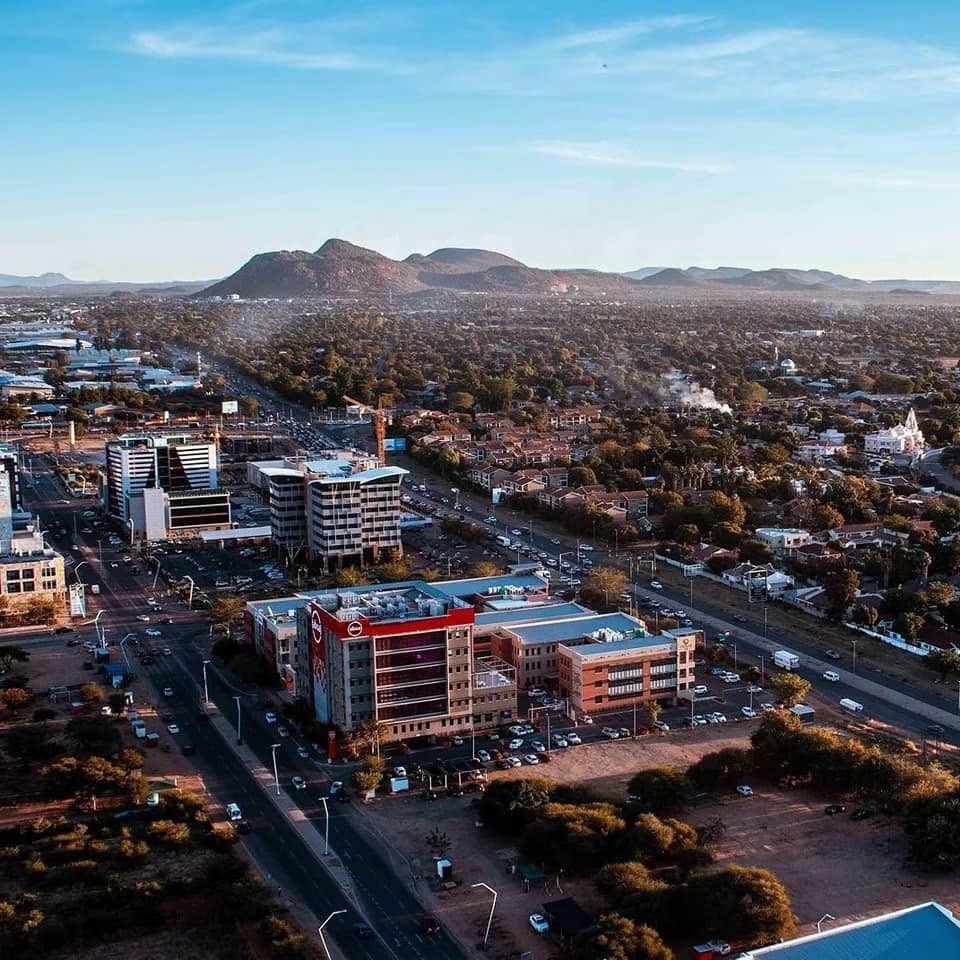
In an African subcontinent where headlines are too often dictated by the volatility of its largest economy, a modest and historically undersung republic on the fringe of the Kalahari is quietly repositioning itself as the region’s most credible counter-narrative. Botswana, landlocked, sparsely populated, and for six decades defined almost singularly by the lustre of its diamonds, is attempting something few resource economies manage: a deliberate, state-orchestrated pivot away from a commodity dependency that has, for the moment, turned from blessing to burden.
The macroeconomic backdrop is sobering. Botswana’s economy contracted by roughly one per cent in 2025, its second consecutive year of weakness, as Debswana, the joint venture between the state and De Beers, cut production to approximately fifteen million carats amid a prolonged inventory overhang. Diamonds still account for around eighty per cent of export earnings and close to a third of GDP, a concentration that would unsettle any prudent allocator long before the word “diversification” entered a single policy paper. It has not gone unnoticed by the rating agencies. Standard & Poor’s downgraded the sovereign to BBB minus with a negative outlook in March 2026, citing declining diamond revenues, with the budget deficit for the 2026-27 fiscal year projected to approach nine per cent of GDP, while Moody’s has separately marked the credit down to Baa1. For bondholders accustomed to Botswana’s historic reputation as Africa’s most disciplined sovereign borrower, this is unfamiliar and uncomfortable territory.
Yet it is precisely this discomfort that makes the present moment analytically interesting, because Gaborone is not responding with the drift and denial characteristic of so many single-commodity states. President Duma Boko, whose Umbrella for Democratic Change coalition ended fifty-eight years of Botswana Democratic Party rule in the 2024 election, has staked considerable political capital on breaking what he has termed the resource curse. His administration launched the Botswana Economic Transformation Programme in mid-2025, targeting growth in services, regional finance, manufacturing, tourism, renewable energy and agriculture, a scheme that attracted thousands of citizen and business project submissions. In September of that year, government established a new sovereign wealth vehicle to manage state assets and redirect diamond-linked revenue into agro-processing, renewables and tourism, an instrument that, if properly insulated from fiscal raiding during lean years, could in time assume something of the disciplining function Norway’s oil fund has performed for a different kind of extractive economy.




The more consequential story, and the one that ought to occupy any serious Africa desk this year, is the running contest for control of De Beers itself. Anglo American, having fought off BHP’s hostile approach in 2024, committed to shedding the diamond house as part of a retreat toward copper and iron ore, and the resulting sale process has become an unlikely theatre for African resource sovereignty. Botswana already holds fifteen per cent of De Beers and, more importantly, controls some seventy per cent of the group’s total production through Debswana, giving Gaborone leverage disproportionate to its minority equity position. Boko has publicly pushed for majority ownership exceeding fifty per cent, framing it explicitly as a matter of economic sovereignty rather than mere commercial opportunism, and Angola has separately signalled interest in a twenty to thirty per cent stake, with talk of a pan-African consortium drawing in Namibia and South Africa as well. The frontrunner bid, led by former De Beers chief executive Gareth Penny, envisages Botswana’s stake rising to somewhere near twenty five to thirty per cent, though no binding transaction had been confirmed as of the middle of this year, and the process has been complicated by the collateral effects of Middle Eastern financing disruption on rival consortia. For an investor weighing exposure to Botswana, the resolution of this sale, whenever it arrives, will matter more than almost any other single variable, because it will determine whether the state captures meaningfully more of the diamond value chain, from sightholder allocation to global marketing spend, or whether it remains a well-informed but ultimately passive shareholder.
There is a case to be made, and it is worth making with appropriate scepticism, that Botswana’s pursuit of majority control is itself a curious diversification strategy, in that it concentrates rather than reduces the state’s diamond exposure at precisely the moment global demand for natural stones is being structurally eroded by laboratory-grown competition and softer luxury spending in key Asian and American markets. The International Monetary Fund has reportedly cautioned against exactly this risk. A more conventional reading of diversification is unfolding elsewhere in the economy, and it is here that the investment case grows more persuasive. Gaborone has spent two decades quietly building itself into a regional financial services hub, a sector now representing some fifteen to eighteen per cent of GDP and hosting a growing complement of banks, insurers and fintech ventures. Government has simultaneously pushed hard on diamond value addition, seeking to move cutting, polishing and jewellery manufacture onshore rather than exporting rough stones for processing in Antwerp, Surat or Tel Aviv, with special economic zones offering tax concessions and infrastructure guarantees to draw such capacity to Gaborone itself. Beyond diamonds, exploration interest is building in copper, manganese, nickel, cobalt and gold, with recent geological work in the northwest identifying rare earth deposits alongside cobalt and lithium reserves positioned to benefit from global battery demand, and with the Karowe mine’s transition from open pit to underground operation extending that particular asset’s productive life well into the 2040s.
Set against this domestic story is a regional context that flatters Botswana by comparison, and this is where the piece departs from balance sheets and enters the realm of political economy. South Africa’s deepening struggle with anti-immigrant sentiment, documented at length in these pages in recent weeks, has exposed the fragility of the region’s largest economy as a destination for capital seeking stability and rule of law. Botswana, by contrast, retains its long-standing reputation, however imperfect in practice, for institutional continuity, judicial independence and the peaceful transfer of power that the 2024 election itself demonstrated. Boko’s own posture toward regional migration, including his stated intention to regularise undocumented Zimbabwean workers rather than criminalise them, situates Gaborone rhetorically closer to a pan-African ethic of shared prosperity than to the exclusionary politics now visible in Pretoria and Johannesburg. Whether this translates into durable competitive advantage for foreign direct investment remains to be tested, but the optics, at a moment when institutional investors are increasingly pricing political and social risk alongside fiscal metrics, are not trivial.
None of this should obscure the structural constraints that persist beneath the diversification rhetoric. The World Bank’s own diagnosis is unsparing: extreme poverty stood at 13.5 per cent in 2023, four times higher than peer economies at comparable income levels, with unemployment at 27.6 per cent, a figure that has since drifted toward a quarter of the workforce in mining-affected regions. Private sector development remains thin, human capital outcomes lag public spending, and the extractives-led, public sector-driven growth model that built modern Botswana is, in the World Bank’s own words, reaching its limits. Growth is forecast to recover only modestly, to around 3.1 per cent in 2026, on a partial normalisation of diamond output that is expected to remain below historical averages over the medium term.
For an institutional allocator or sovereign fund weighing Botswana, the honest appraisal is neither the naive optimism of the diversification brochures nor the cynicism that dismisses any diamond-dependent state as structurally doomed. It is a country with genuine fiscal discipline in its institutional memory, a functioning multi-party democracy that has just demonstrated its own capacity for renewal, and a set of nascent growth sectors, financial services, critical minerals, value-added manufacturing, high-value tourism, that could plausibly mature into a diversified middle-income economy over a decade-long horizon. Set against that is a sovereign credit trajectory now moving in the wrong direction, a fiscal deficit widening toward levels that will require either painful consolidation or continued reliance on a diamond recovery that may not arrive on schedule, and an ownership contest over De Beers whose outcome could either vindicate or undermine the entire resource sovereignty thesis Boko has built his presidency upon. The prudent position for capital with a multi-year horizon is not to treat Botswana as the next frontier darling, but to watch the De Beers resolution and the sovereign wealth fund’s early asset allocation as the two clearest signals of whether Gaborone’s ambitions will be matched by execution.
Farai Ian Muvuti is Chief Executive of The Southern African Times and Founder of Sankofa Capital, championing African trade, investment, and digital innovation by linking businesses with global partners. He serves on the Executive Committee of the South Africa Chamber of Commerce UK, where he focuses on strategic governance, member engagement, and regional representation for London.