Coffee and cocoa prices rose sharply on international commodity markets on Monday as investors reassessed the potential impact of an expected strong El Niño weather pattern on agricultural production across several key producing regions.
Arabica coffee futures traded on the Intercontinental Exchange rose by approximately 16 per cent to close at 3.49 US dollars per pound after reaching an intraday high of 3.57 US dollars per pound. Market data indicated that this represented one of the largest single day gains recorded for the contract. Robusta coffee futures also advanced, climbing 8.8 per cent to 4,044 US dollars per metric tonne.
The renewed market activity reflected growing expectations that El Niño conditions could disrupt production across major coffee growing regions. Weather forecasters have indicated that a strong El Niño event may develop over the coming months, increasing the likelihood of abnormal rainfall and temperature patterns across tropical agricultural areas.



Coffee production remains highly sensitive to climatic conditions. Excessive rainfall can delay harvesting and affect bean quality, while prolonged heat and dry conditions can reduce yields and place additional stress on coffee trees. Recent rainfall in Brazil, the world’s largest coffee producer, has already slowed harvesting activity in some regions, contributing to concerns about future supply.

Market participants also reported that investors holding short positions in coffee futures moved to buy back contracts as prices accelerated, a process commonly known as short covering. Such activity can amplify price movements when traders seek to limit potential losses during periods of heightened market volatility.
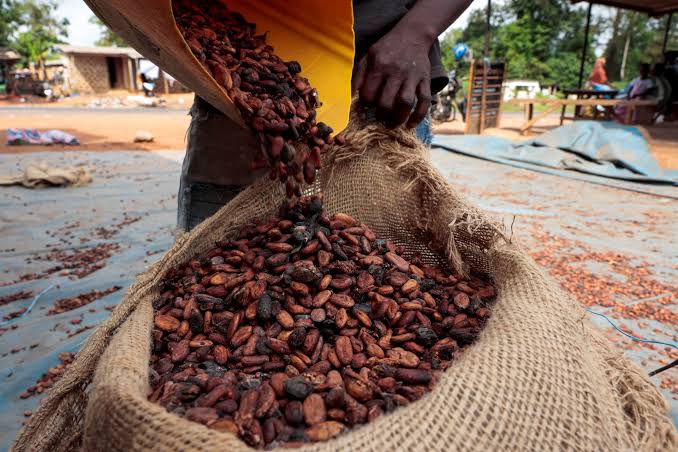
Cocoa markets experienced similar gains. New York cocoa futures rose approximately 13 per cent to 5,694 US dollars per metric tonne, while London contracts increased around 12 per cent to 4,222 pounds sterling per metric tonne.
The outlook for cocoa production remains closely linked to weather developments in West Africa, which accounts for the majority of global cocoa supply. El Niño events have historically been associated with heavier rainfall during parts of the growing season, often followed by hot and dry Harmattan winds that can affect flowering, pod development and crop yields. Such weather variability has the potential to influence both production volumes and global supply expectations.
For Africa, these developments carry significance beyond commodity exchanges. Cocoa exports remain an important source of foreign exchange earnings for several West African economies, while coffee production supports millions of smallholder farmers across countries including Ethiopia, Uganda, Kenya, Tanzania, Rwanda, Burundi and parts of Southern Africa. Higher international prices may improve export revenues for producers, although the benefits realised at farm level will depend on domestic pricing systems, input costs, currency movements and access to markets.
The evolving market conditions also reinforce the growing importance of climate resilience across African agriculture. Increasing investment in climate adapted farming practices, improved irrigation, research into resilient crop varieties and stronger regional value chains continues to feature prominently in agricultural development strategies across the continent. These measures are increasingly viewed as essential to reducing vulnerability to climate related disruptions while strengthening long term food security and export competitiveness.
Sugar prices also moved higher as investors monitored weather developments in other producing regions. Raw sugar futures rose 2.5 per cent to 15.22 US cents per pound, while refined sugar futures increased to 488.40 US dollars per metric tonne. Market participants cited concerns that continued rainfall in Brazil could slow sugar harvesting, while below average monsoon rainfall in India may affect future sugarcane production.
Commodity markets are expected to remain sensitive to weather forecasts in the coming months as traders continue to evaluate the potential impact of El Niño on agricultural output. While climate forecasts remain subject to change, investors are increasingly incorporating weather related risks into pricing decisions across the global soft commodities sector.
For African economies, the coming production season will be closely watched not only for its impact on export earnings but also for its implications for rural livelihoods, regional trade and the broader resilience of agricultural systems in an increasingly variable climate.