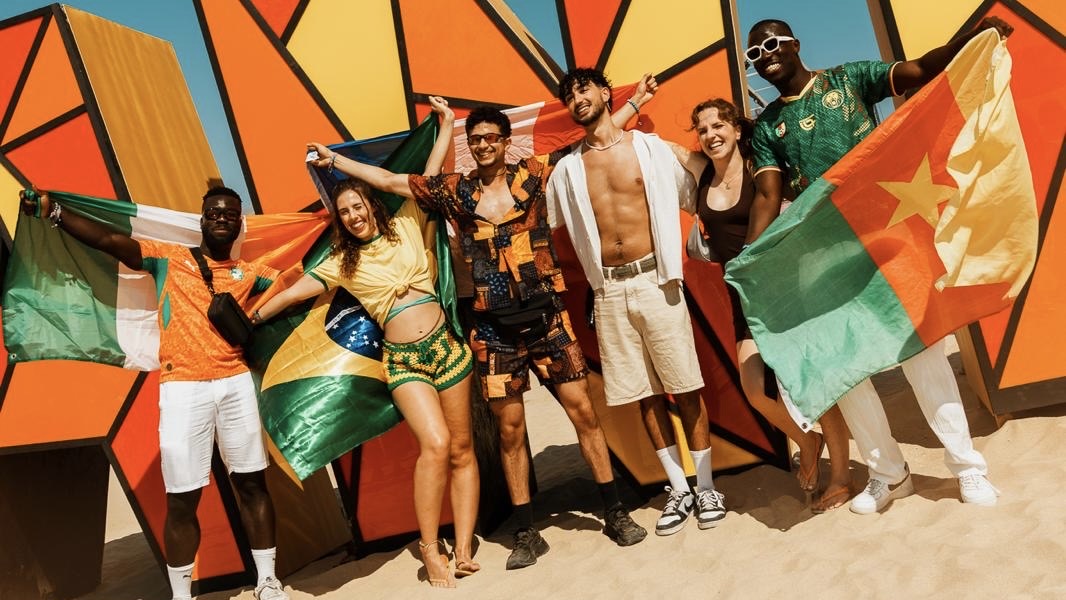
At a time when parts of Africa are once again confronting the painful reality of xenophobia, Afro Nation Portugal has offered a powerful reminder of what the continent looks like when unity triumphs over division.
On Friday, Praia da Rocha in Portimão became more than the home of one of the world’s biggest African music festivals. During Afro Nation’s annual Flag Day celebration, thousands of festivalgoers transformed the beach into a sea of colour as flags from across Africa and the diaspora waved proudly above the crowd. Zimbabweans stood beside South Africans, Nigerians embraced Ghanaians, Angolans danced with Mozambicans, while Kenyans, Congolese, Jamaicans, Britons, Americans and many others celebrated together under one soundtrack.
It was not simply a festival tradition. It was a vision of the Africa many people still believe is possible.



That image could hardly have arrived at a more significant moment. Recent weeks have seen South Africa once again gripped by rising anti migrant sentiment, with foreign nationals, particularly fellow Africans, living in fear amid threats of violence and forced displacement. The scenes have been a painful reminder that, despite decades of Pan African rhetoric, borders continue to divide people who share far more than they often acknowledge.
Afro Nation presented an entirely different reality. There were no passports on the dance floor, no suspicion in the food queues and no hostility between strangers wrapped in different national colours. People celebrated one another’s music as enthusiastically as their own, proving that culture can achieve what politics often struggles to accomplish.
Music has always possessed a remarkable ability to break down barriers. It creates common ground where language, nationality and background become secondary to shared experience. When thousands of people sing the same chorus or move to the same rhythm, they are reminded that identity can unite rather than divide.
That spirit defined Flag Day. National flags remained symbols of pride, but not of separation. Each represented a unique history while contributing to something much larger: a collective African identity strengthened by diversity rather than threatened by it.
For members of the African diaspora, Afro Nation has also become a different kind of homecoming. Whether born in Harare, Lagos, Johannesburg, Accra, Luanda, London or Lisbon, festivalgoers gather around music that has become one of Africa’s most influential cultural exports. The food, fashion, dance and language all reinforce a simple truth that the continent’s greatest strength has always been its extraordinary diversity.
This is why the contrast with xenophobic violence is so striking. While migrants are too often portrayed as burdens or threats, Afro Nation demonstrates how African people enrich one another’s societies through culture, creativity and connection. The Zimbabwean, Nigerian, Malawian or Congolese visitor who may face suspicion elsewhere becomes an essential part of the atmosphere, contributing to the very experience that draws thousands of people from around the world.
No music festival can solve the political, economic and social pressures that fuel xenophobia. Those challenges require leadership, policy and sustained public engagement. What festivals can do, however, is challenge the assumptions that allow prejudice to flourish. They remind audiences that the borders drawn across Africa should never outweigh the shared history, culture and humanity that bind its people together.
Afro Nation achieves this not through speeches or political slogans but through lived experience. It happens when strangers help each other raise their flags, when crowds sing along to artists from countries they have never visited, and when thousands of people discover that they have far more in common than they ever imagined.

As Afro Nation continues on Portugal’s Algarve coast, its greatest achievement may not be its sold out stages or star studded line up. It may be the simple yet powerful image of Africans and the diaspora standing together, flags held high, celebrating one another instead of fearing one another.
In an era when division too often dominates the headlines, Afro Nation reminds us that music still speaks one language everyone can understand.