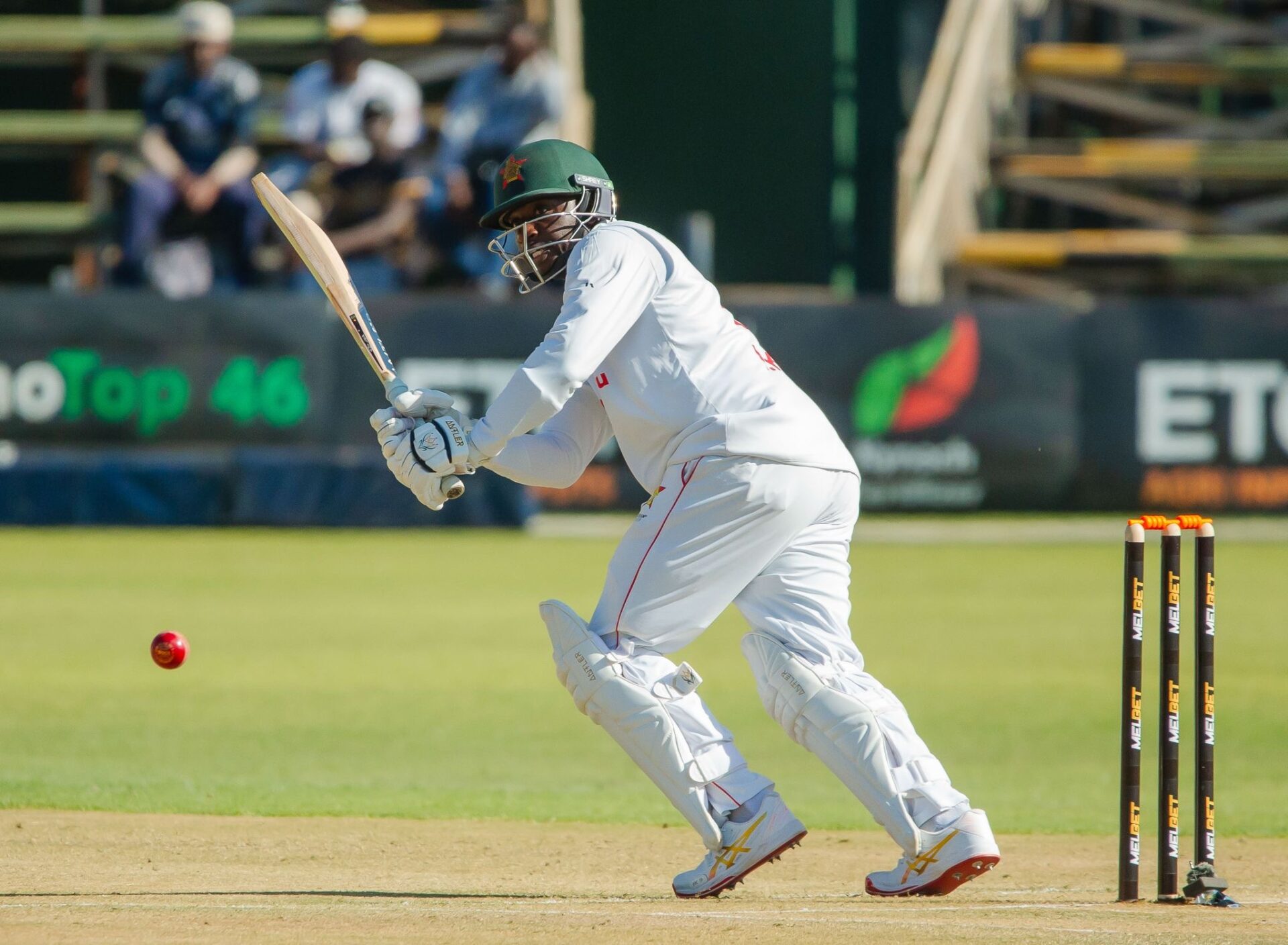
For much of his career, Innocent Kaia was regarded as one of Zimbabwe cricket’s most patient craftsmen, a batsman whose ability was never in doubt but whose route to international recognition demanded perseverance few players are ever required to show.
His maiden Test century against Bangladesh in Harare, an innings of 140 that underpinned Zimbabwe’s biggest ever Test victory, was more than a personal milestone. It was the culmination of a journey that began on the dusty grounds of Highfield and unfolded through years of determination, domestic cricket and quiet resilience.
Kaia’s introduction to cricket came at Chengu Primary School in Highfield, where he first picked up a bat alongside his older brother, Roy Kaia. Cricket quickly became central to their upbringing before the brothers’ academic and sporting abilities earned them scholarships to two of Zimbabwe’s leading schools. Innocent enrolled at Prince Edward School while Roy attended Churchill School, placing the siblings on opposite sides of one of Zimbabwe’s fiercest school sporting rivalries.



His development, however, was shaped as much by club cricket as it was by schoolboy competition. While studying at Prince Edward, Kaia represented Uprising Cricket Club, based in Chitungwiza, rather than Takashinga, the celebrated Highfield club that had become the heartbeat of Zimbabwe’s black cricket movement.
At the time, that decision raised eyebrows. For a Highfield youngster to play for Uprising rather than Takashinga was uncommon, given the deep community ties associated with the latter. Yet it also reflected Kaia’s willingness to pursue opportunities wherever they emerged, exposing him to fiercely competitive cricket where local pride and rivalry often matched the intensity found at higher levels of the game.
Those experiences helped mould a player capable of thriving under pressure. Highfield itself had already established a reputation as one of Zimbabwe’s most important cricket nurseries, with Takashinga producing generations of international players and transforming access to the sport for black Zimbabweans.

Kaia’s performances soon earned him selection for Zimbabwe’s Under 19 side, but the transition to senior international cricket proved anything but straightforward. Instead, he embarked on a lengthy apprenticeship in the domestic game, far removed from the spotlight enjoyed by many of his contemporaries.
His professional career became closely associated with Southern Rocks after joining the franchise in 2012. When the Masvingo based side was temporarily disbanded, Kaia moved to Mountaineers before returning to Southern Rocks following the franchise’s reinstatement to Zimbabwe’s first class structure.
While others arrived on the international stage at a younger age, Kaia continued accumulating runs in domestic cricket, waiting patiently for an opportunity that appeared increasingly elusive. That long awaited breakthrough finally arrived in 2021 when he earned a Zimbabwe call up, before making his One Day International debut the following year.
He announced himself in spectacular fashion against Bangladesh in Harare, scoring a match winning century in a successful chase of more than 300. His 110, combined with a record breaking partnership alongside Sikandar Raza, ended Zimbabwe’s lengthy wait for an ODI victory over Bangladesh and demonstrated that years of domestic consistency could translate onto the international stage.
His latest achievement has elevated that reputation even further. Kaia’s composed 140 in the one off Test against Bangladesh formed the cornerstone of Zimbabwe’s imposing first innings total of 410, paving the way for an innings and 85 run victory, the largest in the country’s Test history.
For Zimbabwe, it was a landmark victory. For Kaia, it represented something equally significant: confirmation that persistence can still be rewarded in modern cricket.
From Chengu Primary School to Prince Edward, from Uprising Cricket Club to Southern Rocks, and from years of domestic toil to a defining Test century, Kaia’s story has never followed a conventional path. Instead, it stands as a reminder that some careers are measured not by how quickly success arrives, but by the character required to keep believing until it does.