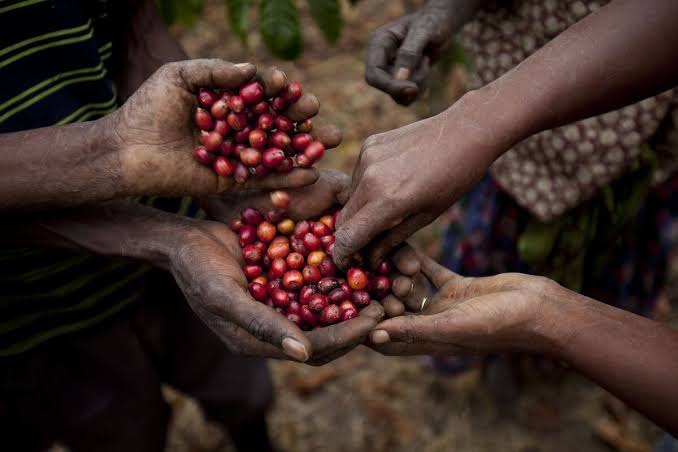
Ethiopia has generated approximately 3 billion United States dollars from coffee exports during the 2025 to 2026 fiscal year, underscoring the continued importance of the commodity to the country’s economy and reinforcing its position as Africa’s largest coffee producer.
The announcement was made by Ethiopia’s Minister of Agriculture, Addisu Arega, during discussions on Saturday surrounding a new national coffee development strategy that is expected to guide the sector over the next five years.
According to the Ministry of Agriculture, coffee export earnings now account for more than 30 per cent of Ethiopia’s total export revenue for the fiscal year ending on 7 July 2026. The figures represent another milestone for a sector that remains central to rural livelihoods, foreign currency generation and agricultural development across the country.



The latest export performance builds on the previous fiscal year’s record results. Official data from the Ethiopian Coffee and Tea Authority show that Ethiopia earned more than 2.65 billion United States dollars from exporting approximately 470,000 tonnes of coffee during the 2024 to 2025 fiscal year, reflecting sustained international demand for Ethiopian coffee varieties.

Government officials say the newly proposed five year national coffee development package seeks to improve productivity, strengthen value chains and expand export revenues while supporting millions of farming households whose livelihoods depend upon coffee production.
Director General of the Ethiopian Coffee and Tea Authority, Adugna Debela, said the programme aims to increase average coffee yields from approximately 900 kilograms per hectare to 2,100 kilograms per hectare by 2031. If achieved, the government projects annual coffee export earnings could rise to approximately 6 billion United States dollars.
The strategy reflects Ethiopia’s broader efforts to increase agricultural productivity through improved farming practices, better seed varieties, expanded extension services and enhanced market access. Agriculture continues to be the backbone of Ethiopia’s economy, employing the majority of the country’s workforce and serving as a significant source of export income.
With more than six million smallholder farmers cultivating coffee across diverse ecological regions, Ethiopia occupies a distinctive place within the global coffee industry. The country is widely recognised as the birthplace of Coffea arabica, with coffee varieties such as Yirgacheffe, Sidamo, Limu and Harrar commanding international recognition for their distinctive flavour profiles.
Across Africa, coffee remains one of the continent’s most valuable agricultural exports, supporting millions of producers from Ethiopia to Uganda, Kenya, Tanzania, Rwanda and Burundi. As African governments increasingly pursue value addition, greater domestic processing and stronger participation in global commodity markets, the sector is viewed not only as a source of foreign exchange but also as an opportunity to strengthen rural economies and create employment throughout agricultural value chains.
Ethiopia’s latest export performance illustrates both the resilience of its coffee sector and the broader economic significance of agricultural commodities across the continent. While international coffee markets remain subject to fluctuations in prices, climate conditions and consumer demand, sustained investment in productivity and quality is expected to remain central to Ethiopia’s long term export ambitions.