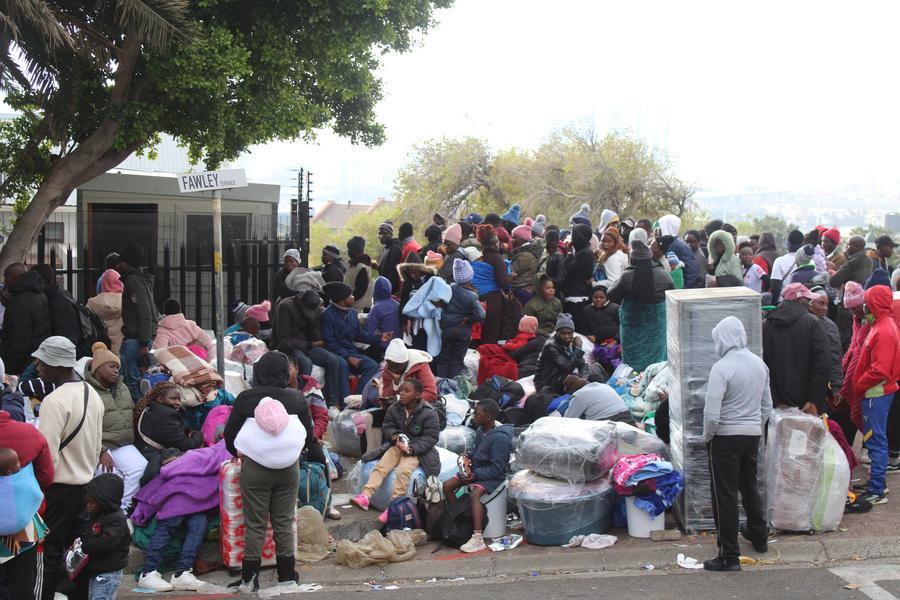
Zimbabwe has repatriated 3,624 of its citizens from South Africa as of 26 June, according to statements made by the Minister of Information, Publicity and Broadcasting Services, Zhemu Soda, during a briefing in Harare. The returns are understood to be ongoing, with further arrivals expected once administrative procedures on the South African side are concluded.
The movement of returnees has taken place against a backdrop of rising public contestation in parts of South Africa linked to labour market pressures, uneven access to public services and heightened political sensitivities around migration governance. Civil society groups and local community structures in several urban centres have voiced concerns about unemployment and service delivery capacity, while migrant advocacy networks have cautioned against the normalisation of scapegoating narratives that risk obscuring structural economic challenges affecting both citizens and non citizens alike.
Zimbabwean authorities have positioned the repatriation process as a coordinated humanitarian and administrative exercise rather than a crisis driven expulsion. Government teams have been deployed at the Beitbridge Border Post to manage reception logistics, documentation and onward movement of returnees into their communities of origin or chosen destinations within Zimbabwe. Officials have emphasised the intention to maintain dignity and order in processing arrivals, while seeking to reduce bottlenecks at one of the region’s busiest migration corridors.



In remarks delivered to the media, Zhemu Soda stated that resources had been allocated to support what he described as safe and dignified returns for citizens opting to come back. The government has also extended fiscal concessions previously associated with the Zimbabwe Exemption Permit framework in South Africa, which had allowed Zimbabwean nationals to live, work and study legally under specific conditions.
Under the revised arrangement, returnees are permitted to import one vehicle duty free, while value added tax is applied through adjusted valuation mechanisms. The policy also provides relief on selected personal and household effects, including certain categories of commercial equipment, provided these were acquired before 31 December 2022. Authorities argue that such measures are intended to ease reintegration pressures and support small scale economic continuity for households re establishing themselves in Zimbabwe.
Education access has also been highlighted as a priority in the reintegration framework. The government has directed public schools to admit children of returning families within designated catchment areas, with officials stating that no child should be excluded from formal education on the basis of recent relocation. Education sector stakeholders note that the practical implementation of this directive will depend on local capacity, infrastructure availability and staffing levels, particularly in peri urban and rural districts already managing variable enrolment pressures.

Zimbabwean nationals constitute one of the largest migrant populations in South Africa, a reflection of long standing labour mobility patterns across the Southern African region shaped by historical economic interdependence, regional integration frameworks and differential labour market opportunities. Migration scholars have long emphasised that these movements are not unidirectional but part of a broader circular system in which households distribute labour across borders as a strategy of economic resilience.
The current wave of returns, while significant in administrative terms, is being interpreted by analysts in varying ways. Some view it as a short term response to heightened social tensions, while others caution against reading it as a permanent reversal of established migration patterns. Regional migration dynamics, they argue, remain sensitive to cyclical economic conditions, policy shifts and labour demand fluctuations across Southern Africa.
Reporting from the region by The Southern African Times has underscored the scale of administrative coordination underway at border points, particularly Beitbridge, where cross border movement between Zimbabwe and South Africa is most concentrated. Further details are available through https://www.southernafricantimes.com
Within Zimbabwe, policymakers are increasingly framing reintegration not only as a welfare concern but also as a potential economic opportunity, particularly if returning citizens bring skills, savings and small scale assets that can be mobilised in local enterprise development. However, economists caution that outcomes will depend heavily on macroeconomic stability, job creation capacity and the absorption limits of the domestic labour market.

The situation continues to evolve, with authorities in both countries maintaining administrative oversight of migration flows while civil society actors and regional institutions monitor the broader social implications.